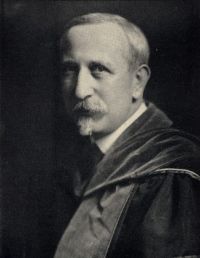
William Allan Neilson

William Allan Neilson

Summary

Portrait of William Allan Neilson William Allan Neilson The Harvard Classics Vol. 51 (1914)

WHEN the great European movement known as the Renaissance reached England, it found its fullest and most lasting expression in the drama. By a fortunate group of coincidences this intellectual and artistic impulse affected the people of England at a moment when the country was undergoing a rapid and, on the whole, a peaceful expansion—when the national spirit soared high, and when the development of the language and the forms of versification had reached a point which made possible the most triumphant literary achievement which that country has seen.
Source: Wikisource

Portrait of William Allan Neilson William Allan Neilson The Harvard Classics Vol. 51 (1914)

Yet the comedies of Shakespeare are far from superficial. Those written in the middle of his career, such as "As You Like It" and "Twelfth Night," not only display with great skill many sides of human nature, but with indescribable lightness and grace introduce us to charming creations, speaking lines rich in poetry and sparkling with wit, and bring before our imaginations whole series of delightful scenes.
Source: Wikisource

Portrait of William Allan Neilson William Allan Neilson The Harvard Classics Vol. 51 (1914)

The art of fiction has gained in technical dexterity since Scott's day, stories now begin sooner and move more rapidly, conversation is reported with a greater life-likeness, the tragedy in human life is more often given its due place; but the entrancing narratives of Scott, with all their deliberation, are likely to retain their charm, and his men and women still have blood in their veins. He created the historical novel, not only for Britain but for Europe, and all its writers since have been proud to sit at his feet.
Source: Wikisource

Get perspective with Kwize: daily news enlightened by great literature