Aegean civilization

Definition and stakes

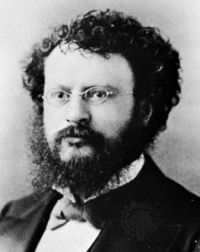
Portrait of Franz von Reber Franz von Reber,  History of Ancient Art

“ The northeastern part of the Mediterranean, because of its many islands, having an even greater proportionate coast-line, was the centre of the countries ennobled by Hellenic civilization. Separating and uniting at once, like all the waters of the earth, the Ægean Sea formed the boundary between the two chief races of Greek intellectual life—the Dorians and the Ionians; while it was, at the same time, the favoring medium of exchange for the productions of their genius. ”

Source: Gutenberg

Hutton Webster,  Early European History

“ COMING OF THE NORTHERN BARBARIANS The barbarians who overthrew Aegean civilization seem to have entered Greece from the north, perhaps from the region the Danube River. They pushed gradually southward, sometimes exterminating or enslaving the earlier inhabitants of the country, but more often settling peaceably in their new homes. Conquerors and conquered slowly intermingled and so produced the one Greek people which is found at the dawn of history. These Greeks, as we shall call them henceforth, also occupied the islands of the Aegean Sea and the coast of Asia Minor. ”
Source: Gutenberg

Hutton Webster,  Early European History

“ ANTIQUITY OF AEGEAN CIVILIZATION These discoveries in the Aegean enable us to place another venerable center of civilized life by the side of Babylonia and Egypt. As early as 3000 B.C. the primitive inhabitants of the Aegean were giving up the use of stone tools and weapons for those of metal. Bronze soon came into general use, as is shown by the excavations. The five centuries between 1600 and 1100 B.C. appear to have been the time when the civilization of the Aegean Age reached its highest development. ”
Source: Gutenberg

Get perspective with Kwize: daily news enlightened by great literature