 Samuel Taylor Coleridge,
The Rime of the Ancient Mariner
“ "God save thee, ancient Mariner! From the fiends, that plague thee thus!— Why look'st thou so?"—With my cross-bow I shot the ALBATROSS. PART THE SECOND. ”
Samuel Taylor Coleridge,
The Rime of the Ancient Mariner
“ "God save thee, ancient Mariner! From the fiends, that plague thee thus!— Why look'st thou so?"—With my cross-bow I shot the ALBATROSS. PART THE SECOND. ”
Samuel Taylor Coleridge,
The Rime of the Ancient Mariner
“ "I fear thee, ancient Mariner! I fear thy skinny hand! And thou art long, and lank, and brown, As is the ribbed sea-sand. ”
Samuel Taylor Coleridge,
The Rime of the Ancient Mariner…
(1927)
“ But the ancient Mariner assureth him of his bodily life, and proceedeth to relate his horrible penance. This body dropt not down. Alone, alone, all, all alone, Alone on a wide wide sea ! And never a saint took pity on My soul in agony.He despiseth the creatures of the calm, The many men, so beautiful ! And they all dead did lie : And a thousand thousand slimy things Lived on ; and so did I.And envieth that they should live, and so many lie dead. ”
Samuel Taylor Coleridge,
The Rime of the Ancient Mariner…
(1927)
“ And lo ! the Albatross proveth a bird of good omen, and followeth the ship as it returned northward through fog and floating ice. And a good south wind sprung up behind; The Albatross did follow, And every day, for food or play, Came to the Mariner hollo! In mist or cloud, on mast or shroud, It perched for vespers nine; Whiles all the night, through fog-smoke white, Glimmered the white Moon-shine.'The ancient Mariner inhospitably killeth the pious bird of good omen. ”
Samuel Taylor Coleridge,
The Rime of the Ancient Mariner…
(1927)
“ The ancient Mariner earnestly entreateth the Hermit to shrieve him ; and the penance of life falls on him. 'O shrieve me, shrieve me, holy man !' The Hermit crossed his brow. 'Say quick,' quoth he, 'I bid thee say-- What manner of man art thou ?' ”
 Jack London,
Michael, Brother of Jerry
(1917)
“ Simon Nishikanta wiping his sweaty neck with the greasy silk handkerchief and painting endless water-colours; the mate patiently stealing the ship's latitude and longitude with his duplicate key; and the Ancient Mariner, solacing himself with Scotch highballs, smoking fragrant three-for-a-dollar Havanas that were charged to the adventure, and for ever maundering about the hell of the longboat, the cross-bearings unnamable, and the treasure a fathom under the sand. ”
Samuel Taylor Coleridge,
The Rime of the Ancient Mariner…
(1927)
“ Her skin was as white as leprosy, The Night-mare LIFE-IN-DEATH was she, Who thicks man's blood with cold.Death and Life-in-Death have diced for the ship's crew, and she (the latter) winneth the ancient Mariner. ”
Various, Punch, or the London Charivari…
“ Stephen's Guest by the Ancient Mariner is now known unto all men, from repeated and prolix narrations; the tale to wit of the Mariner's startling adventure in unsailed seas on board his suddenly launched Home Rule Argo; how that the Ancient Mariner shot the Oof Bird (that made the (financial) mare to go, and the (party) breeze to blow) ; how that his shipmates cried out against the Ancient Mariner for killing the bird of good luck, which lay the golden eggs, but how, when the fog cleared off, they justified the same, and thus made themselves accomplices in the act ”
Augustus E. Silliman, A gallop among American scenery (1843)
“ As we bent over the side and looked far down into the deep vault reflected from above, and saw our gallant little yacht, with her white sails and dark hull, suspended with even minute tracery over it, we could almost imagine ourselves with the Ancient Mariner, “in a painted ship upon a painted ocean.”—The white sandbanks quivered and palpitated in the sultry glare, and the atmosphere of the adjoining swamps hung over them in a light blue vapour ”
Jack London,
Michael, Brother of Jerry
(1917)
“ Then they will return and try for it again!""You think so, sir?""I shall remember even more important data, steward," the Ancient Mariner smiled. "Without doubt they will return. Oh, I know them well. They are meagre, narrow, grasping fools.""Fools! all fools! a ship of fools!" Dag Daughtry exulted; repeating what he had expressed in the hold, as he bored the last barrel, listened to the good water gurgling away into the bilge, and chuckled over his discovery of the Ancient Mariner on the same lay as his own. ”
Samuel Taylor Coleridge,
The Rime of the Ancient Mariner…
(1927)
“ The Wedding-Guest stood still, And listens like a three years' child : The Mariner hath his will. The Wedding-Guest sat on a stone : He cannot choose but hear ; And thus spake on that ancient man, The bright-eyed Mariner. ”
Samuel Taylor Coleridge,
The Rime of the Ancient Mariner
“ It is an ancient Mariner, And he stoppeth one of three. "By thy long grey beard and glittering eye, Now wherefore stopp'st thou me? ”
Samuel Taylor Coleridge,
The Rime of the Ancient Mariner…
(1927)
“ Fly, brother, fly ! more high, more high ! Or we shall be belated : For slow and slow that ship will go, When the Mariner's trance is abated.'The supernatural motion is retarded ; the Mariner awakes, and his penance begins anew. ”
“ I have described at length the form in which the themes of these books are developed, because it is the form that, here extensively, here quite unobtrusively, clothes all the novels and tales. We are caught and held by the skinny finger of the Ancient Mariner. When he has a true tale to tell us his veritable presence is an added zest to our pleasure. ”
Mary Raymond Shipman Andrews, The Whole Family: a Novel by Twelve Authors
“ We get right in front of them and fix them with a glittering eye, the way the Ancient Mariner did, you know, and speak as slowly as we can, in little bits of words, to show them it's very important. Then, sometimes, they pay attention and answer us, but usually they act as if we were babies gurgling in cunning little cribs. ”
“ It is their power to create not only atmosphere, but a world, which, while it lasts, seems more real and solid than this daily existence of pickpockets and trams. Before we begin to read the Ancient Mariner we know that the Polar Seas are not inhabited by spirits, and that if a man shoots an albatross he is not a criminal but a sportsman, and that if he stuffs the albatross afterwards he becomes a naturalist also. ”
Selections from Five English Poets
“ So far as its moral import is concerned, the production will hardly bear close scrutiny, although it teaches the duty of loving all God's creatures, both great and small. The prolonged suffering of the Mariner is a punishment far too severe for his thoughtless act, while his four times fifty comrades, who endure horrible tortures before dying, have been guilty of no crime whatsoever. Still it is not necessary that every piece of literature should teach a consistent moral lesson, and The Ancient Mariner can be enjoyed for its marvelous pictures and its weird melody. ”
Samuel Taylor Coleridge,
Coleridge's Ancient Mariner and Select Poems
“ In all the very considerable changes and omissions that the poem underwent after it was first printed, there was none that either retrenched from or added to the moral interpretation of the tale.Of its imagery the most evident characteristic is what may be called the anthropomorphic treatment of nature. This, although in accord with modern conceptions of primitive culture, is not at all a mark of the popular ballad. Sun, and moon, and storm-wind, and ocean are in folk-song sun and moon and wind and water and nothing more; but in "The Ancient Mariner" they are living beings. ”
Selections from Five English Poets
“ As a punishment for his crime in shooting the albatross the agony was to return at intervals and compel him to travel from land to land relating his strange tale. After admonishing the wedding guest to love well both man and beast, the ancient Mariner departed. The poet says of his listener, "A sadder and a wiser man He rose the morrow morn." [*] When The Ancient Mariner was reprinted in 1800, the poet added explanatory notes in the margin. These have been found useful in writing this argument. The poet's notes are given in his Poetical Works, edited by James Dykes Campbell (1893) . ”
Reuben Post Halleck, Halleck's New English Literature
“ In which is his genius most apparent? Which best presents his view of nature? Which best stand the test of an indefinite number of readings? In what do his poems of childhood excel?Coleridge.—Read The Ancient Mariner, Christabel, Kubla Khan, Hymn before Sunrise in the Vale of Chamouni, Youth and Age; Bronson, I., 54-93; Ward, IV., 102-154; Page, 66-103; Century, 553-565; Manly, I., 353-364; Oxford, 628-656.How do The Ancient Mariner and Christabel manifest the spirit of Romanticism? What are the chief reasons for the popularity of The Ancient Mariner? Would you call this poem didactic? ”
Samuel Taylor Coleridge,
Coleridge's Ancient Mariner and Select Poems
“ See also Wordsworth's "Complaint of a Forsaken Indian Woman" (Cooper) .15, 358—*Sometimes a-dropping*, etc. The Mariner's sin was that in wanton cruelty he took the life of a friendly fellow-creature; his punishment is to live with dead men round him and the dead bird on his breast, in such solitude that "God himself scarce seemed there to be," until he learns to feel the sacredness of life even in the water-snakes, the "slimy things" that coil in the rotting sea; and the stages of his penance are marked by suggestions of his return to the privilege of human fellowship. ”
 Thomas Henry Huxley,
Life and Letters of Thomas Henry Huxley…
“ The missionaries are apt to colour everything, and they never have the chance of knowing the interior life as Mariner knew it. It was this conviction that led me to make Mariner my cheval de bataille in "Evolution of Theology." ”
Edwin Lester Arnold, The Wonderful Adventures of Phra the Phoenician (1917)
“ I have come across a galley drifting idly before the wind, with all her crew, a grim row of skeletons, hanging in a row along her yard, and swinging this way and that, and rattling drearily against the sail and each other in melancholy unison with the listless wallow of their vessel. At another time, a Roman trireme fell upon a big pirate of Melita and stormed and captured her. The three hundred men on board were too ugly and wicked to sell, so the Romans drove them overboard like sheep, and burned the boat. ”
H. Taprell Dorling, Pincher Martin, O.D.: A Story of the Inner Life of the Royal Navy
“ It made the ship's company of the Mariner feel very small and insignificant, and the puffed-up, proud sort of feeling they had when they came out of their first real action oozed from them like gas from a punctured Zeppelin. Sailors are peculiar animals. They long to frustrate and confound the Hun—that goes without saying; but, having done their best in this direction, they are equally desirous that their friends and relations shall be aware of the fact. Most of the men expected at least to see the Mariner's name in the newspapers. ”
 Abby Sage Richardson,
Stories from Old English Poetry…
(1899)
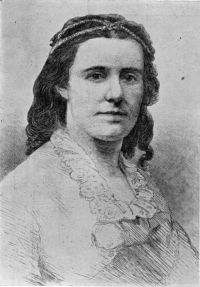
“ Marinell was the son of Cymoent (one of the daughters of Nereus) and an earth-born knight, who had loved the beautiful sea-nymph, and won her to be his bride. Hence the sea and land were equally the home of Marinell, and he could wander at will among the grottoes and fern forests in the depths of the ocean where his mother dwelt. Neptune had given him also, as his birthright, the whole control of the stretch of sandy shore toward which Britomart now set her horse’s head, and all the spoils which the waves threw thereon. ”
 Rudyard Kipling,
Just So Stories
“ The whity thing by the Mariner's left hand is a piece of wood that he was trying to row the raft with when the Whale came along. The piece of wood is called the jaws-of-a-gaff. The Mariner left it outside when he went in. The Whale's name was Smiler, and the Mariner was called Mr. Henry Albert Bivvens, A.B. The little 'Stute Fish is hiding under the Whale's tummy, or else I would have drawn him. The reason that the sea looks so ooshy-skooshy is because the Whale is sucking it all into his mouth so as to suck in Mr. Henry Albert Bivvens and the raft and the jack-knife and the suspenders. ”
Sir George Charles Vincent Holmes, Ancient and Modern Ships, Part 1…
“ The famous galleys of the Egypt of the Ptolemies belonged to the period of Greek and Roman naval architecture, and will be referred to later.From the time of the ancient Egyptian vessels there is no record whatever of the progress of naval architecture till we come to the period of the Greeks, and even the early records relating to this country are meagre in the extreme. The Phœnicians were among the first of the races who dwelt on the Mediterranean seaboard to cultivate a seaborne commerce, and to them, after the Egyptians, is undoubtedly due the early progress made in sea-going ships. ”
 William Mariner,
An Account of the Natives of the Tonga Islands
(1818)
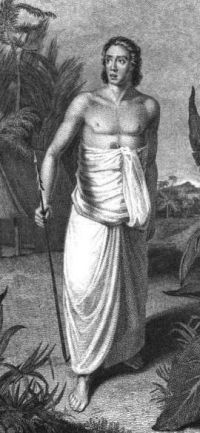
“ Mariner, astonished at the boldness and presumption of this warrior, was determined to punish him for his rashness, and accordingly levelled his musket, but just as he was pulling the trigger, an arrow struck the barrel of the piece, and caused him to miss his aim. The warrior then shouted aloud, and returned with all speed to the fortress. ”
 John James Audubon,
Audubon and His Journals, Volume 2
“ The "Marion," like a sea-bird with extended wings, swept through the waters, gently inclining to either side, while the unknown vessel leaped as it were, from wave to wave, like the dolphin in eager pursuit of his prey. In a short time we were gliding side by side, and the commander of the strange schooner saluted our captain, who promptly returned the compliment. What a beautiful vessel! we all thought; how trim, how clean rigged, and how well manned! She swims like a duck; and now with a broad sheer, off she makes for the reefs a few miles under our lee. ”
P. L. Jacob, Military and religious life in the Middle Ages and at the period of the Renaissance (1870)
“ Sailors have ever been superstitious; their credulous brains are the parents of all the fantastic beings and animals that they persuade themselves they have seen in their wanderings, and with which they have peopled the mysterious depths of the ocean. The sirens of antiquity, the monsters of Scylla and Charybdis, have been far surpassed by modern legendary creations, such as the kraken, a gigantic mass of pulp, which attacked and dragged down the largest ships; the bishop fish, which, mitre on head, blessed and then devoured shipwrecked mariners ”
Samuel Taylor ColeridgeWilliam MarinerJack LondonVariousSir George Charles Vincent HolmesH. E. Marshall E. M. ForsterMary Raymond Shipman Andrews
 Hugh WalpoleReuben Post HalleckRudyard KiplingThomas Henry HuxleyOliver Farrar EmersonAugustus E. SillimanWilliam Wood
 Henry Ward Beecher
 Edward B. TylorHawthorne Daniel
