Rime

Definition and stakes

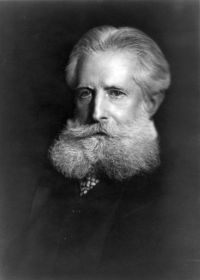
Portrait of Brander Matthews Brander Matthews,  Parts of Speech: Essays on English (1901)

“ In a language as unrhythmic as the French, rime is far more important than it need be in a lilting and musical tongue like our own; but in the masterpieces of the English lyrists, as in those of the French, rime plays along the edges of a poem, ever creating the expectation it swiftly satisfies and giving most pleasure when its presence is felt and not flaunted. Like the dress of the well-bred woman, which sets off her beauty without attracting attention to itself, rime must be adequate and unobtrusive, neither too fine nor too shabby, but always in perfect taste. ”
Source: Gutenberg

Paull F. Baum,  The Principles of English Versification

“ Oscar Wilde's praise of rime—"that exquisite echo which in the music's hollow hill creates and answers its own voice; rhyme, which in the hands of a real artist becomes not merely a material element of metrical beauty, but a spiritual element of thought and passion also, waking a new mood, it may be, or stirring a fresh train of ideas, or opening by mere sweetness and suggestion of sound some golden door at which the Imagination itself had knocked in vain; rhyme, which can turn man's utterance into the speech of the gods; rhyme, the one chord we have added to the Greek lyre." ”
Source: Gutenberg

Raymond MacDonald Alden,  English Verse: Specimens Illustrating its Principles and History

“ The gradual development of rime from assonance among the Romance peoples suggests the same thing. The early appearance of rime by the side of alliteration is illustrated by C. F. Meyer (Historische Studien, Leipzig, 1851) from the Norse Edda, from Beowulf, Cædmon, etc. In the later Anglo-Saxon period rime was evidently securing a considerable though uncertain hold. The Riming Poem suggests what development rime might have had in English without the incoming of Romance influences. ”
Source: Gutenberg

Get perspective with Kwize: daily news enlightened by great literature