Antonio Cánovas del Castillo

Definition and stakes

A. E. Houghton, Alfred Morel-Fatio, David Hannay, Francis Haverfield, James Fitzmaurice-Kelly, Kingsley Jayne & W. A. Phillips 1911 Encyclopædia Britannica, Volume 25… (1911)

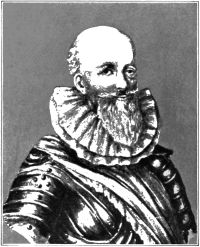
The tendency of Spanish historical students is rather to collect the raw material of history than to write history. Antonio Cánovas del Castillo was absorbed by politics to the loss of literature, for his Ensayo sobre la casa de Austria en España is ample in information and History and Criticism.
Source: Wikisource

Portrait of Carl Schurz Carl Schurz Speeches, correspondence and political papers of Carl Schurz (1913)

The assassination of Canovas del Castillo has, as is usual under such circumstances, caused lively speculation as to what the political consequences of that tragic event may be. Will it improve the chances of the Carlists in Spain? Will it strengthen the Republican movement in that kingdom? Will it bring about a change in the policy of the Spanish Government with regard to Cuba? The probability is that nothing will happen that would not have been brought about by other causes—causes of a general nature far more potential than the disappearance of a single individual from the political stage.
Source: Wikisource

J. N. Larned History for ready reference, Volume 6 (1895)

On the 8th of August, the Spanish Prime Minister, Señor Canovas del Castillo, was shot by an Italian anarchist, a Neapolitan, named Angiolillo, while sojourning for a few days, with his wife, at the baths of Santa Aguada. He lived but two hours after receiving his wounds. General Azcarraga, Minister of War, was called by the Queen to take temporary charge of the government; but before the end of September he and his cabinet were forced to resign, and the Liberals, under the lead of Señor Sagasta, returned to power. "Canovas was the strong man of Spain.
Source: Gutenberg

Get perspective with Kwize: daily news enlightened by great literature