Apollonius of Rhodes

Definition and stakes

Harvard University Press,  Loeb Classical Library (1919)

“ The birth of Apollonius Rhodius is placed by scholars at various times between 296 and 260 B.C., while the year of his death is equally uncertain. In fact, we have very little information on the subject. There are two "lives" of Apollonius in the Scholia, both derived from an earlier one which is lost. From these we learn that he was of Alexandria by birth, [1] that he lived in the time of the Ptolemies, and was a pupil of Callimachus; that while still a youth he composed and recited in public his Argonautica and that the poem was condemned in consequence of which he retired to Rhodes ”
Source: Wikisource

1911 Encyclopedia Britannica (1911)

“ In his youth he composed the work for which he is known—Argonautica, an epic in four books on the legend of the Argonauts. When he read it at Alexandria, it was rejected through the influence of Callimachus and his party. Disgusted with his failure, Apollonius withdrew to Rhodes, where he was very successful as a rhetorician, and a revised edition of his epic was well received. In recognition of his talents the Rhodians bestowed the freedom of their city upon him—the origin of his surname. Returning to Alexandria, he again recited his poem, this time with general applause. ”
Source: Wikisource

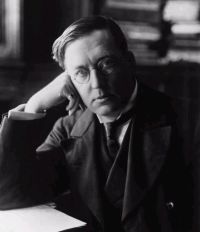
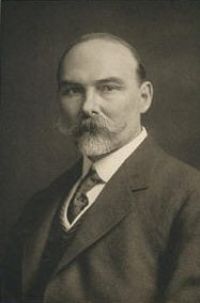
Portrait of G. R. S. Mead G. R. S. Mead,  Apollonius of Tyana, the Philosopher-Reformer of the First Century A.D

“ Again, on another occasion, at Rhodes, Damis asked him if he thought anything greater than the famous Colossus. “I do,” replied Apollonius; “the man who walks in wisdom’s guileless paths that give us health” (v. 21) .
138 There is also a number of instances of witty or sarcastic answers reported of our philosopher, and indeed, in spite of his generally grave mood, he not unfrequently rallied his hearers, and sometimes, if we may say so, chaffed the foolishness out of them (see especially iv. 30) .
”
Source: Gutenberg

Get perspective with Kwize: daily news enlightened by great literature