Arabic language

Definition and stakes

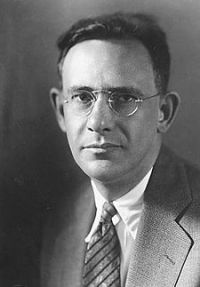
Philip Khuri Hitti,  Syria: A Short History (1959)

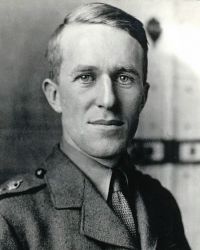
“ By the early twentieth century a new crop of writers, authors, poets, littèrateurs and scientific workers had been raised and was beginning to inch its way slowly to the front, receiving its stimulation from the living present rather than the dead past. Through their pens the Arabic language, rusty with age and given to the expression of traditional unprogressive thought, received a fresh polish and an injection of new life which started it on its way to becoming a vehicle capable of expressing the finest shades of scientific thought and the most delicate sentiments of the human heart. ”
Source: Wikisource

Portrait of Samuel Marinus Zwemer Samuel Marinus Zwemer,  Arabia: The Cradle of Islam

“ Algebra and Astronomy are specially indebted to the Arabs; all the sciences received attention and some of them addition from the Arabian mind.
The Arabic tongue is not only beautiful but it is difficult, exceedingly difficult, to every one who attempts to really master it. One of the veteran missionaries of Egypt wrote, in 1864, “I would rather traverse Africa from Alexandria to the Cape of Good Hope, than undertake a second time to master the Arabic language.”
”
Source: Gutenberg

Portrait of William Dwight Whitney William Dwight Whitney,  Language and the Study of Language (1867)

“ In no other family of human speech would it be possible that the most antique and original of its dialects, the fullest in its forms, the most uncorrupted in its phonetic structure, the most faithful representative of the ideal type inherent in them all, should be the youngest of their number. But such is the character of the classical Arabic, whose earliest literary monuments are from fifteen to twenty centuries later than those of the Hebrew and Assyrian. ”
Source: Wikisource

Get perspective with Kwize: daily news enlightened by great literature