Argonauta

Definition and stakes

A. H. Cooke,  The Cambridge natural history, Vol… (1895)

“ The great controversy on the Argonauta, which once raged with so much fierceness, is now matter of ancient history. It seems scarcely credible that between fifty and sixty years ago, two of the leading zoologists of the day, Mr. Gray and M. de [384] Blainville maintained that the animal which inhabits the Argonaut shell is a parasite, without any means of depositing or forming a shell of its own, but which possesses itself of the Argonaut shell, either by expelling or succeeding the original inhabitant, a supposed nucleo-branchiate (Heteropod) mollusc akin to Carinaria. ”

Source: Gutenberg

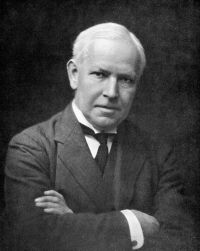
Portrait of E. A. Smith E. A. Smith,  A guide to the shell and starfish galleries (1901)

“ They are divided, according to the number of their gills (which is either two or four) , into Dibranchia and Tetrabranchia. Of the latter but one representative now exists, viz., the Pearly Nautilus, all other living Cephalopods being provided with but two gills, placed one on each side of the body within the mantle, as may be seen in the wax model of Sepia officinalis (Case 207) . The two-gilled section comprises forms with eight arms, as Argonauta and Octopus, and others with ten arms, viz., the Cuttlefishes (Sepia) (Fig. 43) , the Squids (Loligo, Ommatostrephes, Sepiola, Chiroteuthis, etc.) ”
Source: Gutenberg

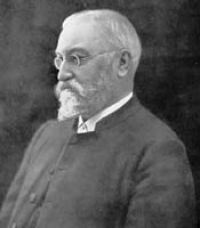
Portrait of Louis Figuier Louis Figuier,  The Ocean World: Being a Description of the Sea and Its Living Inhabitants

“ The elegant little bark which thus plays with the current is no work of human hands, but a child of Nature: it is the Argonaut, whose tribes, decked in a thousand brilliant shades of colour, are wanderers of the night in innumerable swarms on the ocean's surface.
The marine shell which Linnæus called the Argonaut enjoyed great renown among the ancient Greeks and Romans. It was the subject of graceful legends; it had inspired great poets; it occupied the attention of Aristotle, who called it the Nautilus and Nauticos, and of Pliny, who called it Pompylius.
”
Source: Gutenberg

Get perspective with Kwize: daily news enlightened by great literature