Aristotelian logic

Definition and stakes

Thomas Case and Herbert William Blunt,  1911 Encyclopædia Britannica, Volume 16… (1911)

“ The Aristotelian theory of the universal of science as secure from dependence on its instances and the theory of linking in syllogism remain a heritage for all later logic, whether accepted in precisely Aristotle’s formula or no. It is because the intervening centuries had the Aristotelian basis to work on, sometimes in reduced quantity and corrupt form, but always in some quantity and some form, that the rest of our logical tradition is what it is. ”
Source: Wikisource

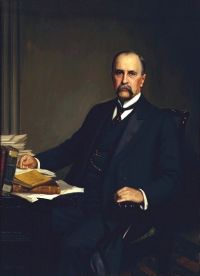
Portrait of William Osler William Osler,  Studies in the History and Method of Science…

“ The influence of Aristotelian logic on the theory of science was natural, and in a sense deserved. For Aristotelian logic is perhaps the mightiest discovery any man has achieved single-​handed. Its might is sufficiently attested by the length of its reign. Euclidean geometry alone is comparable with it, and Euclid owed far more to his predecessors than Aristotle. Moreover, the Aristotelian logic may be said to have achieved its purpose. ”
Source: Gutenberg

Get perspective with Kwize: daily news enlightened by great literature