Athenian navy

Definition and stakes

Baron Edward Bulwer Lytton Lytton,  Athens: Its Rise and Fall, Book IV

“ The completion of the port—the increased navy which the construction of the new harbour would induce—the fame already acquired by Athens in maritime warfare, encouraging attention to naval discipline and tactics—proffered a splendid opening to the ambition of a people at once enterprising and commercial. Themistocles hoped that the results of his policy would enable the Athenians to gain over their own offspring, the Ionian colonies, and by their means to deliver from the Persian yoke, and permanently attach to the Athenian interest, all the Asiatic Greeks. ”
Source: Gutenberg

William Oliver Stevens,  A History of Sea Power

“ After Salamis, Athens rose to a commanding position among the Greek states. Her period of supremacy was brief, lasting less than 75 years, but while it endured it rested on her triremes. In the middle of the fifth century she had 100,000 men in her navy, practically as many as Great Britain in her fleet before 1914. Although the period of Athenian supremacy was short-lived, it is interesting because it produced a great naval genius, Phormio, and because it wrecked itself as Persian sea power had done, in an attempt at foreign conquest. ”
Source: Gutenberg

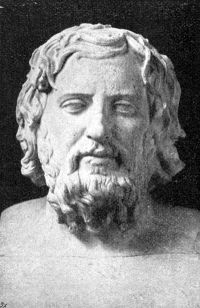
Portrait of George Grote George Grote,  History of Greece, Volume 06 (of 12…

“ If we revert back to the occasion of the battle of Salamis, we find that narrowness of space was at that time accounted the best of all protections for a smaller fleet against a larger. But such had been the complete change of feeling, occasioned by the system of manœuvring introduced since that period in the Athenian navy, that amplitude of sea room is now not less coveted by Phormio than dreaded by his enemies. The improved practice of Athens had introduced a revolution in naval warfare. ”
Source: Gutenberg

Get perspective with Kwize: daily news enlightened by great literature