Berber languages

Definition and stakes

Edgar Barclay,  Mountain life in Algeria (1882)

“ Berber belongs to a class of languages named Hamitic, which comprises ancient Egyptian, Coptic, and Ethiopian languages. An obvious peculiarity which strikes an Englishman, is the prevalence of Th sounds, both hard and soft, as in the English words ‘the’ and ‘thin.’ T is often softened into Th, and S into Z. But natives of the same village do not always pronounce words alike. For instance, one would say Aït Ménguellat, another the Aïth Ménguellath. ”
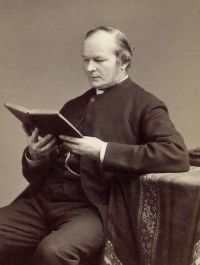
Source: Gutenberg

The treasury of languages (1873)

“ Alfuru dialect of N. Celebes, spoken in the districts of Pasan, Ratahan, and Ponasakan, sometimes called Pasan Bangko. P. J. V.
Berber.
A language spoken in many parts of N. Africa by supposed descendants of the ancient Lybians and Mauritanians; it somewhat resembles Coptic in construction, with an African vocabulary. The word Berber is a form of οἰ βάρβαροι, “people whose speech is not intelligible; gibberish.”
⁂ More properly a name given by the Arabs and Europeans to several widely spread languages of N. Africa. “Dict. Français-Berbère,” Paris, 1844. F. W. N. See Libyan.
”
Source: Gutenberg

1911 Encyclopædia Britannica, Volume 26… (1911)

“ The common germ has long since perished, or can no longer be detected, and the Tibbu and Berber languages stand side by side as fundamentally distinct, while the two races remain physically one. The Tibbu are therefore a Berber people, who in their secluded homes have had time to evolve an independent form of speech, which southwards has become largely assimilated to the Sudanese negro dialects. ”
Source: Wikisource

Get perspective with Kwize: daily news enlightened by great literature