Bernardino Luini

Definition and stakes

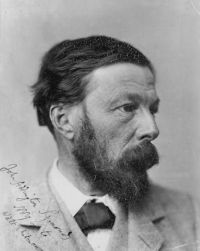
Portrait of William Michael Rossetti William Michael Rossetti,  1911 Encyclopædia Britannica, Volume 17… (1911)

“ A dignified suavity is the most marked characteristic of Luini’s works. They are constantly beautiful, with a beauty which depends at least as much upon the loving self-withdrawn expression as upon the mere refinement and attractiveness of form. This quality of expression appears in all Luini’s productions, whether secular or sacred, and imbues the latter with a peculiarly religious grace—not ecclesiastical unction, but the devoutness of the heart. ”
Source: Wikisource

Portrait of William Michael Rossetti William Michael Rossetti,  1911 Encyclopædia Britannica, Volume 17… (1911)

“ Bernardino, who hardly ever left Lombardy, had some merit as a poet, and is said to have composed a treatise on painting. The precise date of his death is unknown; he may perhaps have survived till about 1540. A serene, contented and happy mind, naturally expressing itself in forms of grace and beauty, seems stamped upon all the works of Luini. The same character is traceable in his portrait, painted in an upper group in his fresco of “Christ crowned with Thorns” in the Ambrosian library in Milan—a venerable bearded personage. ”
Source: Wikisource

James Mason,  Bernardino Luini

“ Were his patrons great men who rewarded him as he deserved—how did he fare when [Pg 16] the evening came wherein no man may work? Surely there is ample scope for the score of quaint comments and amusing if unreliable anecdotes with which Vasari livens his pages. We are confident that there will be much to reward the search, because Bernardino Luini and Giorgio Vasari were contemporaries after a fashion. Vasari would have been twenty-one years old when Luini died, the writer of the “Lives” would have seen frescoes and panel pictures in all the glory of their first creation. ”
Source: Gutenberg

Get perspective with Kwize: daily news enlightened by great literature