Boniface VIII

Definition and stakes

Portrait of Thomas Okey Thomas Okey The Story of Paris

Conflict with Boniface VIII.—The States-General—The Destruction of the Knights-Templars—The Parlement
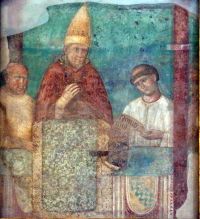
In 1302 the eyes of Europe were again drawn to Paris where the Fourth Philip, surnamed the Fair, a prince who, in Dante's grim metaphor, scourged the shameless harlot of Rome from head to foot, and dragged her to do his will in France, was grappling with the great pontiff, Boniface VIII.—the most resolute upholder of the papacy in her claim to universal secular supremacy—and essaying a task which had baffled the mighty emperors themselves.
Source: Gutenberg

Various Encyclopaedia Britannica, 11th Edition…

Here in the year 1300 new factions, subdividing the old Guelphs and Ghibellines under the names of Neri and Bianchi, had acquired such force that Boniface VIII., a violently Guelph pope, called in Charles of Valois to pacify the republic and undertake the charge of Italian affairs. Boniface was a passionate and unwise man. After quarrelling with the French king, Philip le Bel, he fell into the hands of the Colonna family at Anagni, and died, either of the violence he there received or of mortification, in October 1303.
Source: Gutenberg

Ierne L. Plunket Europe in the Middle Ages

Boniface then fulminated threats of excommunication and deposition, to which the French king replied by an act of open violence.
The agent he chose to inflict this insult was a certain Nogaret, grandson of an Albigensian heretic who had been burned at the stake, and this man joined himself to some of the nobles of the Roman Campagna, who had equally little reverence for the Head of Christendom. Heavily armed, they appeared in the village of Anagni, where Boniface VIII was staying, and demanded to see him.
Source: Gutenberg

Get perspective with Kwize: daily news enlightened by great literature