Breton language

Definition and stakes

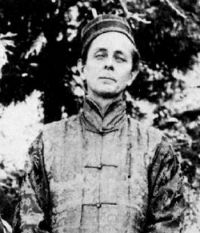
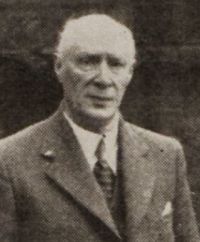
Portrait of Lewis Spence Lewis Spence,  Legends & Romances of Brittany

“ The Brezonek, the Brythonic tongue of Brittany, is undoubtedly the language of those Celtic immigrants who fled from Britain the Greater to Britain the Less to escape the rule of the Saxon invaders, and who gave the name of the country which they had left to that Armorica in which they settled. In the earliest stages of development it is difficult to distinguish Breton from Welsh. From the ninth to the eleventh centuries the Breton language is described as ‘Old Breton.’ ‘Middle Breton’ flourished from the eleventh to the seventeenth centuries, since when ‘Modern Breton’ has been in use. ”
Source: Gutenberg

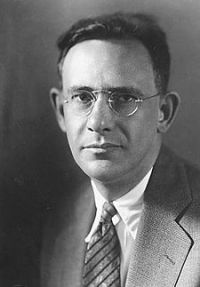
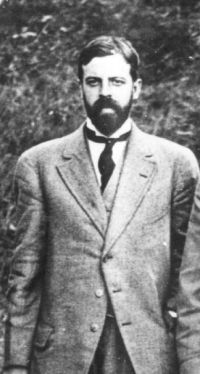
Portrait of A. L. Kroeber A. L. Kroeber,  Anthropology (1923)

“ As a matter of fact, languages often preserve their existence, and even their territory, with surprising tenacity in the face of conquest, new religions and culture, and the economic disadvantages of unintelligibility. To-day, Breton, a Keltic dialect, maintains itself in France as the every-day language of the people in the isolated province of Brittany—a sort of philological fossil. It has withstood the influence of two thousand years of contact, first with Latin, then with Frankish German, at last with French. ”
Source: Gutenberg

M. F. Mansfield,  Rambles in Brittany

“ Yes, Brittany is a land of menhirs, of legends and superstitions, but all this but makes a roundabout journey the more enjoyable, and one must really cross and recross it to its uttermost confines in order to realize its great variation of manners and customs, to say nothing of speech, for, even though the Breton tongue is dying out as a universal language, one still buys his post-card with a queer legend on its face, which looks like Dutch at first glance, but really is Breton. ”
Source: Gutenberg

Get perspective with Kwize: daily news enlightened by great literature