Cyrenaics

Definition and stakes

1911 Encyclopedia Britannica (1911)

“ ARISTIPPUS (c. 435–356 B.C.) , Greek philosopher, the founder of the Cyrenaic school, was the son of Aritadas, a merchant of Cyrene. At an early age he came to Athens, and was induced to remain by the fame of Socrates, whose pupil he became. Subsequently he travelled through a number of Grecian cities, and finally settled in Cyrene, where he founded his school. His philosophy was eminently practical (see Cyrenaics) . Starting from the two Socratic principles of virtue and happiness, he emphasized the second, and made pleasure the criterion of life. ”
Source: Wikisource

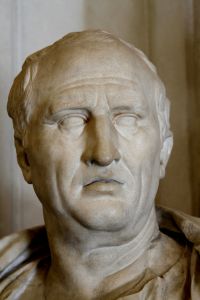
Portrait of Marcus Tullius Cicero Marcus Tullius Cicero,  The Academic Questions, Treatise De Finibus… (1891)

“ He lays down above all others the principle, that nature has but two things as objects of adoption and aversion, namely, pleasure and pain: and he refers all our pursuits, and all our desires to avoid anything, to one of these two heads. And although this is the doctrine of Aristippus, and is maintained in a better manner and with more freedom by the Cyrenaics, still I think it a principle of such a kind that nothing can appear more unworthy of a man. For, in my opinion, nature has produced and formed us for greater and higher purposes. ”
Source: Wikisource

Portrait of Xenophon Xenophon,  Cyropaedia: The Education of Cyrus

“ Then Cyrus said to him, "Son of Hyrcania, it gives me pleasure to see that you show not only friendliness, but sagacity. It is clear that our interests are the same; the Assyrians are my foes as well as yours, only they hate you now even more bitterly than they hate me. (24) We must consult together and see that not one of our present allies turns his back on us, and we must do what we can to acquire more. You heard the Mede summon the cavalry to return, and if they go, we shall be left with nothing but infantry. ”
Source: Gutenberg

Get perspective with Kwize: daily news enlightened by great literature