Danish language

Definition and stakes

Anne C. Lynch Botta,  Handbook of Universal Literature…

“ The Danish and Swedish, may be called the New Norse languages; they began to assume a character distinct from the Old Norse about the beginning of the twelfth century. The Danish language is not confined to Denmark, but is used in the literature, and by the cultivated society of Norway.
The Swedish is the most musical of the Scandinavian dialects, its pronunciation being remarkably soft and agreeable. Its character is more purely Norse than the Danish, which has been greatly affected by its contact with the German.
The Norwegian exists only in the form of dialects spoken by the peasantry.
”
Source: Gutenberg

Peter Olsen Groth,  A Danish and Dano-Norwegian Grammar (1894)

“ Thus it is that we have at the present time two kinds of Danish language, the pure Danish used in Denmark and by Danish authors, and the Dano-Norwegian used in Norway by most of the educated classes, especially in the cities, and by most of the Norwegian authors. Still it should be noted that the language spoken in Norway even by educated people is far more national in its character than the one used in writing. ”
Source: Wikisource

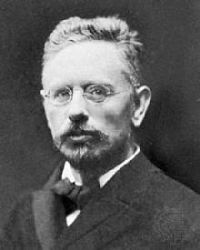
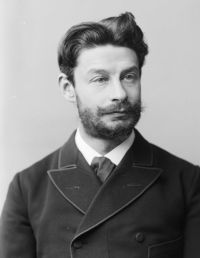
Portrait of Georg Brandes Georg Brandes,  Eminent Authors of the Nineteenth Century…

“ From Germans who were conversant with the Danish language, I have frequently heard the remark, "Paludan-Müller, not Oehlenschläger, is the greatest poet Denmark has produced in this century. How strange this has never been recognized!"
It has never been recognized because it is not the case. Intellectual superiority has here been confounded with poetic, or personal maturity preferred to the originality of genius.
”
Source: Gutenberg

Get perspective with Kwize: daily news enlightened by great literature