Discobolus

Definition and stakes

Various,  Encyclopaedia Britannica, 11th Edition…

“ Haeckel considers that the Siphonophores have two distinct ancestral lines of evolution:
1. In the Disconanthae, i.e. in such forms as Velella, Porpita, &c., the ancestor was an eight-rayed medusa (Disconula) which acquired a pneumatophore as an ectodermal pit on the ex-umbrella, and in which the organs (manubrium, tentacles, &c.) became secondarily multiplied, just as they do in Gastroblasta as the result of incomplete fission. The nearest living allies of the ancestral Disconula are to be sought in the Pectyllidae.
”
Source: Gutenberg

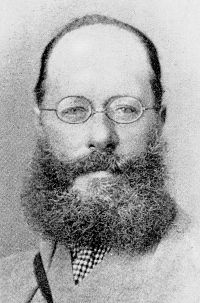
Portrait of Ernst Haeckel Ernst Haeckel,  Report on the Radiolaria Collected by H.M.S. Challenger During the Years 1873-1876…

“ Genealogical Tree of the Discoidea.—The suborder Discoidea is closely related to the Sphæroidea, but separated from it by shortening of one axis; from a simple lattice-sphere (Cenosphæra) a latticed lens or flattened spheroid is developed, whose circular equatorial plane is larger than any other section (Cenodiscus, Pl. 48, fig. 1) . The formation of this horizontal equatorial plane is perhaps indicated in that family of Sphæroidea in which four crossed radial spines, lying in one plane, are developed (Staurosphærida, Pls. 15, 31, 42) . ”
Source: Gutenberg

Various,  Astounding Stories, May, 1931

“ The hybrid began maneuvering Dixon toward the instrument enclosure. For a fleeting second the grip of the tentacles upon his shoulders loosened slightly. Dixon took instant advantage of it. Twisting himself free from the loosened tentacle in one mighty effort, he whirled and fired pointblank at the opalescent globe on the head looming above him.
The bullet smashed accurately home, shattering the globe like a bursting bubble. The great hybrid collapsed with startling suddenness, its life force instantly extinguished as the globe burst.
”
Source: Gutenberg

Get perspective with Kwize: daily news enlightened by great literature