 Samuel Taylor Coleridge,
The Complete Poetical Works of Samuel Taylor Coleridge…
“ The Eighth Commandment was not made for Bards!'" [443:1] 1823. ”
Samuel Taylor Coleridge,
The Complete Poetical Works of Samuel Taylor Coleridge…
“ The Eighth Commandment was not made for Bards!'" [443:1] 1823. ”
John Hildrop, A Proposal ſor Revising the Ten Commandments (1738)
“ The Eighth Commandment appears plainly, by the very Letter os it, to be intended purely to discourage those mean, pitisul, sniveling Rogues, that, in a sar cret cowardly Way, cheat and desraud their Neighbours j such as Robbers os Hen-roosts and Orchards, Sheep-stealers, Horse-stealers, Shop-listers, and Pickpockets j but can, by no means, be supposed to assect the open, generous, undisguised Methods, by which Men os Genius and Penetration increase their sortunes, and support their Rank and sigure in the World ”
Tamar Davis, A General History of the Sabbatarian Churches (1851)
“ In consideration of this, and the strong worldly tendencies that bind the human heart, it is not surprising that thousands who have been brought up to recognise the obligatory and sacred character of the fourth commandment, and who were fully convinced of its unalterable claims, have been induced to abandon it; while others, for the same reasons, although fully convinced of their duty, have refused to embrace it. ”
“ What right have we, under any pretence whatever, to deny the obligation of a law, so plainly, so solemnly, so awfully promulgated by the God of heaven himself? The very position of the fourth commandment in the decalogue, might teach men to regard it with peculiar veneration. It is the link that binds together heaven and earth—our duty to God and our duty to our neighbour. It is the pillar that supports the whole moral and religious fabric. To attempt to set aside the obligation to observe the fourth commandment, is therefore, in our view, a daring attack on the authority of the Lawgiver. ”
Joseph Fielding Smith, Origin of the 'Reorganized' Church and the Question of Succession
“ And yet, this commandment without which the whole earth was to be utterly wasted and destroyed—this eternal commandment that had been prepared before the foundation of the world—is not binding on them! ”
Edward Lewes Cutts, Parish Priests and Their People in the Middle Ages in England
“ Of the Ten Commandments.—Of the ten commandments of the Old Testament three relate to God, and constitute the first table; the remaining seven concern our neighbour, and are called the Commandments of the Second Table. The First Commandment is, [213] Thou shalt have no other gods before Me; by which all idolatrous worship is forbidden; and by inference all lots and incantations and superstitions [214] of letters, and such-like figments are forbidden. In the Second, where it is said, Thou shalt not take the Name of the Lord thy God in vain, all heresy is principally condemned ”
Matthew Henry, Commentary on the Whole Bible… (1700s)
“ Those that willingly walk after the commandment, even when it walks contrary to the command of God, will find the commandment an encroaching thing, and that the more power is given it the more it will claim. ”
 Robert Filmer,
Patriarcha — Chapter III
(1680)
“ If any desire the direction of the New Testament, he may find our Saviour limiting and distinguishing Royal Power, By giving to Cæsar those things that were Cæsar’s, and to God those things that were God’s. Obediendum est in quibus mandatum Dei non impeditur. We must obey where the Commandment of God is not hindred; there is no other Law but God’s Law to hinder our Obedience. ”
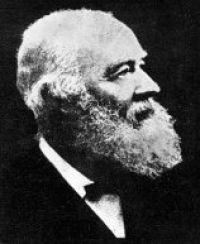 John Ball,
A Treatise of the Covenant of Grace
(1645)
“ God then doth approve, and command the returne of his people that have gone astray, he waiteth for their amendment, useth meanes to bring them to the knowledge of themselves, is not wanting to them in any thing that in justice or promise he ought to doe for them: but yet it is not his will effectually to bring every man to repentance, whom he doth command to repent. The Commandment of God shews what is our duty, but not what God will worke in every man: the commandment lieth upon them that be obstinate and rebellious, but they have not grace to will their conversion or amendment. ”
Clement I, translated by Alexander Roberts and James Donaldson, Ante-Nicene Christian Library/Volume I (1865)
“ Let us then, men and brethren, with all energy act the part of soldiers, in accordance with His holy commandments. Let us consider those who serve under our generals, with what order, obedience, and submissiveness they perform the things which are commanded them. All are not prefects, nor commanders of a thousand, nor of a hundred, nor of fifty, nor the like, but each one in his own rank performs the things commanded by the king and the generals. The great cannot subsist without the small, nor the small without the great. ”
Reginald Vere Laurence, The Cambridge Modern History, Volume 2… (1904)
“ They are to take the vows of poverty and chastity, and obedience to the General whom they set over themselves, in all things which concern the observance of their Rule. The power granted to the General is unprecedented in its extent. The right of command belongs to him entirely. ”
 François Guizot,
World's Best Histories — Volume 7…
“ Strictly faithful to the spirit of the Gospel as to the supreme equality of all men in the presence of God, whatever might occasionally have been his consideration for the wishes of Louis XIV., Bossuet, when expounding the fourth commandment, the respect and submission due by children to their parents, was satisfied with adding,—"What else is commanded to us by the fourth commandment? ”
 John Henry Newman,
Tracts for the Times
(1834)
“ If ever, then, we are tempted to be ashamed of Christ and of His words, or to allow His high and heavenly mission to be thought lightly of in the person of His Deputies and Ministers, let us remember, that it is no matter of personal consideration, that two sacred interests are involved, the glory of God and the edifying of His people. Let us remember that, as Christ received of the Father "a commandment," so we too have received a commandment from Him, the "commandment" as well as the "power" to declare to His people the message of forgiveness ”
Reformed Presbytery of North America, The Auchensaugh Renovation of the National Covenant and
“ In regard, that though a Christian should lose all, yea, even life itself, upon the account of it, yet the covenant will bring in all with advantage to a hundred fold, and glory to the overplus, when it is duly observed. 6th, That the undertakers have God's call and commandment to set about it; this is that which, above all other considerations, inspires a Christian with undaunted courage and alacrity in the undertaking of a duty, when it is made clear that the person has God's call and command for a warrant ”
Portal:The Episcopal Church, The Book of Common Prayer (2007)
“ The original 1571, 1662 text of this Article, omitted in the version of 1801, reads as follows: “General Councils may not be gathered together without the commandment and will of Princes. And when they be gathered together, (forasmuch as they be an assembly of men, whereof all be not governed with the Spirit and Word of God,) they may err, and sometimes have erred, even in things pertaining unto God. Wherefore things ordained by them as necessary to salvation have neither strength nor authority, unless it may be declared that they be taken out of holy Scripture.” ”
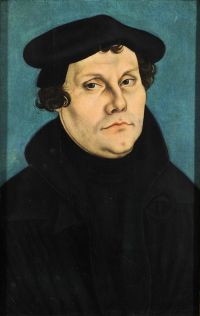 Martin Luther,
Martin Luther's Large Catechism…
“ Therefore, above all things, our young people should have this commandment earnestly enforced upon them, and they should be trained to hold this and the First Commandment in high regard; and whenever they transgress, we must at once be after them with the rod and hold the commandment before them, and constantly inculcate it, so as to bring them up not only with punishment, but also in the reverence and fear of God. ”
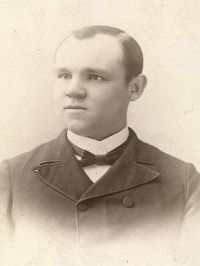 James E. Talmage,
Jesus the Christ — Chapter 31
“ THE GREAT COMMANDMENT. [13] The Pharisees, covertly rejoicing over the discomfiture of their rivals, now summoned courage enough to plan another attack of their own. One of their number, a lawyer, by which title we may understand one of the scribes who was distinctively also a professor of ecclesiastical law, asked: "Which is the first commandment of all?" or, as Matthew states the question: "Master, which is the great commandment in the law?" ”
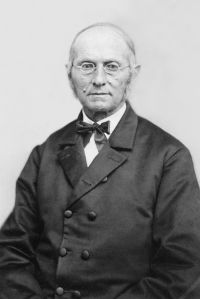 Joseph Bates,
The Seventh Day Sabbath, a Perpetual Sign…
“ I never can be made to believe that our glorious Commander designed that we should leave our sacrifices smoking on the altar of God, in the midst of the enemies' land, but rather that we should be pushing onward from victory to victory, until we are established in the Capital of His kingdom. ”
 Claire von Glümer,
A Noble Name; or, Dönninghausen
“ And the allusion to the fifth commandment had its effect."If this is the way you take it, I must give up my plan," he said. "I enjoin upon no one any transgression of duty, any sin against God's commands. But you take a wrong view of it. ”
John Henry Newman,
Tracts for the Times
(1834)
“ In like manner, the words in Genesis ii. and the practice of the Apostles in the Acts, are quite warrant enough for the Sanctification of the Lord's Day, even though the 4th Commandment were not binding on us. For the same reason we continue the Patriarchal and Jewish rule of paying tithe to the Church. Some portion of our goods is evidently due to God;—and the ancient Divine Command is a direction to us in a case when reason and conscience have no means of determining. ”
Oliver Prescott Hiller, Sermons on the Ten Commandments (1868)
“ In a secondary sense, the command to honor father and mother implies the honor due by wards to their guardians, in case the parents are deceased. In a wider sense, it means to honor the king or magistrates, since these provide for the common good, as parents do for the good of their children. By this commandment, in the widest sense, is meant, that men should love their country, because this nourishes and protects them. ”
 Orson Spencer,
Letters Exhibiting the Most Prominent Doctrines of the Church of Jesus Christ of Latter-Day Saints
“ The first object of this priestly order is to teach all nations to become loyal and good citizens of the kingdom of God, observing all the commandments of God. One universal commandment of God is, for all men every where to repent and be baptized, and keep all other laws of God, as they shall be dispensed from the great High Priest through the delegated authorities. Now if all men do not obey these commands, they are liable to be dealt with as transgressors, and punished as evil doers. The command to obey is imperative upon all men. ”
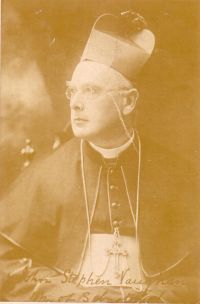 John S. Vaughan,
The Purpose of the Papacy
“ It exists for the express purpose of combating error and repressing evil, in whatever form it may appear; and whether it be instigated by the devil, or the world, or the flesh. But, let us ask, Who ever heard of an army without a chief? An army without a supreme commander is an army without subordination and without law or order; or rather, it is not an army at all, but a rabble, a mob.The supreme head of Christ's army—of Christ's Church upon earth, is our Sovereign Lord the Pope. Some will not accept his rule, and refuse to admit his authority. ”
Thomas Ridgley, A Body of Divinity, Vol. 4 (of 4…
“ The duties required in the tenth Commandment are, such a full contentment with our own condition, and such a charitable frame of the whole soul toward our neighbour, as that all our inward motions and affections touching him tend unto and further all that good which is his. ”
The Philippine Islands, 1493-1898…
“ The forces are to be sent merely to escort and protect the preachers of the faith and subjects of the king who sends them, and to see that they are allowed to enter the land, and may preach where they choose and consider it needful, and so that those who hold the government shall not hinder the others from hearing and receiving the doctrine. ”
Bishop of Milan Saint Ambrose, The Letters of S. Ambrose, Bishop of Milan
“ When we have to consult on military matters we should look for the opinion of one who is versed in war, and follow his counsel; when we treat of religion God is to be considered. No man is injured by Almighty God being preferred before him. He may keep his own opinion, you do not constrain any man to worship against his will, and your Majesty ought to have the same liberty, and every one should be content to be unable to extort from the Emperor, what it would be a hardship for the Emperor to desire to extort from him. ”
Various, The Catholic World, Vol. 11, April…
“ All human government rests upon this basis, whether of patriarch, prophet, priest, king, chieftain, pope, bishop, emperor, or people in organized assembly.The principle underlying every form of government is that of command and obedience, because the government of the universe is one of law. Both command and obedience are of the same nature and alike honorable, because there can be but one source of law, and that is God; and he in his humanity obeyed the laws of his own creation in his divinity, and personally fulfilled the obligations of his own imposition. ”
 Leonard Woolsey Bacon,
A History of American Christianity
“ It is directly to the people of such communities, not through the medium of persons or committees that represent national sectarian interests, that the new commandment is to be preached, which yet is no new commandment, but the old commandment which they have had from the beginning. ”
John Hildrop, A Proposal ſor Revising the Ten Commandments (1738)
“ The Seventh Commandment, like the rest, could be only intended to secure and promote the Good os the Public, by preserring the Order os Society, and discouraging Luxury and Idleness among the lower Part os the People, who alone need or require such Restraints to be laid upon them, as not having Sense, Taste, or Politencss enough, to direct and govern themselves. ”
Charles Coppens, The spiritual exercises of St. Ignatius (1916)
“ The Fourth Commandment obliges subjects to reverence and obey their superiors when they mean to impose an obligation of conscience; and they must be supposed to mean it when the good of souls or the glory of God requires them thus to use their authority. A precept of obedience in virtue of the vow is rarely imposed; but commands in matters of some importance derive from the natural law power to oblige any subjects to obey their lawful superiors, independently of any vow. If serious consequences are likely to follow from the violation of the command, the sin may be grievous. ”
The European Concert in the Eastern Question (1885)
“ Wherefore it is regarded as our imperial duty, knowing the benefits of the divine prescience, that we should be always disposed to consecrate our care and solicitude to the shielding and protection of our faithful subjects, who accurately fulfil the duties of obedience and submission to our Sublime Porte, and to provide for them quiet and safety under the life-giving shadow of our power. ”
 Philip Schaff,
Nicene and Post-Nicene Fathers…
(1885)
“ The expressions, “committed unto me,” and “according to the commandment,” show the matter to be worthy of credit, so that no one should think it discreditable, nor be hesitating about it, or discontented. If then it is a commandment, it is not at my disposal. I fulfill what is commanded. For of things to be done, some are in our power, others are not. For what He commands, that is not in our power, what He permits, is left to our choice. For instance, “Whosoever shall say to his brother, Thou fool, shall be in danger of hell fire.” (Matt. v. 22.) This is a commandment. ”
The Philippine Islands, 1493-1898…
“ I gave testimony regarding that to the inquisitor-general, so that he on his part might procure from your Majesty the appointment for those forts of a minister—a matter so important for the purity of our holy faith—since your Majesty strives, as your chief glory, to preserve it in all the kingdoms and provinces of your monarchy; and it is most necessary [69] in them, as they are in the midst of many sectaries, and, as those people are very warlike, they are more ready to receive errors. ”
John Ball,
A Treatise of the Covenant of Grace
(1645)
“ For the Commandement is a lamp, and the Law is light, and reproofes of instruction are the way of life. The Commandements leade directly to that life, which deserves the name of life, eternall life. The Traveller takes the next way to his Journeyes end: No wise man will willingly step one foot out of the way to Heaven. If our limmes be crooked, we omit nothing that Art or Exercise can doe to set them strait: and shall not I take care to rectifie my soul, and bring it into right order? ”
Saint Aquinas Thomas, Summa Theologica, Part II-II (Secunda Secundae…
“ The establishment of a religious order for the purpose of soldiering does not imply that the religious can wage war on their own authority; but they can do so only on the authority of the sovereign or of the Church. ”
Matthew Henry, Commentary on the Whole Bible… (1700s)
“ That they join themselves to him as subjects to their prince and soldiers to their general, by an oath of fidelity and obedience, to serve him, not occasionally, as one would serve a turn, but to be constantly his servants, entirely subject to his command, and devoted to his interest. ”
Joseph BatesOliver Prescott HillerWestminster Assembly MaimonidesJoseph DeharbeJohn HildropMatthew HenryAnonymousJohn Henry Newman
 Dwight Lyman MoodyMartin LutherSamuel Taylor ColeridgeFrançois GuizotEdward Lewes CuttsPortal:The Episcopal ChurchJohn BallRobert FilmerJoseph Fielding SmithTamar DavisClaire von Glümer
