Etruscan language

Definition and stakes

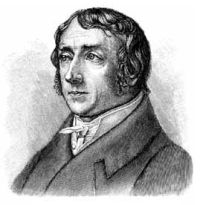
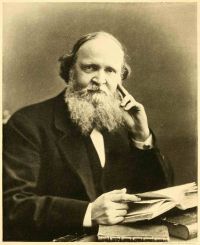
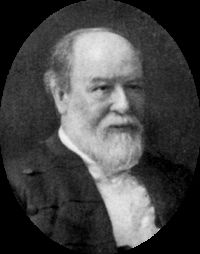
Portrait of Hugh Macmillan Hugh Macmillan,  Roman Mosaics; Or, Studies in Rome and Its Neighbourhood

“ Their language, which survived their absorption by Rome, almost as late as the time of the Cæsars, finally disappeared; and though thousands of inscriptions in tombs and on works of art remain—which we are able to read from the close resemblance of the alphabet to the Greek—the key to the interpretation of the language is gone beyond recall. In an age that has unravelled the Egyptian hieroglyphics, and the cuneiform characters of Assyria, and the runic inscriptions of Northern Europe, the Etruscan language presents almost the only philological problem that refuses to be solved. ”
Source: Gutenberg

Paul Lachlan MacKendrick,  The Mute Stones Speak: The Story of Archaeology in Italy

“ As a culture of cities, Etruria must have had its effect, not without cross-fertilization from Greek practice, upon Roman town-planning. Etruscan political forms and practice recur in Roman usage. The language claims our attention for the light it throws, however dimly, on Etruscan politics, religion, and family life, and for the challenge it has presented to modern scientific scholarship to penetrate its mystery. ”
Source: Gutenberg

Hutton Webster,  Early European History

“ ETRUSCAN CIVILIZATION These Etruscans, like the Hittites of Asia Minor, [3] are a mysterious race. No one as yet has been able to read their language, which is quite unlike any Indo-European tongue. The words, however, are written in an alphabet borrowed from Greek settlers in Italy. Many other civilizing arts besides the alphabet came to the Etruscans from abroad. Babylonia gave to them the principle of the round arch and the practice of divination. [4] Etruscan graves contain Egyptian seals adorned with hieroglyphics and beautiful vases bearing designs from Greek mythology. ”
Source: Gutenberg

Get perspective with Kwize: daily news enlightened by great literature