Filippo Maria Visconti

Definition and stakes

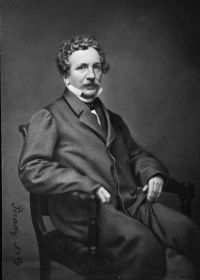
Jacob Burckhardt The Civilization of the Renaissance in Italy…

Filippo Maria Visconti The despotism of the Dukes of Milan, whose government from the time of Giangaleazzo onwards was an absolute monarchy of the most thorough- going sort, shows the genuine Italian character of the fifteenth century. The last of the Visconti Filippo Maria (1412-1447) , is a character of peculiar interest, and of which fortunately an admirable description has been left us. What a man of uncommon gifts and high position can be made by the passion of fear, is here shown with what may be called a mathematical completeness.
Source: Wikisource

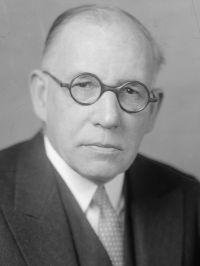
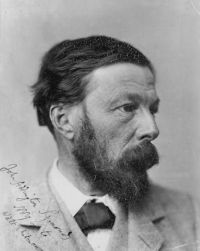
Portrait of Rafael Sabatini Rafael Sabatini Bellarion the Fortunate: A romance (1926)

Vignate was in arms again, as were also Estorre Visconti and his nephew Giovanni Carlo, and a host of lesser insurgents, chief of whom was the Duke's own brother, that Filippo Maria Visconti who was Count of Pavia. By the Ghibellines who had fled to him from Milan during the days of Malatesta and Boucicault's domination, Filippo Maria had been flattered into believing that he was that party's only hope in Northern Italy. His ambition thus aroused, he was ready to take advantage of the general distraction, and to appropriate for himself the ducal chlamys.
Source: Gutenberg

1911 Encyclopædia Britannica, Volume 24… (1911)

He served the-Visconti against the Venetians and then the Venetians against the Visconti; he attacked the pope, deprived him of the Romagna, and later defended him; he married in 1441 Bianca, the only daughter of Filippo Maria Visconti, duke of Milan, and received Pontrenioli and Cremona as dowry and the promise of succession to the duchy of Milan. The short-lived Ambrosian republic, which was established by the Milanese on the death of Visconti (1447) , was overthrown by Francesco, who made his triumphal entry as duke of Milan on the 25th of March 1450.
Source: Wikisource

Get perspective with Kwize: daily news enlightened by great literature