“ For the Forum symbolises all human civilisation. It is the symbol of the common meeting ground—the common sentiments and needs—of human beings, where rancours are laid aside for the business of life—its common but its noblest business, civic, "civilised," pursuits. It is the symbol of human greatness also, for the Roman never suffered the common necessities to force upon him an ignoble peace. The battle-ground became the centre of civic life, but only on condition that the interests for which men should combat were never sacrificed to the interests for which men should co-operate. ”
Forum (Rome)
Definition and stakes
Quotes about “Forum (Rome)”
S. Russell Forbes, Rambles in Rome
“ The gate on the left leads to the double row of shops that surrounded the Forum of Trajan. Custodi at the Forum. Following this street, we pass the medieval Torre del Grillo on our left. On our right are massive remains of the Second Wall of Rome. (See page xviii .) Turning to the right under the arch, we are withinTHE FORUM OF AUGUSTUS."The reason of his building a new forum was the vast increase in the population, and the number of cases to be tried in the courts; for which the two already existing not affording sufficient space, it was thought necessary to have a third. ”
Hutton Webster, Early European History
“ From this place Roman orators addressed their assembled fellow-citizens.THE GRANDEUR OF ROME How splendid a scene must have greeted an observer in ancient times who, from the height of the Capitol, gazed at the city before him. The Forum was then one radiant avenue of temples, triumphal arches, columns, and shrines. And beyond the Forum stretched a magnificent array of theaters and amphitheaters, enormous baths, colossal sepulchers, and statues in stone and bronze. So prodigious an accumulation of objects beautiful, costly, and rare has never before or since been found on earth. ”
Emma Marshall,
No. XIII; or, The Story of the Lost Vestal
“ It is very hard for us to realise the events of the fourth century, and any picture of those times, and of the men and women who took part in the scenes then enacted, must, at the best, be shadowy. To the eye of the casual observer, Rome, seated on her seven hills, under the sway of the Emperor Diocletian, was at the zenith of fame and prosperity.The throngs in the Forum—the gay crowds in the gardens of Circus Maximus, the race-course, the arena—all told of wealth and prosperity and pleasure. ”
W. Warde Fowler, Social life at Rome in the Age of Cicero
“ But of the social life of the city the Forum was the heart, and of any prudent or scientific use of capital the Forum knew hardly anything.Of the two classes of business men we have been describing, the tax-farmers and the money-lenders, it is hard to say which wrought the most mischief in the Empire; they played into each other's hands in wringing money out of the helpless provincials. Together too they did incalculable harm, morally and socially, among the upper strata of Roman society at home. Economic maladies react upon the mental, and moral condition of a State. ”
William Dean Howells,
Roman Holidays, and Others
“ If I were to go again to the Palatine, I would take care to fortify myself with such structural facts from Hare's Walks in Rome, or from Murray, or even from Baedeker, as that it was the home of Augustus and Tiberius, Domitian and Nero and Caligula and Septimius Severus and Germanicus, and a very few of their next friends, and that it radically differed from the Forum in being exclusively private and personal to the residents, while that was inclusively public and common to the whole world. ”
S. Russell Forbes, Rambles in Rome
“ In short, the Forum is dressed up in quite a new attire, and many old visitors would scarcely recognize it in its modern garb. Crowds of spectators lean against the barriers every day, anxiously reviewing the carting of the earth, and awaiting for artistic valuables to "turn up." ”
Augustus J. C. Hare,
Walks in Rome
“ This spot, where the senate had its assemblies, where the rostra were placed, where the destinies of the world were discussed, is the most celebrated and the most classical of ancient Rome. It was adorned with the most magnificent monuments, which were so crowded upon one another, that their heaped-up ruins are not sufficient for all the names which are handed down to us by history. The course of centuries has overthrown the Forum, and made it impossible to define ”
A. D. F. Hamlin,
A Text-Book of the History of Architecture
“ FORA AND BASILICAS. The fora were the places for general public assemblage. The chief of those in Rome, the Forum Magnum, or Forum Romanum, was at first merely an irregular vacant space, about and in which, as the focus of the civic life, temples, halls, colonnades, and statues gradually accumulated. These chance aggregations the systematic Roman mind reduced in time to orderly and monumental form; successive emperors extended them and added new fora at enormous cost and with great splendor of architecture. ”
Frank Frost Abbott, The Common People of Ancient Rome
“ Each of them not only had its forum, its temples, colonnades, baths, theatres, and arenas, but also developed a political and social organization like that of the city of Rome. It had its own local chief magistrates, distinguished by their official robes and insignia of office, and its senators, who enjoyed the privilege of occupying special seats in the theatre, and it was natural that the common people at Ostia, Ariminum, or Lugudunum, like those at Rome, should expect from those whom fortune had favored some return for the distinctions which they enjoyed. ”
“ Certainly the Capitol seen from this side isn’t commanding. The hill is so low, the ascent so narrow, Michael Angelo’s architecture in the quadrangle at the top so meagre, the whole place somehow so much more of a mole-hill than a mountain, that for the first ten minutes of your standing there Roman history seems suddenly to have sunk through a trap-door. It emerges however on the other side, in the Forum; and here meanwhile, if you get no sense of the sublime, you get gradually a sense of exquisite composition. Nowhere in Rome is more colour, more charm, more sport for the eye. ”
William S. Walsh, Around the world in eighty minutes (1894)
“ FORUM ROMANUM, ROME, ITALY. The ancient Forum of Rome exists only in ruins. That it lay at the foot of the Capitoline and Palatine Hills in Rome is certain from the remnants that survive. But the exact area it occupied and the true situation of the various buildings which once covered it are matters of dispute and uncertainty. Conspicuous among the ruins are three beautiful Corinthian columns of white marble belonging to the temple raised to Vespasian by Domitian ”
Gaston Boissier, Cicero and his friends (1897)
“ The politicians of those times had more need of correspondence with each other than those of the present day. The proconsul starting from Rome to govern some distant province felt that he was withdrawing altogether from political life. To pass several years in those out-of-the-way countries which the public rumour of Rome did not reach, was very irksome to men accustomed to the stir of business, the agitations of parties, or, as they said, the broad daylight of the Forum. ”
Augustus J. C. Hare,
Walks in Rome
“ Maria Campitelli—Palazzo Margana—Convent of the Tor de' Specchi. THE second turn on the right of the Roman Forum is the Via dei Fienili, formerly the Vicus Tuscus, so called from the Etruscan colony established there after the drying up of the marsh which occupied that site in the earliest periods of Roman history. During the empire, this street, leading from the Forum to the Circus Maximus, was one of the most important. Martial speaks of its silk-mercers; from an inscription on a tomb we know that the fashionable tailors were to be found there ”
Gaston Boissier, Cicero and his friends (1897)
“ That which filled the streets and squares of the great city, spent its time in the theatre, took part in the riots of the Forum, and sold its votes in the Campus Martius, was only a collection of freedmen and foreigners among whom only disorder, intrigue, and corruption could be learnt. Life was more honest and healthy in the municipia. The citizens who inhabited them remained for the most part strangers to the questions that were debated in Rome, and the rumour of public affairs did not reach them. ”
Baron Thomas Babington Macaulay Macaulay, Lays of Ancient Rome
“ Nor could anything be more natural than that the poets of the next age should embellish this story, and make the celestial horsemen bear the tidings of victory to Rome. Many years after the temple of the Twin Gods had been built in the Forum, an important addition was made to the ceremonial by which the state annually testified its gratitude for their protection. Quintus Fabius and Publius Decius were elected Censors at a momentous crisis. It had become absolutely necessary that the classification of the citizens should be revised. ”
Richard P. Spiers, John Bilson, William R. Lethaby and Henry H. Statham, 1911 Encyclopædia Britannica, Volume 2… (1911)
“ But already in the time of Julius Caesar the Forum Romanum had become too small, and others were built by succeeding emperors. In order to find room for these, not only were numerous crowded sites cleared, but vast portions of the Quirinal hill were cut away to make place for them. The Fora added were those of Julius Caesar, Augustus, Trajan, Nerva and Vespasian. Outside Rome, in provincial towns and in Africa and Syria, the Forum was generally built on the intersection of the two main streets, and was surrounded by porticoes, temples and civic monuments. ”
George Willis Botsford,
The Mentor: Among the Ruins of Rome…
“ Personal service to the empire was their chief title to office and the basis on which successive rulers built up their power. HOW THE FORUM PROBABLY LOOKEDTemple of Julius Cæsar Palace of the Cæsars Basilica JuliaTemple of Vesta Temple of Castor and Pollux THE FORUMThe city of Rome itself abounds in places and objects of interest more easily reached than the Campagna. It requires at least a teaspoonful of information to appreciate the features of Rome; and to those who are mentally equipped no spot furnishes keener enjoyment than the Forum. ”
Herbert M. Vaughan, The Naples Riviera
“ But if the general use [pg 47] of the piazza is characteristic of the modern second-class Italian city, this concentration of life was far more marked in the ancient Roman town, wherein the Forum must have appeared as the very heart of the whole body social and politic. Roman city life indeed displayed two strongly antagonistic phases:—the utmost privacy in the home, the most public exhibition in the Forum, where every trade and form of business were carried on in the open air, and whither pursuit of gain, or pleasure, or religious duty led all the citizens to direct their steps. ”
“ But now the slender piping of the Voice of Truth is stifled by the raucous note of eventide vendors of the Capitale, the Libertà and the Fanfulla; and Rome reading unexpurgated news is another Rome indeed. For every subscriber to the Libertà there may well be an antique masker and reveller less. As striking a sign of the new régime is the extraordinary increase of population. The Corso was always a well-filled street, but now it’s a perpetual crush. ”
James Lewis, The Two Great Republics: Rome and the United States
“ In one important respect in the management of their political affairs, the citizens of the Roman republic occupied a most disadvantageous position in comparison with the citizens of any modern republic. The greatest defect in the political organization of Rome, as of all other ancient republics, lay in the utter absence of representative legislative assemblies. The want of such institutions, in the absence of all the other causes of disruption, might of itself have been sufficient to have caused the downfall of the Roman republic. ”
S. Russell Forbes, Rambles in Rome
“ The contemplation of the city, however, produces the effect of a vast and solid reading of history. Each of the great representations of the city, always and differently mistress of the world, seems to have chosen its respective quarter—the Rome of the kings and emperors is spread out on the Palatine, Esquiline, and Quirinal; republican Rome occupies the Capitol and Aventine; whilst Christian Rome, isolated and solitary, reigns on the Cœlian and Vatican eminences. ”
Benito Mussolini,
My autobiography
“ It is not a thing of small moment [295] that all public utilities are conducted with an efficiency which I might call American, and that the Italian bureaucracy, proverbially slow, has become eager and agile.I have given particular attention to the Capital. Rome is a universal city, dear to the heart of Italians and of the whole world. It was great in the time of the Roman Empire and has conserved a universal light. It was the historical seat and the centre of diffusion of Christianity. Rome is first of all a city with the aura of destiny and history. It is the Capital of the New Italy. ”
Livy, The History of Rome, Books 01 to 08
“ Where there is an equal share of strength, is there also an equal share in the government? This indeed in itself reflects no extraordinary degree of honour on us, as still acknowledging Rome to be the metropolis of Latium; but that it may possibly appear to do so, has been effected by our long-continued forbearance. But if ye ever wished for an opportunity of sharing in the government, and enjoying freedom, lo! this opportunity is now at hand, presented both by your own valour and the bounty of the gods. Ye have tried their patience by refusing them soldiers. ”
John Moore, A View of Society and Manners in Italy…
“ In the two wings of the modern palace, called the Campidoglio, the Conservators of the city have apartments; their office is analogous to that of the ancient Ædiles. In the main body an Italian nobleman, appointed by the Pope, has his residence, [437] with the title of Senator of Rome; the miserable representation of that Senate which gave laws to the world. The most defaced ruin, the most shapeless heap of antique rubbish in all Rome, cannot convey a feebler image of the building to which they belonged, than this deputy of the Pope does of that august assembly. ”
Frank Frost Abbott, Roman politics (1923)
“ In Italy, at the outset, she gave conquered cities civil rights and the right of self-government. The Social War in 91-89 B.C. forced her to grant them the political rights of Roman citizens also. Henceforth Italy was a political unit, but, inasmuch [Pg 22] as ballots could be cast at Rome only, voters outside the city were at a disadvantage. The Roman Republic never got far enough away from the tradition of the city-state to recognize the fact that citizens could cast their ballots elsewhere than at Rome or that other communities could send their representatives to Rome. ”
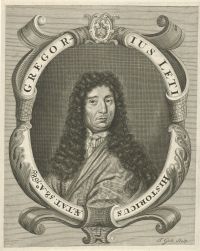
Gregorio Leti,
Il nipotismo di Roma, or, The History of the Popes Nephews
“ I do not wonder, that in the Court of Rome, through a long experience, even the dullest and rawest Politicians do become at last most expert; since that from all the parts of the World, Rome receives none but the wisest and most able Statesmen to negotiate with her. ”
Baron Edward Bulwer Lytton Lytton, Rienzi, the Last of the Roman Tribunes
“ And what a pity that will be!—If you believe the Tribune, he is the only man that can save Rome. What, you, the finest people in the world—you, not able to save yourselves!—you, bound up with one man—you, not able to dictate to the Colonna and Orsini! Why, who beat the Barons at San Lorenzo? ”
George Gissing,
By the Ionian Sea: Notes of a Ramble in Southern Italy
“ We note the decay of central power, and the growth of political anarchy; we observe the process by which Roman nobles, the Senatorial Order when a Senate lingers only in name, are becoming the turbulent lords of the Middle Ages, each a power in his own territory, levying private war, scornful of public interests. The city of Rome has little part in this turbid history, yet her name is never mentioned without reverence, and in theory she is still the centre of the world. ”
Frank Frost Abbott, Roman politics (1923)
“ The development of the city-state into a world-empire is well illustrated by the decadence of the popular assembly which represented the narrow, selfish interests of the city of Rome, and we are not surprised to find the election of magistrates transferred from this body to the senate under the successor of Augustus. ”