Frederick the Wise

Definition and stakes

L. Mühlbach,  Frederick the Great and His Family…

“ I cannot be angry with him, for he has thought and acted as a wise man; and were I not Frederick, I would gladly be D’Alembert. I will not love him less because he has refused my offer. Ah, it is a real pleasure to know that there are still men who are independent enough to exercise their will and judgment in opposition to the king. Princes would be more noble, if those with whom they associated were not so miserable and shallow-hearted. D’Alembert shall be a lesson and a consolation to me; there are still men who are not deceivers and flatterers, fools and betrayers, but really men. ”
Source: Gutenberg

T. F. Tout,  The Empire and the Papacy, 918-1273

“ Frederick’s visions of a lay Papacy and of an Ecclesiastical Revolution. Frederick remained in Italy, struggling with all his might against the papal partisans, and holding his own so far that Innocent found it wise to remain at Lyons. Now that all possibility of reconciliation with the Church was cut off, Frederick threw prudence to the winds. He no longer scrupled against soliciting the help of the heretical Cathari that still swarmed all over Lombardy. Visions of power such as he had never imagined in the days of his success now began to flit before his mind. ”
Source: Gutenberg

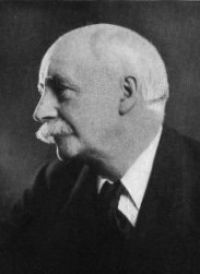
Portrait of Frederick James Gould Frederick James Gould,  The Children's Plutarch: Tales of the Romans (1910)

“ Not only could he work; he could talk in a witty, sensible way, and when a neighbor went to law before a judge Cato would often speak on his behalf, so that, after a while, he went to act as a pleader, or speaker, in the law courts of Rome. People would repeat his shrewd sayings, such as:
“Wise men learn more from fools than fools from the wise; for the wise avoid the errors of fools, while fools do not profit by the examples of the wise.”
”
Source: Wikisource

Get perspective with Kwize: daily news enlightened by great literature