“ But, if possible, we must live and let live. The elements of reconstruction are always at hand. Anglo-Irish culture is indeed dead, but Gaelic culture is only seriously sick, and on that side there is always room for hope. Sooth to say, its sickness consists above all in the fact that the Irish language is no longer spoken in a great part of the country. But, on the other hand, where it is preserved, that same language is spoken in all its purity. By going there to find it all Ireland will gradually become Gaelic. ”
Gaelic culture
Definition and stakes
The theme of “Gaelic culture” has been addressed by authors such as Nigel MacNeill, Alexander MacBain, Daniel Turner Holmes, William Ridgeway, Edmund C. Quiggin and William J. Gruffydd and Alexander Stewart. It is often associated with terms like Ireland, language, Irish, literature and people.
Quotes about “Gaelic culture”
American-Irish Historical Society, The journal of the American-Irish Historical Society…
“ I think that those who have labored so hard for so many years to awaken interest in Gaelic culture have not only done a service for the members of the Irish race in this country, but, as illustrated by this really beautiful concert, they have rendered a valuable service to the whole country. ”
Nigel MacNeill, The literature of the Highlanders
“ English thought and culture also reach the people through the hundreds of University-bred ministers who preach Gaelic in Highland pulpits.These important changes in the Celtic world are not effected without many venerable regrets being uttered by sentimentalists both in Ireland and Scotland. If we look across the channel we find that the Irish Gael indulges in the same unpractical wail over an irrevocable past, that we find so prevalent with his brother of Albin. The cry of the sentimentalist there is even more intense, more persistent. ”
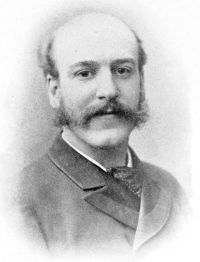 Alfred Nutt,
Folk-Lore
(1898)
“ The conditions under which Gaelic traditional literature has come into being are precisely those I have previously indicated. The professional literary class was strong, and very well organised; it elaborated and handed down extremely rigid literary conventions; it effected a compromise with the representatives of Christian classic culture which enabled the preservation in large measure of the traditional romantic material, and it remained for some fifteen hundred years, at least, in close touch with every section of the community whose emotions and imaginings it faithfully interpreted. ”
Alfred Nutt,
Beside the fire
(1890)
“ Not infrequently, however, the actors in the stories are wholly human, or human and animal. Gaelic folk-lore is rich in such stories, owing to the extraordinary tenacity of the fairy belief. We can hardly doubt that the Gael, like all other races which have passed through a certain stage of culture, had at one time an organised hierarchy of divine beings. But we have to piece together the Gaelic god-saga out of bare names, mere hints, and stories which have evidently suffered vital change. ”
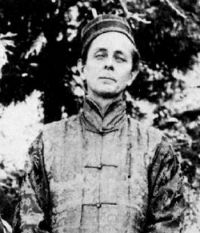 W. Y. Evans-Wentz,
The Fairy-Faith in Celtic Countries
“ And until this mystic message is interpreted, men cannot discover the secret of Gaelic myth and song in olden or in modern times, they cannot drink at the ever-flowing fountain of Gaelic genius, the perennial source of inspiration which lies behind the new revival of literature and art in Ireland, nor understand the seeming reality of the fairy races. ”
Thomas O'Neill Russell, Beauties and Antiquities of Ireland
“ If it had not been for Scandinavian burnings and plunderings, mediæval Gaelic literature would, even now, be so immense that it would command the respect of the world at large. Those who say that the bulk of mediæval Gaelic writings has come down to us—and there are those that have the unspeakable hardihood to say so—must be classed as very prejudiced, or very ignorant of Irish history. ”
William Larminie, West Irish folk-tales and romances (1893)
“ For centuries—we do not know how many—before the Norman invasion, the inhabitants had spoken Gaelic. The absence of political unity, the ceaseless wars and forays, must all have tended to fuse the population and obliterate original differences much more than a settled state of society. Yet they exist. The differences in folk-lore are not greater than other differences. Ethnologists know that the so-called Gaelic race is really a compound one, containing in addition to the true Celtic (Aryan) element probably two that are not Aryan—a Mongolian or Finnish element, and an Iberian element. ”
Nigel MacNeill, The literature of the Highlanders
“ In talking once of the emotional element of the Celtic nature, an enthusiastic Irish scholar jocularly remarked to the writer that the Gael was dying away in song. If this turns out to be true, it is evident that his remains will be examined with pious and scientific care.It is interesting to find that, meagre as Gaelic literature is—and the great wonder is that what we have should have been produced in so unpromising a field—it extends over sixteen centuries. ”
Alfred Nutt,
Folk-Lore
(1898)
“ The homogeneity which is so marked a feature of Gaelic is lacking in Welsh literature, and whilst the one community has preserved the traditional romance with marvellous fulness and accuracy, the other has allowed it to perish almost utterly. ”
Cornelius Weygandt, Irish Plays and Playwrights
“ The drama of the Celtic Renaissance is of an ancestry as mixed as is that of the people of Ireland themselves. There is less in it perhaps of the Gael than in them, for Gaelic literature, until to-day, never approached nearer to the drama than the dialogue, the racy give-and-take of two characters, alike of lively imagination, whether gentle or simple. ”
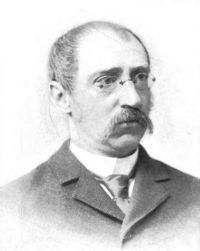 Henry A. Beers,
A History of English Romanticism in the Nineteenth Century
“ It may be doubted whether, for practical purposes, the Gaelic will ever come again into general use. But the concerted endeavour by a whole nation to win back its ancient, wellnigh forgotten speech is a most interesting social phenomenon. At all events, both by direct translations of the Gaelic hero epics and by original work in which the Gaelic spirit is transfused through English ballad and other verse forms, a lost kingdom of romance has been recovered and a bright green thread of Celtic poetry runs through the British anthology of the century. ”
“ No one who is not a Gaelic scholar can venture to dogmatize on this thorny subject. But, setting philology and politics aside, it is hard to avoid the conclusion that Ireland has gained rather than lost in this respect by the clash of races and languages. Gaiety, we are told, is not the predominating characteristic of the Celtic temperament, nor is it reflected in the prose and verse of the "old ancient days" that have come down to us. Glamour and magic and passion abound in the lays and legends of the ancient Gael, but there is more melancholy than mirth in these tales of long ago. ”
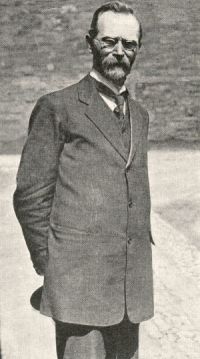 Eoin Mac Neill,
Phases of Irish History
“ The Gaels occupied Ireland as a conquering and dominant people. During the early centuries of their occupation, whatever language or languages had been spoken in Ireland before them completely disappeared as languages, leaving no doubt some traces behind in the names of places, etc., and probably also influencing to some degree the Gaelic language itself. But for a long time there was nothing like a complete fusion of the old and the new population. ”
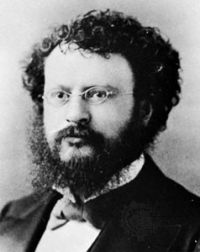 John Fiske,
A Century of Science, and Other Essays
“ Hence the clean sweep of myth tales in one part of the country,—the [Pg 323] greater part, occupied by a majority of the people; while they are still preserved in other and remoter districts, inhabited by men who, for the scholar and the student of mankind, are by far the most interesting in Ireland."The fate of the Gaelic language has, indeed, been peculiarly sad. In various parts of Europe, and especially among the western Slavs, the native tongues have been to some extent displaced by the speech of conquering peoples ”
“ England is still to-day the land of the Saxons to the Gael, and its inhabitants are the "Sassenachs"; the Irishman persists in disregarding the coming of the Angles. We may talk of the extinction of the Gaelic tongue, but in his poetry, as in every place-name of stream or hill or townland all over the country, it is about us still. In the poetry we are back in Gaelic Ireland; the old tribal distinctions, the old clan names, meet us on every page. What does the modern man know of Leth Cuinn or Leth Mogha, the ancient divisions of the North and South, or of the stories which gave them birth? ”
John Fiske,
A Century of Science, and Other Essays
“ Since all mental training in Ireland is directed by powers both foreign and hostile to everything Gaelic, the moment a man leaves the sphere of that class which uses Gaelic as an every-day language, and which clings to the ancient ideas of the people, everything which he left behind seems to him valueless, senseless, and vulgar ”
Baron Thomas Babington Macaulay Macaulay, The History of England, from the Accession of James II…
“ The Gaelic monuments, the Gaelic usages, the Gaelic superstitions, the Gaelic verses, disdainfully neglected during many ages, began to attract the attention of the learned from the moment at which the peculiarities of the Gaelic race began to disappear. So strong was this impulse that, where the Highlands were concerned, men of sense gave ready credence to stories without evidence, and men of taste gave rapturous applause to compositions without merit. ”
Robert Mitchell Henry, The Evolution of Sinn Fein
“ Up to the time of the Union the Gaelic language had preserved intact, in spite of Penal Laws and the instruments of repression, all that was most vital in the national spirit. Tales of warriors and heroes, of the long wars of the Gael with the stranger, the sighs of love and the aspirations of devotion, satire and encomium, all the literature and song of a people were enshrined in the native tongue. ”
Nigel MacNeill, The literature of the Highlanders
“ Chiefly through the great labours of Zeuss, the distinguished Bavarian, the Gael is now, as already remarked, universally admitted to belong to the Aryan family. No student of the science of language will now contend that he has any special affinity to the Semitic race. The Keltae of the Greek, the Galli of the Roman, and the Gàidheil of Scotland and Ireland, are the same people. In the east and in the west Galatia, or in Gaelic [Gaidhealtachd, contracted] and pronounced Gaeltachd, is the Celtica, or land of the Celts or Gaels. ”
Nigel MacNeill, The literature of the Highlanders
“ Unpromising though the Highlands look to the literary eye, yet we find that even Dr Samuel Johnson, no lover of either Celts or Scotsmen, touches with pathetic beauty in two or three sentences written upwards of a century ago, on the conditions under which, even in the heart of the Highlands and Isles, in times of old, the production of Gaelic literature was possible: “We are now treading that illustrious island which was once the luminary of the Caledonian regions, whence savage clans and roving barbarians derived the benefits of knowledge and the blessings of religion. ”
Nigel MacNeill, The literature of the Highlanders
“ All these are genuine productions of the Gaelic popular mind. No stigma or suspicion attaches to them. Some of them are at least as ancient as the time of Dean Macgregor—400 years ago; and they were regarded as ancient then. In character and spirit they resemble—are in many cases only Scottish versions of—the kindred literature of the Gael of Ireland; and possess much definite value to the student of social life and the philologist. ”
“ I may say at once that I do not think a theory, such as I have sketched, likely to be true. I believe it will be found that the Irish mythological cycle is made up of old and genuine Gaelic elements. None the less do I think that a searching examination, starting from the hypothesis of a late and largely foreign origin of this most Interesting and problematic portion of Gaelic legend, would throw much light upon it. ”
Eoin Mac Neill,
Phases of Irish History
“ The Irish nobility were rendered incapable of using their intelligence to profit with the times by one defect—they were perhaps the most intensely proud class of men that ever existed. This pride was bred in their bones. It came to them out of an immemorial past. The history of the Gaelic people falls into cycles of four centuries, beginning with our earliest knowledge of the Celts in the Hallstatt Period. There are four centuries of conquest, expansion and domination, before the Celts came to Ireland. By this time, pride of race was already their dominant sentiment. ”
Nigel MacNeill, The literature of the Highlanders
“ It is premature yet to judge what position she may take among the Gaelic bards. Her songs, superior as some of them are, have not yet been accorded much popularity. There is a sort of straining—an occasional abstruse Browning element in her Gaelic pieces—which is probably the cause of this and which has evidently resulted from too close a following of the abstract conceptions of modern English poets, the natural utterance of which Gaelic is somewhat unfitted for. She possesses keen and nervous sensibilities, and looks at nature with a warm, sympathetic, and observant eye. ”
William Ridgeway, Edmund C. Quiggin and William J. Gruffydd, 1911 Encyclopædia Britannica, Volume 5… (1911)
“ Apart from a well-meant but wholly inadequate version of Schiller’s Tell, the only non-religious work which can be termed literature existing in a Gaelic translation is a portion of the Arabian Nights, though fragments of other classics such as Lamb’s Tales from Shakespeare have appeared in magazines. The one-sided character of Gaelic literature, in addition to exercising a baneful influence on Highland character, has in the long run of necessity proved adverse to the vitality of the language. The best standard of Gaelic is by common consent the language of the Scriptures. ”
William Ridgeway, Edmund C. Quiggin and William J. Gruffydd, 1911 Encyclopædia Britannica, Volume 5… (1911)
“ Others whom we cannot mention here are known as the authors of one or more songs which have become popular. It is natural to compare the state of affairs at the beginning of the 20th century with that obtaining in 1800. In the dawn of the 19th century every district in the Highlands had its native poet, whilst a century later not a single Gaelic bard of known reputation existed anywhere within its borders. It is only too evident that the new writers prefer English to Gaelic as a medium of literature, partly because they know it better, but also because in it they appeal to a far wider public. ”
 Henry Osborn Taylor,
The Mediaeval Mind (Volume 1 of 2…
“ On the other hand, Irish qualities of temperament and mind bear such fair fruit in literature and art as might be imagined springing from the Gallic stem but for the Roman graft. [148] No trustworthy story can be put together from the myth, tradition, and conscious fiction which record the unprogressive [Pg 128] turbulence of pre-Christian Ireland. But the Irish character and capacities are clearly mirrored in this enormous Gaelic literature. Truculence and vanity pervade it, and a passion for hyperbole. A weak sense of fact and a lack of steady rational purpose are also conspicuous. ”
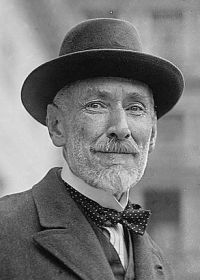 Sir Horace Curzon Plunkett,
Ireland In The New Century
“ The question of the Gaelic Revival seems to be really a form of the eternal question of the interdependence of the practical and the ideal in Ireland. Their true relation to each other is one of the hardest lessons the student of our problems has to learn. ”
Various, The Celtic Magazine, Vol. I, No…
“ Although the English were sung with the greatest art, and in the best possible style, it would neither warm our hearts nor melt our souls like singing in Gaelic. I feel that the great "mistress of art" has a tendency to puff me up, whereas I have no such feelings in my Gaelic. Perhaps one-third of the songs of the Gael are love songs, and the delicacy of feeling which is manifest in most of them is extraordinary. They will not offend the most refined ear; so that we have reason to be proud of our race in that respect. Our songs may be divided into two classes—the cheerful and plaintive. ”
Sir Horace Curzon Plunkett,
Ireland In The New Century
“ The Gaelic movement has brought to the surface sentiments and thoughts which had been developed in Gaelic Ireland through hundreds of years, and which no repression had been able to obliterate altogether, but which still remained as a latent spiritual inheritance in the mind. ”
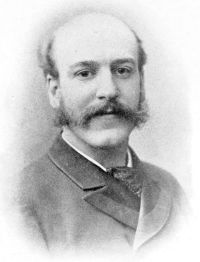 Alfred Trübner Nutt,
Clan Traditions and Popular Tales of the Western Highlands and Islands
(1895)
“ But for this very reason it yields better evidence to the wealth and variety of Gaelic popular tradition. A large portion of the book is local legendary matter, and is closely analogous to what the Icelandic Sagas must have been in one stage of their development, a stage overlaid by the artistry of a greater school of prose story tellers than ever took the sagas of Gaelic Scotland in hand. ”
Related terms
Authors who wrote about “Gaelic culture”
Nigel MacNeill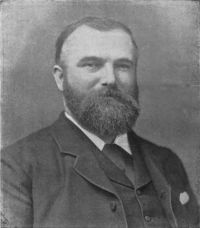 Alexander MacBainDaniel Turner HolmesWilliam Ridgeway, Edmund C. Quiggin and William J. GruffyddAlexander Stewart
 John Gregorson CampbellStephen J. M. BrownDavid MacRitchieSir Charles Gavan DuffyJohn H. DixonThomas O'Neill RussellDouglas Hyde
 W. B. YeatsVariousAlfred NuttSir Horace Curzon PlunkettEoin Mac NeillJohn Fiske
 William Eleroy CurtisR. G. Latham
Alexander MacBainDaniel Turner HolmesWilliam Ridgeway, Edmund C. Quiggin and William J. GruffyddAlexander StewartJohn Gregorson CampbellStephen J. M. BrownDavid MacRitchieSir Charles Gavan DuffyJohn H. DixonThomas O'Neill RussellDouglas HydeW. B. YeatsVariousAlfred NuttSir Horace Curzon PlunkettEoin Mac NeillJohn FiskeWilliam Eleroy CurtisR. G. Latham