Haran

Definition and stakes

Gertrude Landa,  Jewish Fairy Tales and Legends

“ O king, this must be no other than the child of Terah against whom, at his birth, we warned your majesty. The message of the stars has come true. He has dared to destroy our gods. Soon he will destroy us."
"Is this, in truth, the child of the stars?" asked Nimrod, of Terah, but the latter did not answer.
"It is in truth, your majesty," said Haran. "I have long suspected it."
"Then why didst thou not inform me?" exclaimed the king in a rage. "I will test this star-child with the power of my god, fire. And thou, Haran, for thy neglect, must also suffer.
”
Source: Gutenberg

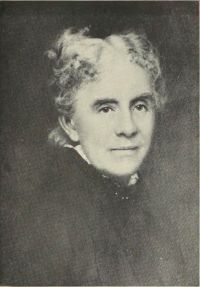
Portrait of Frances Delavan Page Jermain Frances Delavan Page Jermain,  In the path of the alphabet

“ The references in the scripture narrative to Terah, the father of Abraham, as an idolator, and the Arabian tradition as a sculptor or maker of idols, is significant in these connections.
The destination of this family was Haran, at that time a Turanian city in northern Mesopotamia, [109] an important frontier station on the high road to Syria and Palestine, and the various roads to the fords of the Tigris and Euphrates.
The word Haran is from the Accadian, Kharran, “a road,” and was thus named for its position. It is said to lie in a region of exceeding fertility and beauty.
”
Source: Gutenberg

Get perspective with Kwize: daily news enlightened by great literature