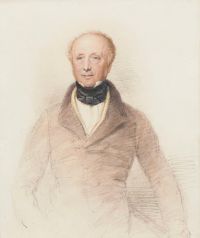
Horace Smith

Definition and stakes

1911 Encyclopædia Britannica, Volume 25… (1911)

In private life Horace Smith was not less popular than his brother, though less ambitious as a talker. It was of him that Shelley said: “Is it not odd that the only truly generous person I ever knew who had money enough to be generous with should be a stock-broker? He writes poetry and pastoral dramas and yet knows how to make money, and does make it, and is still generous.” Horace Smith died at Tunbridge Wells on 12th July 1849.
Source: Wikisource

Israel Abrahams By-paths in Hebraic bookland (1920)

It was remarked above that the Rejected Addresses were absolutely free from anti-Jewish gibes. Impossible would it have been for the Smiths to have acted otherwise. Horace, in particular, was an ardent admirer of Richard Cumberland, writer of The Jew, which at the end of the eighteenth century did so much to rehabilitate the Jews in English good-will. We can see Horace Smith’s tendency, negatively, in one of his other poems. In the “Culprit and the Judge,” he deals with a case of coin-clipping in medieval France. [Pg 202] As with all of Horace’s verses, it is full of good points.
Source: Gutenberg

A Century of Parody and Imitation

Though we choose chocolate, will the world suspect
Genius undying?'
[393]
NOTES
P. 1. Rejected Addresses. First published anonymously in the autumn of 1812. The authors, James Smith (1775-1839) and Horace Smith (1779-1849) were brothers, the former a solicitor, the latter a stockbroker. James wrote a number of 'entertainments' for Charles Mathews, who described him as 'the only man in London who can write good nonsense.' Horace wrote more than a score of novels and collections of stories, of which, perhaps, Brambletye House is the best remembered.
Source: Gutenberg

Get perspective with Kwize: daily news enlightened by great literature