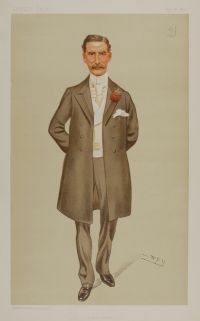
Horatio Herbert Kitchener, 1st Earl of Kitchener

Definition and stakes

1911 Encyclopædia Britannica, Volume 15… (1911)

Immediately after the peace he went to India as commander-in-chief in the East Indies, and in this position, which he held for seven years, he carried out not only many far-reaching administrative reforms but a complete re-organization and strategical redistribution of the British and native forces. On leaving India in 1909 he was promoted field marshal, and succeeded the duke of Connaught as commander-in-chief and high commissioner in the Mediterranean.
Source: Wikisource

1911 Encyclopædia Britannica, Volume 15… (1911)

This post, not of great importance in itself, was regarded as a virtual command of the colonial as distinct from the home and the Indian forces, and on his appointment Lord Kitchener (after a visit to Japan) undertook a tour of inspection of the forces of the empire, and went to Australia and New Zealand in order to assist in drawing up local schemes of defence.
Source: Wikisource

1911 Encyclopædia Britannica, Volume 15… (1911)

He entered the Royal Military Academy, Woolwich, in 1868, and was commissioned second lieutenant, Royal Engineers, in 1871. As a subaltern he was employed in survey work in Cyprus and Palestine, and on promotion to captain in 1883 was attached to the Egyptian army, then in course of re-organization under British officers. In the following year he served on the staff of the British expeditionary force on the Nile, and was promoted successively major and lieutenant-colonel by brevet for his services.
Source: Wikisource

Get perspective with Kwize: daily news enlightened by great literature