“ The recent deaths of his son and of others who knew Hugh Miller in Cromarty and in Edinburgh still more preclude the appearance of a full and authentic presentation. To the scientist the works of Miller will ever form the best biography; to the general reader and to those who, from various causes, regard biography as made for man and not man for biography some such sketch as the following may, it is believed, not be unacceptable. To treat Hugh Miller apart from his surroundings of Church and State would be as impossible as it would be unjust. ”
Hugh Miller
Definition and stakes
The theme of “Hugh Miller” has been addressed by authors such as . It is often associated with terms like science, John, Worthington, spring and bank.
Quotes about “Hugh Miller”
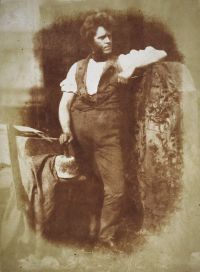 Hugh Miller,
The Foot-prints of the Creator
(1850)
Hugh Miller,
The Foot-prints of the Creator
(1850)
“ Hugh Miller holds a lofty place, not merely from the discovery of new and undescribed organisms in the Old Red Sandstone, but from the accuracy and beauty of his descriptions, the purity and elegance of his composition, and the high tone of philosophy and religion which distinguishes all his writings. Mr. Miller is one of the few individuals in the history of Scottish science who have raised themselves above the labors of an humble profession, by the force of their genius and the excellence of their character, to a comparatively [xv] high place in the social scale. ”
Various, British Quarterly Review, American Edition…
“ It is correct to speak of poetical genius when we mean an inborn tunefulness of nature which awakens to vocal melody at the sight of beauty or the touch of pathos. When we say Hugh Miller was a man of genius, we mean that, take him all in all, in his life, in his character, in his books, he was unique. In a remote Highland village, one of the quietest, least important places in the world, amid a simple, ruminating population, with no Alpine grandeur of surrounding scenery or stirring memorials of local life, the sea-captain's son is born. ”
Chautauqua Institution, The Chautauquan, Vol. 03, April 1883
“ Hugh Miller was another man of undoubted genius. When we contemplate such a man rising to distinction both in science and literature, in spite of the most adverse circumstances, we are apt to think that he must have been indebted to the native vigor of his mind alone, without the aid of any extraneous advantages. ”
“ Both Miller and Murchison came out of the Black Isle. In a communication to us of the date 22nd December 1895, he thus writes:— 'Hugh Miller will always occupy a peculiar place in the history of geology, and in the ranks of geological literature. He was not in any sense a trained geologist. He lacked the habit of patient and detailed investigation in departments of the science that did not specially interest him, but which were essential as a basis of accurate induction and successful speculation. ”
Various, Lippincott's Magazine of Popular Literature and Science…
“ Whose heart has not been stirred by the life-story of the great Hugh Miller, the stonecutter's pick earning for him humble means, thereby enabling him to acquire that learning which made his name a household word even in America. ”
“ Hugh Miller furnished, in his own life, an excellent instance of that practical common sense in the business of life which he so strongly recommended to others. When he began to write poetry, and felt within him the growing powers of a literary man, he diligently continued his labour as a stone-cutter. ”
Walter Aimwell, Whistler; or, The Manly Boy (1856)
“ Hugh Miller is one of the most remarkable men of the age. Having risen from the humble walks of life, and from the employment of a stone-cutter, to the highest rank among scientific men, everything relating to his history possesses an interest which belongs to that of few living men. ”
Hugh Miller,
The Testimony of the Rocks
“ We cannot well estimate the loss which society sustains in the death of Mr. Miller. He occupied a foremost place among us, and there is none on whom his mantle can fall. In the world of letters his name takes high rank, for undoubtedly he was one of the ablest writers in our literature. Who can have read without delight his manly, vigorous language, soaring sometimes into the highest eloquence, anon plunging into the depths of metaphysical argument, or grappling with the dry technicalities of science, yet ever rolling along with the same easy, onward flow? ”
 Archibald Geikie,
Landscape in History, and Other Essays
Archibald Geikie,
Landscape in History, and Other Essays
“ Malcolmson, who eventually carried some of his specimens to London and the Continent, and was the means of bringing him into correspondence with Murchison and Agassiz. Hugh Miller was thus at last placed in direct communication with the world of science and into relation with the men who were most thoroughly versed in the subjects that had so long engrossed his thoughts, and most capable of helping him to clear away the difficulties that beset his progress. ”
“ It was a time of great men. If Chalmers was the incarnation of the country and the movement, Murray Dunlop its jurist, Cunningham and Candlish its debaters, it was yet to the leaders in The Witness that the great mass of his countrymen looked for the opinions of Hugh Miller. His relative, Dr. Gustavus Aird of Creich, the late Moderator of the Free Church, has informed us that in his own parish he learned the paper was read out in the mill, and that in many places the same thing took place. ”
Hugh Miller,
The Foot-prints of the Creator
(1850)
“ The geological works of Hugh Miller have excited the greatest interest, not only among scientific men, but also among general readers. There is in them a freshness of conception, a power of argumentation, a depth of thought, a purity of feelings, rarely met with in works of that character, which are well calculated to call forth sympathy, and to increase the popularity of a science which has already done so much to expand our views of the Plan of Creation. ”
Hugh Miller,
Scenes and legends of the north of Scotland
(1869)
“ The progress of character is fully as interesting a study as the progress of art; and both are curiously exemplified in the history of Donald Miller. Now that he had conquered his enemy, and might realize his long-cherished dream of unbroken leisure, he found that constant employment had, through the force of habit, become essential to his comfort. ”
“ While regarding the 'days' as ages, Miller views the record as the result of an optical vision presented to the writer. He truly enough remarks that any exact revelation would have defeated its own object through an elaborate statement to man at an early stage. Man would not have believed it, as it would have contradicted his own experience. He would no more have believed that the earth revolved on its own axis than that molluscs had preceded him on the earth. ”
“ This had before been fully expounded by Hume and Scott, and Miller could show its peculiar ability for enabling men to 'coin their characters should they be good ones, even should houses, ships, and furniture be wanting.' In the years to come his experience enabled him to write his own business and commercial leaders in his paper, but as yet his income did not exceed one hundred pounds, and he willingly joined in the continuation of Wilson's Tales of the Borders. ”
“ The hour, then, had come and the man. Miller was invited to Edinburgh to meet the leaders of the Evangelical party, and he was offered the position of editor of the newspaper, which started its first issue on January 15, 1840, appearing bi-weekly upon Wednesdays and Saturdays. At the end of the bank's financial year, he was presented by his fellow-townsmen with a breakfast service of plate, and the presence of his uncle Alexander was to Miller a circumstance of peculiar satisfaction. ”
“ Alexander's Johnny Gibb, and was, though a fair scholar, rather inefficient as a disciplinarian and teacher. Yet it was his boast—one now, alas, in these days sadly becoming obsolete—that he sent forward more lads to the bursary competition at the Northern university than any other teacher, and his 'heavy class' of a few boys in Latin was increased by his persuading the willing Uncle James to set Miller to the Rudiments in that time-honoured volume by Ruddiman, who had in his own days been a first bursar at Aberdeen. ”
“ It is this informing power that keeps alive the geologist. Hume owes his position in metaphysics to this power, and to his great gifts as a stylist. Few men of science have had graces of style. In Darwin it is lacking, and he has himself set on record that literature and art had ceased for him to exert any influence, and that a mere novel had become the highest form of intellectual amusement. Hutton needed a Playfair to make him intelligible, as Dugald Stewart was needed for the exposition of Reid. But it is this power that will keep Miller alive. ”
Hugh Miller,
Scenes and legends of the north of Scotland
(1869)
“ Preparatory to the trial the miller invited one of his neighbours, the young farmer of Eathie, that they might pass the early part of the evening with Tam; but when, after an hour’s hard drinking, they rose to leave the cottage, the farmer, a kind-hearted lad, who was besides warmly attached to the jockey’s only sister, would fain have dissuaded him from the undertaking. “I’ve been thinking, Tam,” he said, “that flyte wi’ the miller as ye may, ye would better let the good people alone;—or stay, sin’ ye are sae bent on playing the fule, I’ll e’en play it wi’ you;—rax me my plaid ”
“ Setting sail in the Leith smack running between Cromarty and that port, he entered the Firth of Forth four days after losing sight of the Sutors. He saw with interest Dunottar Castle and the Bass Rock chronicled in the well-known lines of his friend, Dr. Longmuir of Aberdeen. Indeed the latter had for him peculiar associations through one of the Ross-shire worthies in the times of Charles II.—James Fraser of Brea;—for, when the sun set on the upland farm on which he had been born, Miller knew that it was time to collect his tools at the end of his day's labour. ”
“ George's to succeed Candlish, who had been translated to the college chair left vacant by Chalmers. None of his friends were nearer to him than Mackgill-Crichton of Rankeillour in Fife, and there we find him one Christmas along with Sir David Brewster and Guthrie. Both Miller and his host were men of great physical powers, and—as Professor Masson notes—the geologist had a habit of estimating men by their physique. ”
Hugh Miller,
The Testimony of the Rocks
“ We lament the death of one who was alike an honor to his profession, to literature, to science, and to his country,—one of the most loved and cherished of friends. Let us not forget to mingle our sympathy and our sorrow with that deeper grief that mourns the loss of a husband and a father. ”
Hugh Miller,
The Cruise of the Betsey
“ It is one of those scenes in which a man feels that he is little, and that nature is great. There is no precipice in the island in which the puffin so delights to build as among the dark pinnacles overhead, or around which the silence is so frequently broken by the harsh scream of the eagle. ”
Hugh Miller,
My Schools and Schoolmasters; Or…
“ In quiet moonlight nights I found it exceedingly pleasant to saunter all alone through the Niddry woods. Moonlight gives to even leafless groves the charms of full foliage, and conceals tameness of outline in a landscape. ”
Hugh Miller,
My Schools and Schoolmasters; Or…
“ Alas! thy latest voyage draws near a close,For Death broods voiceless in the darkening sky;Subsides the breeze; the untroubled waves repose;The scene is peaceful all. Can Death be nigh,When thus, mute and unarm'd, his vassals lie?Mark ye that cloud! There toils the imprisoned gale ”
Hugh Miller,
The Cruise of the Betsey
“ Lying fair, green and populous within the sweep of its inaccessible rampart of rock, at least twice as lofty as the ramparts of Babylon of old, it reminds one of the suburbs of some ancient city lying embosomed, with all its dwellings and fields, within some roomy crescent of the city wall. ”
Hugh Miller,
First Impressions of England and its People
(1873)
“ When the sky is clear and the sun bright, even the smallest and tamest patches of country have their charms: there is beauty in even a hollow willow pollard fluttering its silvery leaves over its patch of meadow-sedges against the deep blue of the heavens ”
Hugh Miller,
My Schools and Schoolmasters; Or…
“ I see Mercury sparkling to the sun, with its oceans of molten glass, and its fountains of liquid gold. I see the ice-mountains of Saturn, hoar through the twilight. I behold the earth rolling upon itself, from darkness to light, and from light to darkness. ”
Hugh Miller,
The Cruise of the Betsey
“ The marble silence is suddenly broken by the rush of an avalanche, that tears away the superincumbent masses, rolling them into the sea; and the ponderous block, laid open to the light, finds itself on the bleak shore of a desert island of the northern Scottish archipelago, with a wintry scene of snow-covered peaks behind, and an ice-mottled ocean before. The winter passes, the cold severe spring comes on, and day after day the field-ice goes floating by,—now gray in shadow, now bright in the sun. ”
Hugh Miller,
My Schools and Schoolmasters; Or…
“ One ocean appears smooth as a mirror—another is black with tempest. I see the pyramid of shade which each of the planets casts from its darkened side into the space behind; and I perceive the stars twinkling through each opening, as through the angular doors of a pavilion. ”
Hugh Miller,
The Cruise of the Betsey
“ Viewed by moonlight, when the pale red of the clay where the beam falls direct is relieved by the intense shadows, these excavations of the valley of Rosemarkie form scenes of strange and ghostly wildness: the projecting, buttress-like angles,—the broken walls,—the curved inflections,—the pointed pinnacles,—the turrets, with their masses of projecting coping,—the utter lack of vegetation, save where the heath and the furze rustle far above,—all combine to form assemblages of dreary ruins, amid which, in the solitude of night, one almost expects to see spirits walk. ”
Hugh Miller,
The Testimony of the Rocks
“ The great column of being, with its base set in the sea, and inscribed, like some old triumphal pillar, with many a strange form,—at once hieroglyphic and figure,—bears, as the ornately sculptured capital, which imparts beauty and finish to the whole, reasoning, responsible man. ”
“ One heavy sunless day is made the representative of myriads; the faint light waxes fainter—it sinks beneath the dim undefined horizon; the first scene of the drama closes upon the seer; and he sits a while on his hill-top in darkness, solitary but not sad, in what seems to be a calm and starless night. ”
Hugh Miller,
The Cruise of the Betsey
“ There is no lack of life along the shores of the solitary little bay. The shriek of the sparrow-hawk mingles from the cliffs with the hoarse deep croak of the raven; the cormorant on some wave-encircled ledge, hangs out his dark wing to the breeze; the spotted diver, plying his vocation on the shallows beyond, dives and then appears, and dives and appears again, and we see the silver glitter of scales from his beak ”
Hugh Miller,
My Schools and Schoolmasters; Or…
“ An enemy appears: the creature ejects its cloud of ink, like a sharp-shooter discharging his rifle ere he retreats; and then, darting away, tail foremost, under cover of the cloud, it grounds itself high upon the beach, and perishes there. ”
Hugh Miller,
The Cruise of the Betsey
“ The sun, low in the sky,—for the hour was early,—cast its slant rays athwart the prospect, giving to each nearer bank and hillock, and to the more distant protuberances on the mountain-sides, those well-defined accompaniments of shadow that serve by throwing the minor features of a landscape upon the eye in bold relief, to impart to it an air of higher finish and more careful filling up than it ever bears under a more vertical light. ”
Hugh Miller,
Scenes and legends of the north of Scotland
(1869)
“ The boys shouted, the girls shrieked, the apprentices, tapping their fingers against their throats, bleated like sheep in mockery of the farmers, the women yelled out their defiance in one continuous howl, interrupted occasionally by the hoarse exclamations and loud huzzas of the men. ”
Hugh Miller,
The Foot-prints of the Creator
(1850)
“ It is surely no time, when we walk amid the dark cemeteries of a departed world, and see the cold blank shadows of the tombs falling drearily athwart the way—it is surely no time to extinguish the light given us to shine so fully and so cheerfully on our own proper path, merely because its beams do not enlighten the recesses that yawn around us. ”
