“ Save the Magyars alone, the ruling race in the Hungarian kingdom, there is no case in those lands in which the whole continuous territory inhabited by speakers of the same tongue is placed under a separate national government of its own. And, even in this case, the identity between nation and government is imperfect in two ways. It is imperfect, because, after all, though Hungary has a separate national government in internal matters, yet it is not the Hungarian kingdom, but the Austro-Hungarian monarchy of which it forms a part, which counts as a power among the other powers of Europe. ”
Hungarian government
Definition and stakes
Quotes about “Hungarian government”
Charles Alan Fyffe, A History of Modern Europe, 1792-1878
“ The future of Hungary can never be secure while in the other provinces there exists a system of government in direct antagonism to every constitutional principle. Our task it is to found a happier future on the brotherhood of all the Austrian races, and to substitute for the union enforced by bayonets and police the enduring bond of a free constitution." When the Hungarian Assembly had thus taken into its own hands the cause of the rest of the monarchy, it was not for the citizens of Vienna to fall short in the extent of their demands. ”
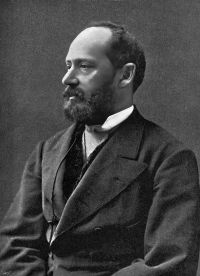
Ármin Vámbéry,
The story of Hungary
“ The non-Hungarian portion of the inhabitants, choosing to ignore the fact that the new laws secured, without distinction of nationality, equal rights to every citizen of the state, were apprehensive lest the liberal constitution would chiefly benefit the Hungarian element of the nation. They, therefore, encouraged by the secret machinations of the government of Vienna, took up arms, in order to drag the country, which was preparing to take possession of her new liberties, into a civil war. ”
Various, Encyclopaedia Britannica, 11th Edition…
“ The appeal was now to arms; and the fortunes of the Habsburg monarchy were bound up with the fate of the war in Hungary (see Hungary: History) .Meanwhile, renewed trouble had broken out in Vienna, where the radical populace was in conflict alike with the government and with the Slav majority of the Reichsrath. The German democrats appealed for aid to the Hungarian government; but the Magyar passion for constitutional legality led to delay, and before the Hungarian advance could be made effective, it was too late. ”
Mór Jókai,
Black Diamonds: A Novel
“ Hungary are both in danger. How is the danger to be averted? Let us put our shoulders to the wheel; let us be more patriotic than the democrats, more loyal than the prime-minister, more liberal than revolutionists; let us save the Church property from the government, and the Church itself from the revolution. Let us throw into the market a gigantic loan of a hundred millions upon the property of the Hungarian Church for the rescue of the throne of St. Peter. ”
Ármin Vámbéry,
The story of Hungary
“ The aim of the Viennese government became daily more evident, to put the Austrian rule in the place of the Turkish, and to ignore altogether the Hungarian national aspirations. The nation herself seemed to the government too much enfeebled and trodden down to give any ground for apprehending any resistance in defence of her rights, but to make assurance doubly sure every effort was made to crush the national spirit. ”
Charles Alan Fyffe, A History of Modern Europe, 1792-1878
“ No statement was made as to the future form of government, but everything indicated that Hungary, if successful in maintaining its independence, would become a Republic, with Kossuth, who was now appointed Governor, for its chief. Even in the revolutionary severance of ancient ties homage was paid to the legal and constitutional bent of the Hungarian mind. Nothing was said in the Declaration of April 19th of the rights of man; there was no Parisian commonplace on the sovereignty of the people. ”
Anonymous, Cassell's History of England, Vol…
“ The Government of Vienna resolved now to crush the Hungarian insurrection at any cost. A decree was issued by the emperor, who had lately returned to the capital, dissolving the Diet, declaring all its ordinances and acts illegal and void, constituting Jellacic Commander-in-Chief in Hungary and Transylvania, with unlimited powers, and appointing also a new Hungarian Ministry. Kossuth met this by a counter-proclamation, asserting the entire independence of Hungary, and denouncing the Ban and the new Prime Minister as traitors. ”
Mór Jókai,
The Strange Story of Rab Ráby
“ The preceding remarks will enable the reader to see clearly that Hungary never accepted, nor can ever accept Austrian rule in any shape whatever; and that the entire business of political, judicial, and administrative government in Hungary must legally be done by Hungarian citizens only. The King alone happens to be an official in Austria as well as in Hungary; but according to Hungarian constitutional law he cannot command, nor reform things in Hungary except with the formal consent of the Hungarian authorities, in Parliament and County. ”
J. N. Larned, History for ready reference, Volume 3… (1895)
“ The Hungarian Parliament, which had been closed for so many years, reopened its gates. These concessions, however, did not satisfy the Magyars, who wanted perfect autonomy for their country. ... The Hungarians refused to pay taxes, which therefore had to be collected by military aid. In 1865 the Hungarian Parliament was opened by the Emperor in person, who gave his assent to the Self-Government of Hungary, but further details had still to be arranged, and the war which broke out between Austria, Prussia and Italy in 1866 prevented these from being carried out. ”
Daniel Webster,
The Great Speeches and Orations of Daniel Webster
“ KOSSUTH. FROM A SPEECH DELIVERED IN BOSTON, ON THE 7TH OF NOVEMBER, 1849, AT A FESTIVAL OF THE NATIVES OF NEW HAMPSHIRE ESTABLISHED IN MASSACHUSETTS. We have all had our sympathies much enlisted in the Hungarian effort for liberty. We have all wept at its failure. We thought we saw a more rational hope of establishing free government in Hungary than in any other part of Europe, where the question has been in agitation within the last twelve months. But despotic power from abroad intervened to suppress that hope. ”
Lajos Kossuth,
Select Speeches of Kossuth
“ That the people of the United States should declare their opinion in respect to the question of the independence of Hungary, and urge the government to act accordingly."Resolved, That the people of Hungary are, and ought to remain a free and independent nation; that Louis Kossuth is their lawful governor, and that the Hungarian people should not be prevented from exercising the rights of freemen by the tyranny of Austria and Russia. ”
Various, Harper's New Monthly Magazine Vol…
“ The whole series of bills received the royal signature on the 11th of April; the Diet having previously adjourned to meet on the 2d of July.Up to this time there had been indeed a vigorous and decided opposition, but no insurrection. The true cause of the Hungarian war was the hostility of the Austrian Government to the whole series of reformatory measures which had been effected through the instrumentality of Kossuth; but its immediate occasion was the jealousy which sprung up among the Serbian and Croatian dependencies of Hungary against the Hungarian Ministry. ”
Alexander Andrew Knox, Once a Week (1861)
“ It should be remarked that this question of constitutional government for the other provinces of the Austrian Empire—save Hungary—stands quite apart, and must be considered apart from the complications which have arisen with regard to Hungarian affairs. Hungary declines absorption into the general body of the Empire. Hungary is a kingdom by itself, and refuses to be cast into the melting-pot. She consents to be united to Austria by the golden link of the Crown, but will not budge one inch further. ”
Carl W. Ackerman, Germany, The Next Republic?
“ The Ancona crisis brought the Foreign Office new and unexpected support. Hungary was opposed to a dispute with America. In the first place, Hungarians are more of a liberty loving people than the Germans, and public opinion in Hungary rules the country. While there is a strong Government press, which is loyal to the Tisza party, there is an equally powerful opposition press which follows the leadership of Count Albert Apponyi and Count Julius Andrassy, the two most popular men in Hungarian public life. ”
Frigyes Riedl,
A History of Hungarian Literature
(1906)
“ The Austrian Government had suspended the Constitution, abolished the ministry, the palatinate, and the provinciai system, refused to summon a Parliament, and altagether dealt with Hungary as a conquered province. Those were the years of absolutism, when neither in Austria nor in Hupgary, newly deprived of her independence, was there any Partiament or responsible Government. Many believed that Hungary was ruined, that her future would resemble that of Poland, and that together with the Magyar language, the whole nation would be wiped out. ”
Heinrich Karl Schmitt, The Hungarian Revolution (1918)
“ Tisza died like a man who is at one with his destiny. Hungary can always be proud to have had such a despot, who knew not only how to apply force to others, but was also able and willing to take himself the last infinite consequences. He hated in his life the cowardice of others, in the theatre of war he was the best-loved of his soldiers, and he accepted death as the close of a career, whose gigantic worth was too absolute for it to have attained to maturity in our days. It was a satisfying sign that the Government took the sharpest vengeance on the murder. ”
Frederic Austin Ogg,
The Governments of Europe
“ In Bohemia, Hungary, and elsewhere there were revivals of racial enthusiasm and of nationalistic aspirations which grew increasingly ominous. The Hungarian diet of 1844 substituted as the official language of the chambers Magyar for Latin, and during the forties there was built up, under the leadership of Louis Kossuth and Francis Deák, a flourishing Liberal party, whose aim was the re-establishment of the autonomy of the kingdom and the thoroughgoing reform of the government. ”
Heinrich Karl Schmitt, The Hungarian Revolution (1918)
“ Hungary's revolution was the historical consequence of a biological principle. The sick place had to be removed by operation: a non-national Government, which managed the affairs of an Empire without any relation to the people, which throughout its whole structure was antediluvian in its reactionary trend, had, in the atmosphere of our time, to perish. ”
The Czechoslovak Review (1918)
“ If there is then no hope that this right of self-determination may be had within Austria, there is even less reason to believe that there could be any guarantee of it in the Hungarian half of the empire. To speak of Hungary is to utter an accusation before the whole world. Hungary of today is the last survival of barbaric Asia in Europe. There is not in the world a more violent racial tyranny or more brutal political oppression than in that satrapy of the corrupt high-born Magyar oligarchy. ”
George W. Bush,
Proclamation 8072
“ Though Soviet tanks brutally crushed the Hungarian uprising, the thirst for freedom lived on, and in 1989 Hungary became the first communist nation in Europe to make the transition to democracy. The lesson of the Hungarian experience is clear: liberty can be delayed, but it cannot be denied. Today, this beautiful country has held democratic elections, established a free economy, and inspired millions around the world. ”
Oscar Briliant, Robert N. Bain, Walter A. Phillips, Charles N. E. Eliot, Edward D. Butler and Emil Reich, 1911 Encyclopædia Britannica (1911)
“ Like Poland two centuries later, Hungary had ceased to be a civilized autonomous state because her prelates and her magnates, uncontrolled by any higher authority, and too ignorant or corrupt to look beyond their own immediate interests, abandoned themselves to the exclusive enjoyment of their inordinate privileges, while openly repudiating their primal obligation of defending the state against extraneous enemies. During these miserable years everything like patriotism or public spirit seems to have died out of the hearts of the Hungarian aristocracy. ”
Anonymous, The New Europe (1917)
“ Budapest is the citadel of racial domination, and he who speaks within its walls must forswear the self-determination of peoples. He may speak, like Czernin, of international goodwill, but not of the neighbourly duty of the Magyar to the Croat; he may paint the picture of a new Europe under the rule of Right, but it must be a Europe in which the ruling race of Hungary shall enjoy for ever their “right” to exploit all the others. That is why the touchstone of Austro-Hungarian sincerity is not “peace” but “nationality.” ”
Graf Ottokar Theobald Otto Maria Czernin von und zu Chudenitz, In the World War
“ In the period of preparation for the agreement of 1867 Hungary was a poor and, comparatively speaking, small part of the then Monarchy, and the great statesmen of Hungary based their administrative plan on dualism and equality as being the only possible way for ensuring that Hungarian independence, recognised and appealed to on many occasions, should materialise in a framework of modern constitutional practice. ”
Ármin Vámbéry,
The story of Hungary
“ But the triumph of the reactionary spirit under the reign of King Francis made them conspirators. Those of their friends who joined them were all honest and enthusiastic patriots, who saw in the success of democratic ideas the welfare of Hungary. But they did not look to a revolution for the realization of their fond hopes. They entered the society for the sole purpose of preparing the minds of their countrymen for reforms to be obtained by constitutional means. Almost every Hungarian writer, who was not in some dependent position, belonged to the society. ”
Heinrich Karl Schmitt, The Hungarian Revolution (1918)
“ And while the Russian Soldiers' Councils became the sources of the grimmest tyranny and despotism, the Hungarian Soldiers' Council developed into a centre for the soldiers' agenda, which did excellent service in respect of restoring human conditions in the barracks, of hygiene, of hospital questions, of the organisation of a people's army for the support of the Government and good order. ”
Alice Riggs Hunt,
Facts About Communist Hungary
(1919)
“ Another policy, not followed in the second Russian Revolution, but pursued by all the People's Commissaries in Hungary, is that of retaining every useful man or woman in his or her former occupation, provided each consents to fit into the new scheme of things. Bela Kun told me himself that he thought the realization of the value of the "intellectual" by the Hungarian Revolution, was perhaps the greatest step in advance made, in comparison to the Russian attitude towards them a year ago. ”
Oscar Briliant, Robert N. Bain, Walter A. Phillips, Charles N. E. Eliot, Edward D. Butler and Emil Reich, 1911 Encyclopædia Britannica (1911)
“ Its deep underlying causes can only be understood in the light of the whole of Hungarian history. It is easy to denounce the dominant Magyar classes as a selfish oligarchy, and to criticize the methods by which they have sought to maintain their power. But a nation that for a thousand years had maintained its individuality in the midst of hostile and rival races could not be expected to allow itself without a struggle to be sacrificed to the force of mere numbers, and the less so if it were justified in its claim that it stood for a higher ideal of culture and civilization. ”
Emerson Hough,
The Purchase Price; Or, The Cause of Compromise
“ In this era of arrested activities, the energies of a restless people turned otherwhere for interest. To relieve the monotony of political stagnation, popular attention was now turned toward the affairs of Hungary. We could not solve our own problems, but we were as ready to solve those of Europe as Europe was to offer us aid in ours. Therefore, instant interest attached to the news that a Hungarian committee of inquiry had landed upon our shores, with the purpose of investigating a possible invitation from our republic to the Hungarian patriot, Kossuth, then in exile in Turkey. ”
István Bibó,
For Freedom and Truth
“ Hungary does not wish to pursue an anti-Soviet Policy. On the contrary, Hungary's full intent is to live in the community of free Eastern European nations which want to organise themselves on the principles of liberty, justice and freedom from exploitation. Before the entire world, I also reject the slanderous accusation that the glorious Hungarian Revolution has been despoiled by fascist or anti-semitic excess. The entire Hungarian nation, without class or denominational differences, participated in the struggle. ”