Imperial Japanese Army

Definition and stakes

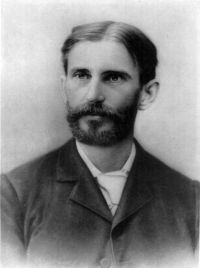
Portrait of Ernest W. Clement Ernest W. Clement,  A Handbook of Modern Japan

“ The Emperor is not expected to take command in person; but often one of the Imperial Princes will act as Commander-in-Chief in the field. There are now only two living Field-Marshals, Marquis Yamagata and Marquis Ōyama. There are various schools for educating and training the officers of the army and the navy.
As Japan is entirely an insular nation, the importance of her navy cannot be over-estimated. Even before the war with China, the Japanese navy had been rapidly growing
”
Source: Gutenberg

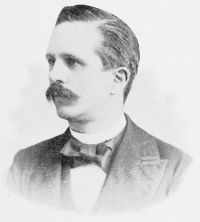
Portrait of Basil Hall Chamberlain Basil Hall Chamberlain,  Things Japanese (1905)

“ Exclusive of the Imperial Guard, there would be twelve divisions with headquarters at Tōkyō, Sendai, Nagoya, Ōsaka, Hiroshima, Kumamoto, Sapporo, Hirosaki, Kanazawa, Fukuchiyama, Marugame, and Kokura. Three brigades—say 7,500 men—are detached for service in Formosa. The cavalry has always been the weakest branch of the Japanese army, owing to the absence of good horses; neither does the build of the average Japanese tend to make him a graceful rider. ”
Source: Wikisource

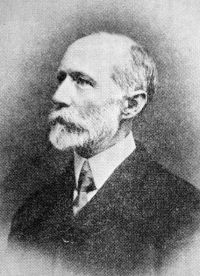
Portrait of Fred T. Jane Fred T. Jane,  The imperial Japanese navy

“ Immediately upon the exchange of the ratifications of this act all prisoners of war then held shall be restored, and China undertakes not to ill-treat or punish prisoners of war so restored to her by Japan. China also engages to at once release all Japanese subjects accused of being military spies or charged with any other military offences. China further engages not to punish in any manner, nor to allow to be punished, those Chinese subjects who have in any manner been compromised in their relations with the Japanese army during the war. ”
Source: Gutenberg

Get perspective with Kwize: daily news enlightened by great literature