James Moore

Definition and stakes

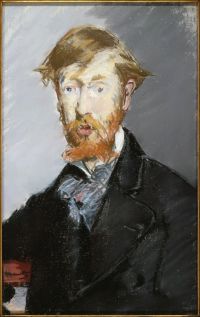
Portrait of James Lane Allen James Lane Allen,  Flute and Violin and Other Kentucky Tales and Romances (1891)

“ The Reverend James Moore, sitting in the chair of logic, moral philosophy, metaphysics, and belles-lettres; lecturing daily to young men on all the powers and operations of the human mind, taking it to pieces and putting it together and understanding it so perfectly, knowing by name every possible form of fallacy and root of evil—the Reverend James Moore, when he came to study the living mind of this boy, confessed to himself that he was as great a dunce as the greatest in his classes. ”
Source: Wikisource

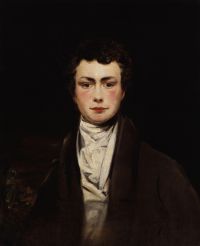
Portrait of G. E. Moore G. E. Moore,  Philosophical Studies

“ What Professor James says in this passage seems to me so indisputably true as fully to justify the vigour of his language. It is as clear as anything can be that it would not be useful for any man's mind to be always occupied with the true idea that he had certain faults and blemishes; or to be always occupied with the idea that twice two are four. It is clear, that is, that, if there are times at which a particular true idea is useful, there certainly are other times at which it would not be useful, but positively in the way. ”
Source: Gutenberg

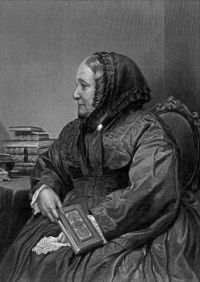
Portrait of G. E. Moore G. E. Moore,  Philosophical Studies

“ Apparently, therefore, Professor James wishes to assert that all our true ideas are or can be verified—that all are useful. And certainly this is not a truism like the proposition that many of them are so. Even if this were all that he meant, it would be worth discussing. But even this, I think, is not all. The very first proposition in which he expresses his theory is the following. "True ideas," he says (p. 201) "are those that we can assimilate, validate, corroborate and verify. False ideas are those that we cannot." ”
Source: Gutenberg

Get perspective with Kwize: daily news enlightened by great literature