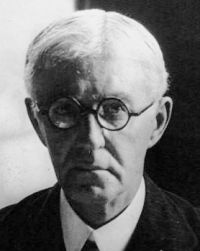
Karl Ernst von Weismann

Definition and stakes

George John Romanes,  An Examination of Weismannism

“ For the distinguishing essence of this theory is, that germ-plasm must always have moved, so to speak, in a closed orbit of its own: its “sphere” must have been perpetually distinct from those of whatever other “plasms” there may be in the constellations of living things. So that, in such passages as those just quoted, Weismann is not only destroying the very foundations of his general theory of evolution, but at the same time he is identifying his more special theory of heredity with those which had been already published by his predecessors, and more particularly by Galton. ”
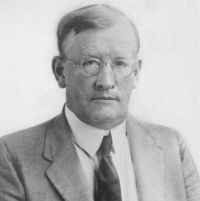
Source: Gutenberg

George John Romanes,  An Examination of Weismannism

“ Nevertheless, it is evident that this fact tends rather to confirm the view that expectation of life on the part of individuals has in all cases been determined with strict reference to the requirements of propagation, if under propagation we include the rearing as well as the production of offspring. I may observe in passing that I do not think this general law can be found to apply to plants in nearly so close a manner as Weismann has shown it to apply to animals ”
Source: Gutenberg

William A. Locy,  Popular Science Monthly (1909)

“ Weismann, as you all know one of its great representatives, expresses the opinion that "the theory of descent is the most progressive step that has been taken in the development of human knowledge "and he says further that this position "is justified, it seems to me, even by this fact alone: that the evolution idea is not merely a new light on the special region of the biological sciences, zoology and botany, but is of quite general importance. The conception of an evolution of life upon the earth reaches far beyond the bounds of any single science, and influences our whole realm of thought." ”
Source: Wikisource

Get perspective with Kwize: daily news enlightened by great literature