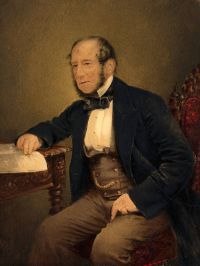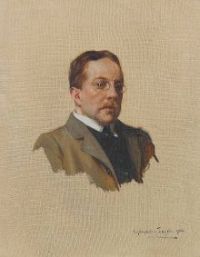
“ Mr. Kentish watched the little operation of "sticking up" without a word."So that's Stingaree!" he said, more to himself than to his comrades in humiliation; but the bushranger had cantered back into the scrub, and his name opened the flood-gates of a profanity which made Kentish wince, for all his knowledge of the world."Do you never swear at him till he has gone?" he asked when he had a chance. The driver leant across the legs of his friend."Not unless we want a bullet through our skulls," he answered in boorish derision; and the man between them laughed harshly. ”
Kentish
Definition and stakes
Quotes about “Kentish”
Thomas William Shore, Origin of the Anglo-Saxon Race (1906)
“ The Kentish man’s liberty was his marked characteristic in the Middle Ages—a characteristic which had come down to him from the earliest Kentish settlers. Descended partly from Frisians—who were themselves, as the remnant of their ancient language shows, also of the old Gothic stock—and strongly marked by their love of freedom, the people of Kent preserved, through all the changes of the Anglo-Saxon period and the later powerful influences of feudalism, their free institutions, the relics of which, in the customs incidental to the gavelkind land tenure, have come down to our time. ”
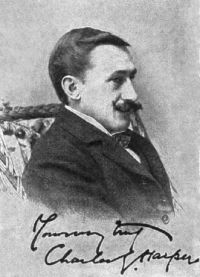
Charles G. Harper,
The Ingoldsby Country: Literary Landmarks of the "Ingoldsby Legends"
“ These are those true Kentish men in whose mouths the sound of "th" is impossible, and who pronounce the definite article "the" like a Frenchman. To hear a Kentish rustic holding forth upon the iniquities of "de wedder" when he is intent upon abusing the climate is as humorous an interlude as to listen to a Kentish housewife who talks in unaccustomed plurals and asks the hungry tourist at tea if he will have any more "bread and butters." ”
Thomas William Shore, Origin of the Anglo-Saxon Race (1906)
“ The name Franklins of Kent has found a place in our literature, and all the native-born men of London, or those who had resided in it for a year and a day, were similarly accounted freemen. Kentish people, when they migrated, carried with them some, at least, of their own laws and customs, certainly their personal freedom. The very remarkable custom of Kentish gavelkind may be considered in reference to the customs in and around London. Its nature has already been discussed. Its chief privilege was partible inheritance among the sons, and, failing sons, among the daughters. ”
E. W. Hornung,
Stingaree
(1908)
“ An old friend would have lurked in every cut, a friend whom it might well be a painful pleasure to meet again. There were the oval face and the short upper lip of one imperishable type; on the next page one of Punch's Fancy Portraits, with lines underneath which set Stingaree incongruously humming a stave from H.M.S. Pinafore. Mr. Kentish smiled without surprise. The common folk in the omnibus opposite were the common folk of an inveterate master; there was matter for a homesick sigh in his hint of streaming streets—and Kentish thought he heard one as he held his breath. ”
William R. Hughes, A Week's Tramp in Dickens-Land
“ In our tramp the question of "Kentish man," or "man of Kent," often cropped up, and we had an opportunity [403] of having the difference explained to us. A "Kentish man" is one born on the east side of the river Medway, and a "man of Kent" is one born on the west side.The position of the residence "Overblow" is delightful. It stands on a little hill, the front having a fine view of the Thames valley and the marshes, the side looking on to the pretty hollow, in the centre of which stands Shorne Church, and the back being flanked in the distance by the beautiful Cobham Woods. ”
J. W. Horsley, Place Names in Kent
“ Tenterden is named, says an old Kentish writer, as “some vulgar fancies conjecture, from the tenderness of its soil”; Feversham, says another old Kentish writer, Phillipott, useful as an historian, useless to etymologists, “is an unhealthy town, and carries the tokens of it in its name.” Id. est., the home of fevers! Harbledown, says Black, is so-called “in allusion to its grassy downs and hills,” as if grassiness were not a characteristic of any and every down and hill in Kent. ”
Leslie Stephen,
Dictionary of National Biography…
(1898)
“ On the 13th the Kentish men occupied Tower Hill, and loudly threatened his life. Early on Friday, the 14th, he celebrated mass before the king, and remained in the chapel after Richard had left the Tower. As soon as the king had gone the Kentish men entered the Tower, and made one of the servants show them where the archbishop was. He had passed the previous night in prayer, and was awaiting their coming. As they rushed into the chapel they cried ‘Where is the traitor to the kingdom, where is the spoiler of the commons?’ To which he replied, ‘You have come right, my sons ”
Various, Notes and Queries, Number 139, June 26…
“ As I have always understood that the contrary is the case, and that the inhabitants of East Kent are called "Men of Kent," and those in West Kent, "Kentish Men"—because in East Kent the people are less intermixed with strangers than in West Kent, from its proximity to the metropolis—I was desirous of correcting what appeared to me to be a manifest error: but not finding any direct authority on the point, I consulted my friend Charles Sandys, Esq., of Canterbury, as a Kentish antiquary, on the subject. ”
Henry Adams,
The Education of Henry Adams
(1906)
“ Kent has charms rivalling those of Shropshire, and, even compared with the many beautiful places scattered along the Welsh border, few are nobler or more genial than Surrenden with its unbroken descent from the Saxons, its avenues, its terraces, its deer-park, its large repose on the Kentish hillside, and its broad outlook over what was once the forest of Anderida. Filled with a constant stream of guests, the house seemed to wait for the chance to show its charms to the American, with whose activity the whole world was resounding ”
Various, Notes and Queries, Number 139, June 26…
“ MEN OF KENT AND KENTISH MEN. (Vol. v., p. 321.) In your answers to Minor Queries (Vol. v., p. 321.) I find it stated, that the inhabitants of the part of Kent lying between Rochester and London being invicti, have ever since (the Norman Conquest) been designated as Men of Kent; while those to the eastward, through whose district the Conqueror marched unopposed, are only "Kentish Men." ”
E. W. Hornung,
Stingaree
(1908)
“ Stingaree's hand closed: his eyes were terrible. "And yet," continued Kentish, "the moment I saw you at close quarters in the road I recognized you as——" "Stingaree!" cried the bushranger, on a rich and vibrant note. "Let the other name pass your lips—even here—and it's the last word that ever will!" "Very well," said Mr. Kentish, with his unaffected shrug. "But, you see, I know all about you." "You're the only man who does, in all Australia!" exclaimed the outlaw, hoarsely. "At present! I sha'n't be the only man long." "You will," said Stingaree through teeth and mustache ”
“ But Stingaree insisted, and presently stood ready to mount his mare."You give me your word, Kentish?""My word of honor.""It is something to have one to give! I shall not come back this way; we shall have the Clear Corner police on our tracks by moonlight, and the more they have to choose from the better. ”
“ We be no traitors, but wise. Hearken to the maid! She hath been in east and west and north and south. Hear her, wherefore she counselleth patience.The roar fell to a growl and anon to a muttering, and they turned their angry faces to Calote.Brothers, she said, ye of Kent are ready. Yea, 't is very true. Were all men so strong in fellowship as Kentish men, would be little to fear. But in Essex men be not so well-fed, nor so wise. Kind-Wit dwelleth not in their cots. ”
Various, The Strand Magazine, Vol. 07, Issue 40…
“ Kentish stared gloomily at the tracks, and said nothing."However," Hewitt resumed, "I think I'll take a little walk now, and think over it. You go into the house and show yourself at the bar. If anybody wants to know how Crockett is, he's pretty well, thank you. By-the-bye, can I get to the Cop—this place of Taylor's—by this back lane?""Yes, down to the end leading to the Catton Road, turn to the left, and then first on the right. Anyone'll show you the Cop," and Kentish shut the door behind the detective, who straightway walked—toward the Old Kilns. ”
George Meredith,
Rhoda Fleming — Complete
“ Remains of our good yeomanry blood will be found in Kent, developing stiff, solid, unobtrusive men, and very personable women. The distinction survives there between Kentish women and women of Kent, as a true South-eastern dame will let you know, if it is her fortune to belong to that favoured portion of the county where the great battle was fought, in which the gentler sex performed manful work, but on what luckless heads we hear not ”
1911 Encyclopædia Britannica (1911)
“ The place of their landing is said to have been Ebbsfleet in Kent. Its date is not certainly known, 450–455 being given by the English authorities, 428 by the Welsh (see Kent) . The settlers of Kent are described by Bede as Jutes (q.v.) , and there are traces in Kentish custom of differences from the other Anglo-Saxon kingdoms. Hengest and Horsa were at first given the island of Thanet as a home, but soon quarrelled with their British allies, and gradually possessed themselves of what became the kingdom of Kent. ”
Frederic Boase, Modern English biography, volume 2… (1892)
“ KENTISH, John (only son of John Kentish, draper, d. 1814) . b. St. Albans 26 June 1768; ed. at Daventry academy 1784–8, at Hackney college 1788–90; unitarian minister at Plymouth Dock 1790, chapel in George st. opened 27 April 1791; minister of Treville st. chapel, Plymouth 1794–5; afternoon preacher at the Gravel Pit, Hackney 1795; morning preacher at St. Thomas’s chapel, Southward 1802; pastor of New Meeting, Birmingham 23 Jany. 1803 to 1844; author of A Letter to James White on the unitarian christians in West of England 1794 ”
E. W. Hornung,
Stingaree
(1908)
“ But his hand went out a little as he spoke, and Kentish's met it seven-eights of the way. "Give this up, man! It's a poor game, when all's said; do give it up!" urged the man of the world with the warmth of a lad. "Come back to England and——" But the hand he had detained was wrenched from his, and, in the pink sunset sifted through the pines, Stingaree vaulted into his saddle with an oath. ”
J. W. Horsley, Place Names in Kent
“ Quarrels with these mercenaries arose as to pay, and the Britons of Kent resolved to fight. Hrofesceastre was too strong, and so southward turned Hengist along the Celtic country by Kits Coty House, and then swooped down on Aylesford and won a battle which meant the winning of England. Horsa fell in the moment of victory, and the flint heap of Horsted preserves his name, and has been held to mark his grave. Kentish landowners fled to France; the British labourers to the vast forest; churches gave no sanctuary, for the heathen Jutes raged most against the clergy. ”
Gilbert Abbott À Beckett,
The Comic History of England
“ It has been well remarked somewhere, by somebody, that the men of Kent, though living near the water, were always very inflammable, and the Kentish fire is to this day proverbial for its intensity. Cade threw himself among these men, who made him their captain, and inarched with him to Blackheath, from which he commenced a long correspondence with the Londoners. The Government, alarmed at an assembly of fifteen or twenty thousand men at a place where large assemblies were unusual, sent to enquire the reason of the good men of Kent having quitted their homes in such large numbers. ”
“ Stingaree hurled the stump of his cigar into the scrub, and without a word the villain was born again, with his hard eyes, his harder mouth, his sinister scowl, his crag of a chin."So you come back to that," he cried, harshly. "I thought you had more sense; you will make me tie you up before your time.""You may do exactly what you like," retorted Kentish, a galling scorn in his unaltered voice. "Only, before you do it, you may as well know who I am.""My good sir, do you suppose I care who you are?" asked Stingaree, with an angry laugh: and his anger is the rarest thing in all his annals. ”
John Earle, Anglo-Saxon Literature
“ If weapon be drawn where men drink, and no harm be done; a shilling to the owner of the house, and 12 shillings to the king.After a troublous time of encroachment from the side of Wessex, the kingdom of Kent had again a time of honour, if not of absolute independence, under king Wihtred (691-725) , who, in the preamble to his laws, is called the most gracious king of the Kentish folk (se mildesta cyning Cantwara) . His laws are mostly ecclesiastical. ”
“ For an instant Stingaree seemed on the brink of a smile; then his dark face hardened, and he tapped the long barrel in rest between his knees."You may call it murder if you like," said he. "That will not prevent me from shooting you dead unless you speak the truth. You have come for something; what is it?""I've told you already. I was bored and disgusted. That is the truth.""But not the whole truth," cried Stingaree. "You had some other reason."Kentish looked down without speaking. He heard the revolver cocked. ”
Thomas William Shore, Origin of the Anglo-Saxon Race (1906)
“ And I will that every child be his father’s heir after his father’s day. And I will not suffer that any man do you wrong. And God you keep.’ As every child was to be his father’s heir (not his or her father’s) , it is clear that the custom referred to was the old Kentish custom of partible inheritance among sons. This custom of dividing the property among the sons was also the custom of the ancient manors of Stepney, Hackney, Canonbury or Canbury, Newington Barrow or Highbury, Hornsey, and Islington. ”
Ben Jonson,
The Works of Ben Jonson
(1816)
“ To carry a Tongue in his Head to his Superiours. Hil. This 's a wise Constable! where keeps he School? Cle. In Kentish-Town; a very survere man. Hil. But as survere as he is, let me, Sir, tell him, He sha' not lay his Man by the heels for this. ”
Ben Jonson,
The Works of Ben Jonson
(1816)
“ The high constable's daughter of Kentish-town here, master Tobias Turfe.Enter Tub in his night-gown. Tub. What news of him? Hugh. He has waked me An hour before I would, sir; and my duty To the young worship of Totten-Court, 'squire Tripoly; Who hath my heart, as I have his: Your mistress Is to be made away from you this morning, St. Valentine's day: there are a knot of clowns, The council of Finsbury, so they are styled, Met at her father's; all the wise of the hundred ”
E. W. Hornung,
Stingaree
(1908)
“ Kentish found himself smoking his chronic cigar on the Glenranald and Clear Corner coach one scorching morning in the month of February. He thought he had never seen such a howling desert in his life; and it is to be feared that in his heart he applied the same epithet to his two fellow-passengers. The one outside was chatting horribly with the driver; the other had tried to chaff the Hon. Guy, and had repaired in some disorder to the company of the mail-bags inside. Kentish wondered whether these were the types he might expect to encounter upon the station to which he Mr. ”
Ben Jonson,
The Works of Ben Jonson
(1816)
“ Turfe. Nay, pray you, sir, be not angry, but content; My man shall make you what amends you'll ask 'un. Hilts. Let 'un mend his manners then, and know his betters; It's all I ask 'un: and 'twill be his own, And's master's too another day; che vore 'un. Med. As right as a club still! Zure this angry man Speaks very near the mark when he is pleased. Pup. I thank you, sir, an' I meet you at Kentish town, I ha' the courtesy o' the hundred for you. Hilts. Gramercy, good high constable's hind! But hear you? ”
Raphael Holinshed, Chronicles (1 of 6): The Historie of England…
“ And when he should returne, he gaue commandement that no man should staie behind him, but come backe togither The Kentishmen disobeing the kings commandement, are surprised by the enimies. Adelwold king Edwards brother. for doubt to be forelaid by the enimies. The Kentishmen notwithstanding this ordinance and commandement, remained behind, although the king sent seuen messengers for them. The Danes awaiting their aduantage, came togither, and fiercelie fought with the Kentishmen, which a long time valiantlie defended themselues. ”