Khmer people

Definition and stakes

Various,  Popular Science Monthly (1887)

“ Cambodia, now small in extent and weak, was formerly a powerful empire, and held under its allegiance, either directly or as tributary states, more than half of the Indo-Chinese Peninsula. Its splendor is attested by its numerous monuments of grand dimensions and beautiful architecture. Yet this Khmer people, which has left such admirable traces of its power and civilization, is an enigma to the world. ”
Source: Wikisource

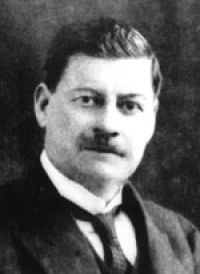
Portrait of Charles Eliot Charles Eliot,  Hinduism and Buddhism, An Historical Sketch…

“ This legend hardly proves that the Khmer people came from India but they undoubtedly received thence their civilization, their royal family and a considerable number of Hindu immigrants, so that the mythical ancestor of their kings naturally came to be regarded as the progenitor of the race. The Chinese traveller Chou Ta-kuan (1296 A.D.) says that the country known to the Chinese as Chên-la is called by the natives Kan-po-chih but that the present dynasty call it Kan-p'u-chih on the authority of Sanskrit (Hsi-fan) works. The origin of the name Chên-la is unknown. ”
Source: Gutenberg

Portrait of Charles Eliot Charles Eliot,  Hinduism and Buddhism, An Historical Sketch…

“ The multitude of great temples and opulent endowments, the knowledge of Sanskrit literature and the use of Indian names, leave no doubt about this, but it is highly probable that the mass of the people had their own humbler forms of worship. Still there is no record of anything that can be called Khmer—as opposed to Indian—religion. As in Siam, the veneration of nature spirits is universal in Camboja and little shrines elevated on poles are erected in their honour in the neighbourhood of almost every house. ”
Source: Gutenberg

Get perspective with Kwize: daily news enlightened by great literature