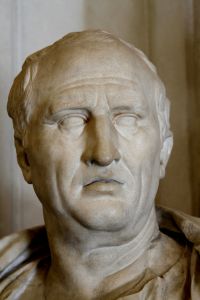
Laelius, a Roman statesman and general of the late Republic, is renowned for his association with Scipio Africanus and his embodiment of republican virtues. Authors like Cicero emphasize his intellectual and military abilities, contrasting him with Scipio in discussions on eloquence and wisdom. Livy describes his strategic roles in battles, while Greenidge and Sellar present him as a symbol of Rome’s transitional era, connecting Greek influence with Roman identity.
The Encyclopædia Britannica mentions his political resistance during the Gracchan crisis, highlighting his lasting reputation as a key figure in the Scipionic circle. These perspectives collectively portray Laelius as a complex individual whose legacy reflects both the ideals and conflicts of Roman public life.