“ Suddenly this straight line changed; an unlooked for turn revealed a new horizon, a transformation had been effected. Lantenac had appeared on the scene in an unexpected character. A hero had come forth from the monster; yea, one greater than a hero,—a man. Something higher than a mind,—a heart. He stood before Gauvain no longer a murderer, but a saviour. Gauvain was overwhelmed by a flood of celestial light. Lantenac had felled him to the ground by a thunderbolt of virtue. ”
Lantenac
Definition and stakes
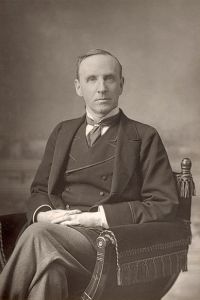
The theme of “Lantenac” has been addressed by authors such as Victor Hugo and John Morley. It is often associated with terms like Gauvain, marquis, Lantier, Gervaise and hero.
Quotes about “Lantenac”
 Victor Hugo,
Ninety-Three
(1900)
Victor Hugo,
Ninety-Three
(1900)
“ Kill him? What an anxiety! Set him free? What a responsibility! If Lantenac should be saved, the war with la Vendée would have to be begun all over again, as with a hydra, as long as its head is not cut off. In a twinkling, and with the swiftness of a meteor, the flame, extinguished by the disappearance of this man, would blaze forth again. Lantenac would not rest until he had realized that execrable plan of placing, like the cover of a tomb, the monarchy over the Republic, and England over France. ”
Victor Hugo,
Ninety-Three
(1874)
“ And Cimourdain raised his voice,— "Two men are enough; Lantenac, for us, myself for you. This is what I offer you, and it will be the saving of all your lives: give us Lantenac and take me. Lantenac will be guillotined, and you will have me to dispose of as you like." "Priest," howled l'Imânus, "if we had you we would burn you over a slow fire." "I am willing," said Cimourdain. And he added,— "You, condemned, who are in this tower can all be alive and free; in an hour I bring you safety. Do you accept it?" L'Imânus thundered,— "You are not only a villain; you are mad. ”
Victor Hugo,
Ninety-Three
(1874)
“ Three pieces drawn by horses strengthened the column, and at the same time left it easily handled. Lantenac also was a warrior and still more formidable. He was both more reflective and more daring. The real old heroes have more coolness than the young men because they are farther from the sunrise, and more audacious because they are nearer death. What have they to lose? so little! Hence, Lantenac's rash movements, which were at the same time so skillful. But in the main, in this obstinate hand-to-hand conflict, Gauvain almost always had the advantage. ”
Victor Hugo,
Ninety-Three
(1874)
“ No! no! no! it was not a monster of a man who had just illuminated civil war with the light of a divine action! The sword-bearer had been metamorphosed into an angel of light. Infernal Satan had returned as the celestial Lucifer. Lantenac had been redeemed from all his barbarities by an act of sacrifice; in losing himself materially, he had saved himself morally; he had become innocent; he had signed his own pardon. Does not the right to pardon one's self exist? Henceforth, he would be worthy of worship. Lantenac had just been extraordinary, it was now Gauvain's turn. ”
 John Morley,
Studies in Literature
John Morley,
Studies in Literature
“ Lantenac, though naturally a less original creation than the other two, is still an extremely bold and striking figure, drawn with marked firmness of hand, and presenting a thoroughly distinct and coherent conception. It is a triumph of the poetic or artistic part of the author's nature over the merely political part, that he should have made even his type of the old feudal order which he execrates so bitterly, a heroic, if ever so little also a diabolic, personage. There is everything that is cruel, merciless, unflinching, in Lantenac; there is nothing that is mean or insignificant. ”
Victor Hugo,
Ninety-Three
(1874)
“ Besides the Republic had reason to be troubled about this Marquis de Lantenac. He had hardly landed when he made them tremble. His name had run through the Vendéan insurrection like a train of powder, and Lantenac became at once the centre. In a revolt of this kind, where all are jealous of each other, and each has his bush or his ravine, the coming of a superior rallies the scattered chiefs, who are equals among themselves. Almost all the captains of the woods joined Lantenac, and from far and near, they obeyed him. One alone had left him; he had been the first to join him,—Gavard. Why? ”
“ Had not he, Gauvain the merciful, declared that Lantenac was to be excluded from mercy, and that he would deliver him to Cimourdain?This head was a debt which he owed, and he paid it That was all.But was this indeed the same head?Hitherto Gauvain had seen in Lantenac nothing but a barbarous warrior, enslaved by the fanaticisms of royalty and feudality, the murderer of prisoners, an assassin let loose by war, a man of blood,—and of that man he felt no fear; this proscriber of others he would himself proscribe; this relentless man would find him relentless also. Nothing could be more simple ”
Victor Hugo,
Ninety-Three
(1900)
“ Who could be there? Evidently, it was not Gauvain. It would be foolish to attack with one against four. Was it Léchelle? But what a forced march to have made! Léchelle was improbable; Gauvain, impossible. Lantenac spurred on his horse; on his way he met the inhabitants in flight; he questioned them, they were mad with fear. They cried: "The Blues! The Blues!" ”
Victor Hugo,
Ninety-Three
(1874)
“ You are a Gauvain, and Lantenac is a Gauvain. You are too nearly related to be a judge; and I blame Egalité for having judged Capet. The court martial will be composed of these judges: an officer, Captain Guéchamp; a sub-officer, Sergeant Radoub; and myself, who will preside. Nothing of all this will concern you. We shall conform to the decree of the Convention; we shall limit ourselves to establishing the identity of the former Marquis de Lantenac. To-morrow, the court-martial; the day after, the guillotine. La Vendée is dead. ”
Victor Hugo,
Ninety-Three
(1874)
“ It was more good fortune than anything else. All good luck, even good luck which is terrible, belongs to youth. Victory is in some respects like a young girl. Lantenac was incensed against Gauvain; first because Gauvain was opposed to him, then because he was his relative. What right had he to be a Jacobin! this Gauvain! this scamp! his heir, for the marquis had no children; a grand-nephew, almost a grandson! ”
Victor Hugo,
Ninety-Three
(1874)
“ Often, these terrible combatants trample our souls under foot. Gauvain meditated. The Marquis de Lantenac, surrounded, blockaded, condemned outlawed; held fast, like the wild beast in the circus, like a snail in pincers; shut up in his home, now become his prison; enclosed on all sides by a wall of iron and of fire,—had succeeded in getting away; he had performed a miracle of escape. He had made that masterstroke, the most difficult of all in such a war, flight. He had taken possession of the forest, to intrench himself there; of the country, to fight in it ”
“ From the top of the tower the Imânus kept watch of the enemy's approach. Lantenac had given orders that the besiegers should be allowed to advance unmolested."They are four thousand five hundred," he said; "it would be useless to kill them outside. Wait till they are within the walls, where we shall be equal to them." ”
Victor Hugo,
Ninety-Three
(1874)
“ One cannot follow in the steps of a man of trust; the shoe of la Rouarie did not fit Lantenac. Gavard had gone to join Bonchamp. Lantenac, as a soldier, belonged to the school of Fredderick II.; he knew how to combine the greater war with the less. He wished to have neither a "confused mass," like the great catholic and royal army, a multitude destined to be destroyed; nor a scattering in the thickets and copses, good for harrassing, powerless to overthrow. ”
“ For fifteen days he has held the old Marquis de Lantenac in check. He restrains him, and at the same time compels him to give way. He will end by forcing him to the sea and pitching him into it. Lantenac has the cunning of an old general, while his opponent possesses the boldness of a young captain. This young man has already won for himself enemies and detractors, who are envious of him. Adjutant-General Léchelle is jealous of him.""This Léchelle wants to be commander-in-chief," interrupted Danton. "He has only a pun in his favor,—it needs a ladder to mount into a cart. ”
Victor Hugo,
Ninety-Three
(1900)
“ The terrified inhabitants shut themselves up in their houses. The six thousand Vendéans took up their quarters in the town with boorish confusion; it was almost a fair ground, without quartermasters, without definite camp, bivouacking at haphazard, cooking in the open air, scattering about in the churches, leaving their guns for their rosaries. Lantenac hastened with some artillery officers to reconnoitre Mont-Dol, leaving the lieutenancy to Gouge-le-Bruant, whom he had appointed field-sergeant. ”
Victor Hugo,
Ninety-Three
(1874)
“ He has left the country. He is the Marquis de Lantenac, Viscount de Fontenay, prince in Brittany; he is the seigneur of the Sept-Forêts (seven forests) . I have never seen him, but that doesn't prevent his being my master." "And if you were to see him, would you obey him?" "Certainly. I should be a pagan if I didn't obey him! One owes obedience first to God; then to the king, who stands in the place of God; and then to the seigneur, who represents the king. But that is not the question; you have killed my brother, and I must kill you." ”
Victor Hugo,
Ninety-Three
(1874)
“ In the camp at Paramé there are nothing but tents. Between Tréguier and Dinan there are a hundred little useless posts which might be made into a division to cover the whole coast. Léchelle, supported by Parrein, is leaving the northern coast unguarded, under pretext of protecting the southern coast, and in this way opening France to the English. To raise half a million peasants, and a descent from England on France, is Lantenac's design. The young commander of the reconnoitring column is pushing on this Lantenac at the point of the sword, and defeating him without Léchelle's permission ”
Victor Hugo,
Ninety-Three
(1900)
“ Any one who wished could eat and drink. The firing of the cannon put them all on guard. They had only half an hour more before them. L'Imânus, from the top of the tower, was watching the approach of the besiegers. Lantenac had commanded them not to fire, and to let them draw near. ”
“ He holds the coast and drives Lantenac back into the interior and the English into the sea. Lantenac was here, but Gauvain dislodged him, recaptured Pont-au-Beau, drove him out from Avranches and Villedieu, and prevented him from reaching Granville. He is manoeuvring now to force him to retreat into the forest of Fougères, and there to surround him. Yesterday everything was favorable, and Gauvain was here with his division. All at once, mind you, the old man, who is a shrewd one, made a point; the news came that he had marched on Dol. ”
“ Some fled towards Châteauneuf, some towards Plerguer, and others in the direction of Antrain.The Marquis de Lantenac, who was the last man to leave the scene, spiked the guns with his own hands, and then quietly and calmly took his departure, saying as he went,—"It is evident that the peasants cannot be depended upon to stand their ground. ”
“ And then, as good luck would have it, this Lantenac at the time of his arrival, when he was massacring a multitude of prisoners, gave orders to have two women shot, one of whom had three children, who had been adopted by a Paris battalion. This roused the rage of the battalion, which is called the Bonnet-Rouge. There are but few of the original Parisians left, but they are desperate fighters. They have been incorporated into Commandant Gauvain's division. Nothing can resist them. Their great object is to avenge the women and recapture the children. ”
Victor Hugo,
Ninety-Three
(1874)
“ Lantenac did not intend to carry on this Breton war either wholly in the open field, as La Rochejaquelin had done, or wholly in the forest, like Jean Chouan; neither Vendée nor Chouannerie; he wanted real war; to make use of the peasant, but to support him with the soldier. He wished to have bands of men for strategy, and regiment for tactics. ”
Victor Hugo,
Ninety-Three
(1874)
“ The Marquis de Lantenac had confidence in his cruelty. It was a fact that l'Imânus excelled in cruelty; but in strategy and tactics he was less superior, and perhaps the marquis was wrong to make him field-sergeant. However that may be, he left l'Imânus behind him, with orders to take his place and watch everything. Gouge-le-Bruant, more of a warrior than a soldier, was more fit to slaughter a clan than to guard a city, but yet he stationed main guards. ”
Victor Hugo,
Ninety-Three
(1874)
“ That is your affair. You are traitors and cowards, incapable of devotion and sacrifice. I have spoken. Now have me guillotined, monsieur le vicomte. I have the honor to be your most humble servant." And he added, "Ah! I tell you the truth about yourself! What difference will it make to me? I am dead." "You are free," said Gauvain. And Gauvain stepped towards the marquis, took off his commander's cloak, threw it over Lantenac's shoulders and pulled the hood down over his eyes. They were of the same height. ”
Victor Hugo,
Ninety-Three
(1874)
“ A lantern was brought. Cimourdain rejoined Gauvain. They stopped to consider. It was indeed time to reflect. The besiegers were not in the secret of the besieged. They were ignorant of their lack of ammunition. They did not know that the defenders of the place were short of powder; the second story was the last post of resistance; the besiegers knew that the staircase might be mined. One thing was certain, that the enemy could not escape. Those who were not dead were as good as under lock and key. Lantenac was in a trap. ”
Charles Morris, Historic Tales: The Romance of Reality…
“ Seeing Lantaro, his late page, he asked him to intercede with the chief, and this the generous boy did. But the Araucanians had little faith in Spanish promises, and an old warrior who stood near ended the matter by raising his war-club and dashing out the captive's brains. Thus tragically ended the career of one of the least cruel of the Spanish conquerors. He paid the penalty of his disdain of Indian courage.Lantaro, the boy hero, had the blood of chiefs in his veins, and was endowed by nature with beauty of person, nobleness of character, and intrepidity of soul. ”
 Anatole France,
The Wicker Work Woman: A Chronicle of Our Own Times
Anatole France,
The Wicker Work Woman: A Chronicle of Our Own Times
“ It seemed to him that M. Lantaigne was in good odour at the Department of Religion, and, in short, his visit to Paris had only filled him with disquieting fancies. And now, if he was giving a lunch to the curé of Saint-Exupère, it was merely because the latter had the key to all the wire-pulling in M. Lantaigne’s party. M. Guitrel hoped, therefore, to worm out of the worthy curé all his opponent’s secrets.“And why,” continued the arch-priest, “should you not be a bishop one of these days, like M. Lantaigne?” ”
 Charlotte M. Yonge,
A Modern Telemachus
Charlotte M. Yonge,
A Modern Telemachus
“ Estelle dragged hard at Arthur’s hand, with entreaties that he would come, but he lifted her down the ladder, and then closed the door on her, Lanty and he being both left outside.‘To be shut into a hole like a rat in a trap when there’s blows to the fore, is more than flesh could stand,’ said Lanty, who had seized on a hand-spike and was waving it about his head, true shillelagh fashion, by hereditary instinct in one who had never behold a faction fight, in what ought to have been his native land. ”
Anatole France,
The Elm-tree on the Mall
“ But, incapable of long self-flattery, M. Lantaigne speedily rejected this unlikely hope and saw in this lad a Guéroult, a Renan. And the sweat of anguish chilled his forehead. His fear was lest, in rearing such pupils, he might be training formidable enemies of the truth.He knew that it was in the temple itself that the hammers were forged which overthrew it. He very often said: “Such is the power of theological discipline that it alone is capable of rearing great reprobates; an unbeliever who has not passed through our hands is powerless and without weapons for evil. ”
