Leavenworth, Kansas

Definition and stakes

1911 Encyclopædia Britannica (1911)

“ During the Civil War Leavenworth enjoyed great prosperity, at the expense of more inland towns, partly owing to the proximity of the fort, which gave it immunity from border raids from Missouri and was an important depôt of supplies and a place for mustering troops into and out of the service. Leavenworth was, in Territorial days and until after 1880, the largest and most thriving commercial city of the state, and rivalled Kansas City, Missouri, which, however, finally got the better of it in the struggle for railway facilities. ”
Source: Wikisource

The American Cyclopædia — Leavenworth…

“ LEAVENWORTH, a N. E. county of Kansas, bounded N. E. by the Missouri river, which separates it from Missouri, and S. by the Kansas; area, 460 sq. m.; pop. in 1870, 32,444. The surface is undulating, diversified with prairies and timber lands; the soil is fertile. The Leavenworth branch of the Kansas Pacific railroad traverses it, and it is also crossed by the Kansas Central and the Missouri Pacific railroads. The chief productions in 1870 were 31,647 bushels of wheat, 1,133,188 of Indian corn, 193,851 of oats, 295,980 of potatoes, 14,380 lbs. ”
Source: Wikisource

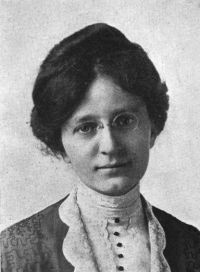
Portrait of Anna E. Arnold Anna E. Arnold,  A History of Kansas

“ People were coming in from north, east, and south, settling on claims and starting other towns. The principal proslavery towns were Leavenworth, Atchison, and Lecompton. Free-state towns were Lawrence, Topeka, Osawatomie, and Manhattan. Leavenworth and Atchison were both founded by people from Missouri, and, since they were on the Missouri River, came to be outfitting 69 points for travelers over the California and Salt Lake Trails. Lecompton, on the Kansas River, not far from Lawrence, soon became the headquarters of the proslavery people, and for several years was the Territorial capital. ”
Source: Gutenberg

Get perspective with Kwize: daily news enlightened by great literature