Lepidosteus

Definition and stakes

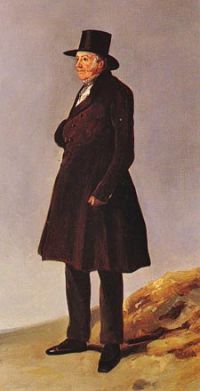
Portrait of Burt Green Wilder Burt Green Wilder,  Popular Science Monthly (1877)

“ But do we know, or can we easily infer, any differences in the necessities or the manner of life of the Lepidosteus at different ages, which may account for its having a tail first like a lamprey's, then like a sturgeon's, and, finally, like that of Amia?
It may be suggested that the rapid and, at most, invisible vibrations of the filament enable the young gar to glide stealthily upon its prey.
”

Source: Wikisource

Francis M. Balfour,  The Works of Francis Maitland Balfour…

“ The body of the young Lepidosteus is quite colourless and transparent. The embryonic fin is narrow, the dorsal part commencing above the posterior end of the yolk-bag; the tail is slightly rounded, the anal opening nearer the extremity of the tail than the bag. The intestine is narrow, and the embryonic fin extending from the vent to the yolk-bag is quite narrow. In a somewhat more advanced stage,—hatched a few hours earlier,—the upper edge of the yolk-bag is covered with black pigment cells, and minute black pigment cells appear on the surface of the alimentary canal. ”
Source: Gutenberg

Portrait of Burt Green Wilder Burt Green Wilder,  Popular Science Monthly (1877)

“ Fig. 8.—Four Figures of the Tails of Lepidosteus at Different Stages.
A, from a specimen twenty-two millimetres or seven-eighths inch long, enlarged four diameters. The ventral fin (Ve) is just appearing. The median fin is being absorbed between the fourspots referred to in Fig. 9. The lip of the tail is inclined upward, and the infra-caudal lobe is larger. In B the primordial fin has almost disappeared; the dorsal (D) and the anal (A) fins are quite large. The infra-caudal lobe is nearly as long as the tip of the original tail, which has been reduced to a slender vibratile filament.
”
Source: Wikisource

Get perspective with Kwize: daily news enlightened by great literature