Macrobius

Definition and stakes

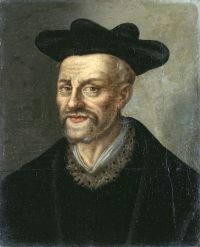
Portrait of François Rabelais François Rabelais,  Three Good Giants

“ Macrobius asked Pantagruel how it was that he and his fleet could have survived the awful storm and reached port, when the Macreons could see that all the air and the earth were in wild uproar. Pantagruel answered, with that simple faith of his which gives the smallest dwarf the strength of the tallest giant, "Friend, it was God's will." ”
Source: Gutenberg

George Middleton,  The Student's Companion to Latin Authors

“ Besides his commentary on the Somnium Scipionis of Cicero, Macrobius wrote a work in seven Books on Roman literature and antiquities with the title of Saturnalia. The imaginary conversations of which it consists are supposed to take place during the festival of the Saturnalia at Rome (hence the title) ; and the chief subject of discussion is the poetry of Virgil. A remarkable feature of the book is its wealth of quotation from Greek and Latin authors. Macrobius, like Gellius, bases his work on extracts from older authorities; but, unlike him, arranges his matter systematically. ”
Source: Gutenberg

W. Warde Fowler,  The Roman Festivals of the Period of the Republic

“ This was undoubtedly the real popular belief—that by eating this food on Carna’s day your digestion was secured for the year. Macrobius [531] makes the practice into a much more definite piece of ritual. ‘Prayers are offered to this goddess,’ he says, ‘for the good preservation of liver, heart, and the other internal organs of our bodies. Her sacrifices are bean-meal and lard, because this is the best food for the nourishment of the body.’ Ovid is here the genuine Italian, Macrobius the scholar and theologian: both may be right. ”
Source: Gutenberg

Get perspective with Kwize: daily news enlightened by great literature