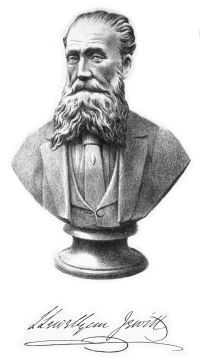
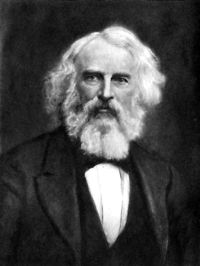
“ At Sèvres, on the other hand, we shall see that the glaze of the hard porcelain contains no lime, while that substance is an essential constituent in the paste.The Meissen porcelain, and indeed the German porcelains generally, form a typically hard and refractory group. But they have in a full measure les défauts de leurs qualités. Among them we may look in vain for that blending of the glaze and body that gives to the best Chinese porcelain a surface like that of polished marble; still less do we find in the enamel decoration the brilliancy and transparence of Oriental wares. ”
Meissen porcelain
Definition and stakes
Quotes about “Meissen porcelain”
William Burton, Harry R. H. Hall, Albert van de Put, Henry B. Walters, Robert L. Hobson and Bernard Rackham, 1911 Encyclopædia Britannica (1911)
“ So jealously were the secrets of this factory guarded that when Napoleon, the master of Europe, sent Brongniart to investigate the methods in use at Meissen in 1812, the elector of Saxony had to release Steinauer, the director, from his oath of secrecy before he would explain the processes. Meissen porcelain, therefore, affords us the best example by which we may follow the changes of fashion and taste that governed the styles of porcelain decoration in Europe during the 18th century. ”
“ The flower-painter came first with realistic, well-shaded little nosegays, in the style of the Dutch painters of the day; then landscapes, views of real towns, sometimes in a purple-red monochrome, and surrounded by a gold rococo frame to imitate that of an oil picture. The free use of gold, however, in the European porcelain of this time, was to some extent a saving point. It helped, as gold always does, to pull together the decoration. On the earlier Meissen ware the gold is most solidly applied and has worn well. ”
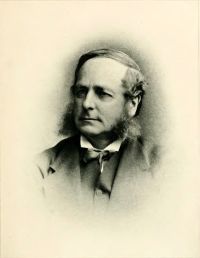
“ At Meissen, says M. Garnier, they are still working on the old lines: reproductions of the models made a century and a half ago by Kändler are as much as ever in demand. Certain ambitious attempts in a newer style have resulted in errors that will add nothing to the fame of the works. (Dr. Heintze, the present director, has especially devoted himself to the development of the new colours under the glaze. But the porcelain now produced, apart from the copies of the old wares, follows in the lines either of the Copenhagen porcelain, or again, at times, of the coloured pastes of Sèvres.) ”
Bernard Rackham, A Book of Porcelain: Fine examples in the Victoria & Albert Museum
“ The Meissen factory had not long been working before its success suggested the introduction of the manufacture of porcelain in other German states, and in less than fifty years from the date of the royal patent of Augustus the Strong, a porcelain factory was considered a necessary adjunct to the Court of even the minor German rulers. ”
Sara Ware Bassett, The Story of Porcelain
“ Afterward the potters attempted the use of blue in a vain attempt to reproduce Nankin Blue ware.""I guess the other countries were pretty sore when they found Saxony had learned how to make porcelain," put in Theo."They were greatly agitated, my son," laughed Mr. Croyden. "They begged, bribed, and schemed to find out what the new clay was; but all to no purpose. The works at Meissen were guarded day and night, and every person employed in the factory was compelled to swear to keep the great secret. Men were cautioned they would be shot should they divulge the process. ”
William Burton, Harry R. H. Hall, Albert van de Put, Henry B. Walters, Robert L. Hobson and Bernard Rackham, 1911 Encyclopædia Britannica (1911)
“ German experimenters worked in another direction, and the first porcelain made in Europe from materials similar to the Chinese was produced at Meissen by Böttger (1710–1712) . During the 18th century not only was there a very large trade in imported Chinese and Japanese porcelain, but there was a great development of porcelain manufacture in Europe; and in every country factories were established, generally under royal or princely patronage, for the manufacture of artificial porcelain like the French, or genuine porcelain like the German. ”
“ There are some elaborately decorated plates at South Kensington which well illustrate the merits or demerits of this ware. In spite of the early foundation of the factory, the Viennese porcelain, as a whole, falls into the later ‘sentimental to classical’ period, that contemporary with Marcolini at Meissen and with the earlier hard paste of Sèvres. The historical development of the ware is well illustrated in the Industrial Museum at Vienna, and it may be acknowledged that some success was obtained with small figures and even life-sized busts. ”
“ The shapes of the vases, however, go too far in the direction of eccentricity. (Cf. p. 389.) As at Meissen, so in the porcelain now made in{394} Italy there is a total absence of all personality and novelty, and the old, well-beaten road is still followed. At Florence this is carried so far that the old moulds acquired so many years ago from the Capo di Monte works are still in use. ‘Ce sont des choses,’ says M. Garnier, ‘qui prêtent trop au “truquage” et qu’il faut laisser aux fabricants de vieuxneuf.’{395}EXPLANATION OF THE MARKS ON THE FOLLOWING PLATES (A. TO E.) CHINESE MARKS1. ”
Jennie J. Young, The Ceramic Art
“ The supreme delicacy with which the requisite tints are here applied is admirable. On others are different kinds of seaweed and other marine objects, in which the artist has caught the natural hues with wonderful precision. The porcelain vases are, as a rule, small in size. No attempt, so far as we are aware, has been made to follow the gigantic works of Sèvres, Meissen, and Berlin, and we do not regret the fact. The works with which we are presented show great skill in the colors obtained, and the shapes are simple and sometimes severe. ”
“ VIENNA—BERLIN—HÖCHST—FÜRSTENBERG—LUDWIGSBURG—NYMPHENBURG—FRANKENTHAL—FULDA—STRASSBURG. THE HARD AND SOFT PASTES OF SWITZERLAND, HUNGARY, HOLLAND, SWEDEN, DENMARK, AND RUSSIA. IN spite of the elaborate precautions that were taken—the oaths of secrecy, the military guards that accompanied the relays of china-clay to the fortress at Meissen in which the works were established—by the middle of the eighteenth century, at nearly all the courts of Germany, imperial, royal, or serene, we find a porcelain manufactory already in full work. ”
“ So long as the kaolin from Passau was employed the paste was inferior to that of Meissen and Berlin, but in later days a better material was obtained from Bohemia. The most flourishing period was from 1770 to 1790, and in 1780, we are told, there were three hundred and twenty men employed. In early years the porcelain did not differ much from that of Dresden, but in 1784, when Conrad von Sorgenthal became director, a new style was introduced which has made the Viennese in some respects the typical ware of a bad period. ”
Jennie J. Young, The Ceramic Art
“ While working to that end, Böttcher surprised himself by producing something akin to Chinese porcelain. The course of his experiments was turned at once from the channel in which it had run. The king gave him every facility for continuing his experiments and working out his secret. He was first established at Meissen, then at Königstein, and last at Dresden. The first results were comparatively rude; then came a reddish stone-ware, and afterward a dull white porcelain. ”
Bernard Rackham, A Book of Porcelain: Fine examples in the Victoria & Albert Museum
“ He obtained the assistance of an expert from the factory at Vienna, Carl Wendelin Anreiter, of whose painted work on porcelain rare specimens are occasionally met with. The earliest Doccia productions showed distinct signs of Meissen influence, as may be seen from a soup-bowl in the Victoria and Albert Museum; this has a basket-work rim of the Meissen type, and is45 decorated with genre scenes from Italian peasant life in medallions, surrounded by tendrils in red and gold and small panels of lilac colour. Other pieces of the same service bear the mark of a Doccia painter, Pietro Fanciullacci. ”
R. L. Hobson, Chinese pottery and porcelain; vol… (1915)
“ In the open air children are painting the cups. Each artist paints with his own colour and his own few strokes, whether a leaf, a tree, a man’s dress or beard, and passes it over to his neighbour, who in turn applies his brush to paint what is his share in the decoration.” Unfortunately there is no reason to suppose that the writer made his observations with an expert eye which would make a distinction between pottery and porcelain, but in any case it is certain that he found a vast ceramic industry in full blast at Tê-hua. ”
R. L. Hobson, Chinese pottery and porcelain; vol… (1915)
“ Several of these are in the British Museum, and they show a white compact body of close but granular fracture; the glazed face is a pure, solid-looking white, and the unglazed sides show a smooth, fine-grained ware which has assumed a pinkish red tinge in the firing. The coarser porcelains of the period would, no doubt, have similar characteristics in body and glaze. The finer wares are exemplified by the white bowls, of wonderful thinness and transparency, with decoration engraved in the body or traced in delicate white slip under the glaze and scarcely visible except as a transparency. ”
R. L. Hobson, Chinese pottery and porcelain; vol… (1915)
“ The latter was made to perfection in the K’ang Hsi period. Having no colours to distract the eye from surface blemishes, nothing short of absolute purity could satisfy the critic. In choice specimens the paste was fine, white and unctuous, the glaze clear, flawless, and of oily lustre, [360] the form was elegant and the potting true. Such pieces without blemish or flaw are the very flower of porcelain, whether they be of eggshell thinness (t’o t’ai) , half eggshell (pan t’o t’ai) , or of the substance of ordinary wares. ”
Various, The Mirror of Literature, Amusement…
“ It is not for me to determine which of our English porcelains is the best; probably, indeed, one will be found superior in hardness, another in whiteness, a third in the thinness and evenness of the glaze, a fourth in the form of the articles, a fifth in the design, and a sixth in the colours. In hardness and in fusibility, they are probably all inferior to the Dresden and to the Sevrès porcelain; for pieces in biscuit and in white glaze, from both these manufactories, are imported in considerable quantities, in order to be painted and finished here. ”
“ This place would be taken, in such a collection, by a series of small bowls and jars mostly of a dark-coloured earthenware, which offer little to attract a European eye. On the other hand, a Western collector of Japanese ceramics would be likely to find more to interest him in the decorated fayence of which the kilns of Kioto and Satsuma have furnished the most exquisite examples. And yet, perhaps, in no country, not even in China, do we find porcelain, and that of a high technical quality, so largely employed for domestic use. ”
Arthur Hayden, Chats on Royal Copenhagen Porcelain
“ Nevers, Rouen, and Moustiers caught the colour-schemes of Persia and Italy, and each in turn made them her own. In studying the finest work of the old masters of faience we see that the technique is something very different from what Staffordshire has made it. John Dwight in the seventeenth, and Thomas Whieldon in the eighteenth century both worked on sound lines. It is not high art to attempt to make faience simulate porcelain, any more than it is when wall paper pretends to be marble, or leather, or tapestry. Porcelain shows as much of its white body and sparkling glaze as is possible. ”
R. L. Hobson, Chinese pottery and porcelain; vol… (1915)
“ The verdict of the T’ao lu, “extremely refined and elegant,” is fully justified by the porcelain itself no less than by its decoration.Not the least deserving of this praise, though mainly made for export, is the important group discussed on page 209, viz. the saucer dishes, plates, tea and coffee wares, etc., of delicate white porcelain, painted, apparently at Canton, in the famille rose enamels. It is an “eggshell” porcelain, white, thin, and beautifully finished, and the dainty little conical or bell-shaped tea cups, though without handles, are the perfection of table ware. ”
“ There is here no necessity for concealing the natural white colour of the paste. In the case of many kinds of pottery, however, as in the ‘enamelled fayence’ of Delft and Italy, the glaze is rendered opaque by the addition of oxide of tin, so that the ill-favoured ground is concealed by a white shiny surface which may be made to resemble closely the natural surface of porcelain. ”
R. L. Hobson, Chinese pottery and porcelain; vol… (1915)
“ On the other hand, one sometimes finds the individual brush strokes, as it were, bitten into the porcelain body, and almost suggesting scratched lines. Both peculiarities, the thick fluescent blue and the deep brush strokes, are observable on a small vase of unusually glassy porcelain in the Franks Collection. Two other pieces in the same collection may be quoted. One is a tazza or high-footed bowl with a band of Sanskrit characters and deep borders of close lotus scrolls, very delicately drawn in a soft pure blue, to which a heavily bubbled glaze has given a hazy appearance. ”
“ This is a practical, and, we may also add, a hygienic defect, that is now sometimes forgotten, the more so as nowadays our common table ware is free from this fault, and resembles fine porcelain in so far that the white, compact body is covered by nothing but the transparent glaze. In fact, as far as European experience is concerned, we may say, broadly, that the merits of porcelain compared with those of fayence are rather of a practical than of an artistic nature. ”
R. L. Hobson, Chinese pottery and porcelain; vol… (1915)
“ Taken, as they may fairly be, as typical specimens, they show on the [69] whole a porcelain of indifferent quality, with all the defects and virtues of export ware—the summary finish of skilful potters who worked with good material but for an uncritical public, and rapid, bold draughtsmanship in an ordinary quality of blue usually of greyish or indigo tint. The most finished specimen was a bowl from the Pierpont Morgan Collection, with a design of phœnixes and lotus scrolls finely drawn in blue of good quality. ”
Charles Wyllys Elliott,
Pottery and Porcelain, from early times down to the Philadelphia exhibition of 1876
“ In the Loan Collection of the Metropolitan Museum of Art have been exhibited many examples from Mr. Prime’s collection of porcelains, and about five hundred pieces of Oriental ware from Mr. Avery’s, of nearly every distinctive style made in China and Japan in their best times.The collection of Mr. Robert Hoe, Jr., is extremely choice in its admirable specimens of Oriental porcelain. Its egg-shells, crackles, and “celestial blues,” are not to be excelled. In this collection are also examples of other styles, among them some of the best of old Dresden. ”
Sara Ware Bassett, The Story of Porcelain
“ It is the duty of one worker to arrange the design and see that it is in the right place; and the task of the next one to rub it in with the flannel and soap. Then after the china has stood for some time it is put into water and the paper sticking to it is floated off, leaving the colored print on the porcelain.""Is it done before the ware is fired?" asked Theo."Sometimes it is done on the biscuit ware before it is glazed, and sometimes on the glaze itself. It all depends on the result the decorators wish to obtain. ”
“ This would be strictly true, for instance, of the white porcelain of Berlin, so largely used in the chemical laboratory; a great deal, too, of the china in domestic use receives no decoration of any kind. But for us there remains still to examine the element of colour and the way in which it is applied to the decoration of porcelain.This is effected in three different ways: by the employment of coloured glazes; by painting on the surface of the paste before the glaze is applied (this is the decoration sous couverte) ; and finally by coloured enamels applied to the surface of the glaze. ”
R. L. Hobson, Chinese pottery and porcelain; vol… (1915)
“ At their worst, they are deliberate frauds added by modern vendors with intent to deceive.Incised or stamped marks have always been common on pottery, but porcelain is usually marked by painting with a brush, and for this purpose underglaze blue is the commonest medium, red and [208] other on–glaze colours being used chiefly on the relatively modern wares decorated in famille rose enamels. Similarly the ordinary script is usual in marks, and seal characters are quite exceptional on porcelain earlier than the eighteenth century. ”