Michael Strogoff

Definition and stakes

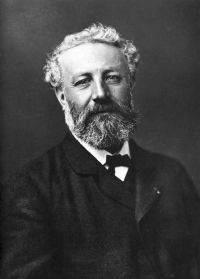
Portrait of Jules Verne Jules Verne,  Michael Strogoff; Or, The Courier of the Czar

“ Michael Strogoff went out of the hut. When he tried to walk he was seized with such faintness that, without the assistance of the mujik, he would have fallen; but the fresh air quickly revived him. He then felt the wound in his head, the violence of which his fur cap had lessened. With the energy which he possessed, he was not a man to succumb under such a trifle. Before his eyes lay a single goal—far-distant Irkutsk. He must reach it! But he must pass through Omsk without stopping there.
“God protect my mother and Nadia!” he murmured. “I have no longer the right to think of them!”
”
Source: Gutenberg

Portrait of Jules Verne Jules Verne,  Michael Strogoff (1876) — Chapter XXIII (1876)

“ Michael Strogoff waited alone for a minute, listening attentively.
Nadia returned almost immediately and said, "It is a cart. A young man is leading it."
"Is he alone?"
"Alone."
Michael hesitated an instant. Should he hide? or should he, on the contrary, try to find a place in the vehicle, if not for himself, at least for her? For himself, he would be quite content to lay one hand on the cart, to push it if necessary, for his legs showed no sign of failing him; but he felt sure that Nadia, compelled to walk ever since they crossed the Obi, that is, for eight days, must be almost exhausted.
”
Source: Wikisource

Portrait of Jules Verne Jules Verne,  Michael Strogoff (1876) — Chapter III (1876)

“ In a few moments Michael Strogoff, the courier, entered the imperial library. He was a tall, vigorous, broad-shouldered, deep-chested man. His powerful head possessed the fine features of the Caucasian race. His well-knit frame seemed built for the performance of feats of strength. It would have been a difficult task to move such a man against his will, for when his feet were once planted on the ground, it was as if they had taken root. ”
Source: Wikisource

Get perspective with Kwize: daily news enlightened by great literature