Molinism

Definition and stakes

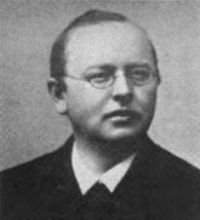
Portrait of Joseph Pohle Joseph Pohle,  Grace, Actual and Habitual: A Dogmatic Treatise

“ Molinism.—Molinism takes its name from the Jesuit Luis de Molina, who published a famous treatise under the title Concordia Liberi Arbitrii cum Gratiae Donis at Lisbon, in 1588. His teaching may be outlined as follows:
a) In actu primo there is no intrinsic and ontological but merely an extrinsic and accidental distinction between efficacious and sufficient grace, based upon their respective effects. Sufficient grace becomes efficacious by the consent of the will; if the will resists, grace remains inefficacious (inefficax) and merely sufficient (gratia mere sufficiens) .
”
Source: Gutenberg

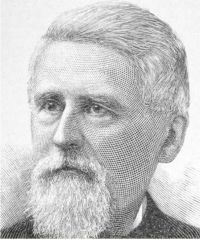
Portrait of Henry Charles Lea Henry Charles Lea,  A History of the Inquisition of Spain…

“ The condemnation of Molinos seems to have stimulated the Inquisition to greater activity in the suppression of mysticism, for cases begin to appear more frequently in the records and henceforth the term Molinism, to a great extent, takes the place of Illuminism. We hear of a Molinist penanced in a Córdova auto of May 12, 1693, [130] and he cannot have been the only one there for Fray Francisco de Possadas of that city tells us that he was led to write his book against the carnal errors of Molinos by his experience in the confessional, showing that some of his penitents had been misled by them. ”
Source: Gutenberg

Portrait of Joseph Pohle Joseph Pohle,  Grace, Actual and Habitual: A Dogmatic Treatise

“ Another and more plausible contention of the Thomist school is that Molinism, too, is compelled to ascribe sin somehow to God. “It is impossible for a man to sin unless God lends His coöperation. Do not, therefore, the Molinists also make God the author of sin?” Those who argue in this wise overlook the fact that there is a very large distinction between the concursus simultaneus of the Molinists and the praemotio physica of the Thomists. The praemotio physica predetermines the sinful act without regard to the circumstance whether or not the will is able to offer resistance. ”
Source: Gutenberg

Get perspective with Kwize: daily news enlightened by great literature