“ Casaubon now, it was as if he suddenly found himself on the dark river-brink and heard the plash of the oncoming oar, not discerning the forms, but expecting the summons. In such an hour the mind does not change its lifelong bias, but carries it onward in imagination to the other side of death, gazing backward—perhaps with the divine calm of beneficence, perhaps with the petty anxieties of self-assertion. What was Mr. Casaubon’s bias his acts will give us a clew to. ”
Mr. Casaubon
Definition and stakes
The theme of “Mr. Casaubon” has been addressed by authors such as George Eliot, Jane Austen, David Carnegie Andrew Agnew, Leslie Stephen and Mathilde Blind. It is often associated with terms like Brooke, Dorothea, Gerald, will and Rome.
Quotes about “Mr. Casaubon”
“ His experience was of that pitiable kind which shrinks from pity, and fears most of all that it should be known: it was that proud narrow sensitiveness which has not mass enough to spare for transformation into sympathy, and quivers thread-like in small currents of self-preoccupation or at best of an egoistic scrupulosity. And Mr. Casaubon had many scruples: he was capable of a severe self-restraint; he was resolute in being a man of honor according to the code; he would be unimpeachable by any recognized opinion. ”
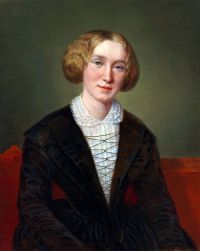 George Eliot,
Middlemarch
(1872)
“ The thoughts which had gathered vividness in the solitude of her boudoir occupied her incessantly through the day on which Mr. Casaubon had sent his letter to Will. Everything seemed hindrance to her till she could find an opportunity of opening her heart to her husband. To his preoccupied mind all subjects were to be approached gently, and she had never since his illness lost from her consciousness the dread of agitating him. But when young ardor is set brooding over the conception of a prompt deed, the deed itself seems to start forth with independent life, mastering ideal obstacles. ”