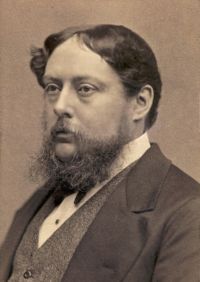
Mr. Newton

Definition and stakes

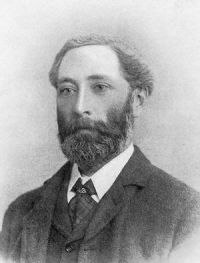
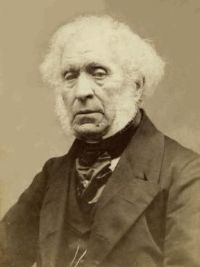
Portrait of David Brewster David Brewster,  The Life of Sir Isaac Newton

“ Newton elected Associate of the Academy of Sciences in 1699—Member for Cambridge in 1701—and President of the Royal Society in 1703—Queen Anne confers upon him the Honour of Knighthood in 1705—Second Edition of the Principia, edited by Cotes—His Conduct respecting Mr. Ditton’s Method of finding the Longitude.
Hitherto we have viewed Newton chiefly as a philosopher leading a life of seclusion within the walls of a college, and either engaged in the duties of his professorship, or ardently occupied in mathematical and scientific inquiries.
”
Source: Gutenberg

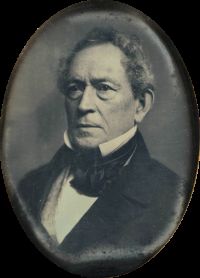
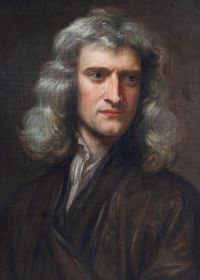
Portrait of Isaac Newton Isaac Newton,  The Mathematical Principles of Natural Philosophy (1846)

“ There is one Mr. Newton (whom I have very oft seen) , Fellow of Trinity College, that is mighty famous for his learning, being a most excellent mathematician, philosopher, divine, &c. He has been Fellow of the Royal Society these many years; and among other very learned books and tracts, he's written one upon the mathematical principles of philosophy, which has given him a mighty name, he having received, especially from Scotland, abundance of congratulatory letters for the same ”
Source: Wikisource

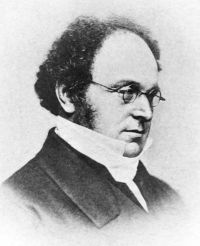
Portrait of Isaac Newton Isaac Newton,  The Mathematical Principles of Natural Philosophy (1846)

“ Mr. Leibnitz calling those quantities differences which Mr. Newton calls moments, or fluxions; and marking them with a letter d—a mark not used by Mr. Newton.
"And, therefore, we take the proper question to be, not who invented this or that method, but, who was the first inventor of the method? And we believe that those who have reputed Mr. Leibnitz the first inventor knew little or nothing of his correspondence with Mr. Collins and Mr. Oldenburg long before, nor of Mr. Newton's having that method above fifteen years before Mr Leibnitz began to publish it in the Acta Eruditorum of Leipsic.
”
Source: Wikisource

Get perspective with Kwize: daily news enlightened by great literature