“ It was during the reign of the late king, Oscar II, that Sweden attained her greatest prosperity and made most progress. Oscar II, brother of his predecessor, ascended the throne at a moment when universal peace was restored after the great conflict between France and Germany, and when an age of commercial prosperity for Sweden seemed to have begun. King Oscar had received the same superior education as his older brothers, was as brilliantly gifted as they, and of a more scholarly mind. ”
Oscar II of Sweden
Definition and stakes
The theme of “Oscar II of Sweden” has been addressed by authors such as Victor Alfred Nilsson, Frederick Beck, Robert Nisbet Bain, Oskar Dumrath, Osbert Howarth and Edmund Gosse, Edmund William Gosse, M. de Burigny and Sigvart Sörensen. It is often associated with terms like Norway, Stockholm, king, Swedish and Russia.
Quotes about “Oscar II of Sweden”
Frederick Beck, Robert Nisbet Bain, Oskar Dumrath, Osbert Howarth and Edmund Gosse, 1911 Encyclopædia Britannica, Volume 26… (1911)
“ King Oscar II. died on the 9th of December 1907, sincerely regretted by his people, and was succeeded as king of Sweden by his eldest son, Prince Gustaf. During King Oscar’s reign many important social reforms were carried out by the legislature, and the country developed in all directions. In the Riksdag of 1884 a new patent law was adopted, the age at which women should be held to attain their majority was fixed at twenty-one years and the barbarous prison punishment of “bread and water” abolished. ”
1911 Encyclopædia Britannica, Volume 20… (1911)
“ Most of the legislation during Oscar I.'s reign aimed at improving the economic position of Sweden, and the riksdag, in its address to him in 1857, rightly declared that he had promoted the material prosperity of the kingdom more than any of his predecessors. In foreign affairs Oscar I. was a friend of the principle of nationality. In 1848 he supported Denmark against Germany; placed Swedish and Norwegian troops in cantonments in Fünen and North Schleswig (1849-1850) ”
Related terms
Authors who wrote about “Oscar II of Sweden”
Victor Alfred NilssonFrederick Beck, Robert Nisbet Bain…Edmund William GosseM. de BurignySigvart SörensenPhilip Lake, Osbert J. R. Howarth…Cornelia MeigsIan C. HannahFrancis Johnson Maurice Francis EganVarious
 Bayard TaylorL. de Hegermann-Lindencrone
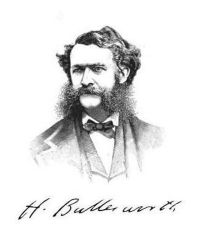 Hezekiah ButterworthLewis GoldsmithS. E. FryerCharles Morris
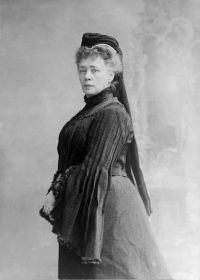 Bertha von SuttnerJohn Bell Bouton
 Allen Upward
Maurice Francis EganVariousBayard TaylorL. de Hegermann-LindencroneHezekiah ButterworthLewis GoldsmithS. E. FryerCharles MorrisBertha von SuttnerJohn Bell BoutonAllen Upward