“ Like all sound revolutions, Post-Impressionism is nothing more than a return to first principles. Into a world where the painter was expected to be either a photographer or an acrobat burst the Post-Impressionist, claiming that, above all things, he should be an artist. Never mind, said he, about representation or accomplishment—mind about creating significant form, mind about art. ”
Post-Impressionism
Definition and stakes
The theme of “Post-Impressionism” has been addressed by authors such as Arthur Jerome Eddy, Clive Bell, Clara Erskine Clement Waters, Willard Huntington Wright and Geoffrey Arundel Whitworth. It is often associated with terms like painting, art, painter, artist and beauty.
Quotes about “Post-Impressionism”
“ Even to speak of Post-Impressionism as a movement may lead to misconceptions; the habit of speaking of movements at all is rather misleading. The stream of art has never run utterly dry: it flows through the ages, now broad now narrow, now deep now shallow, now rapid now sluggish: its colour is changing always. But who can set a mark against the exact point of change? In the earlier nineteenth century the stream ran very low. In the days of the Impressionists, against whom the contemporary movement is in some ways a reaction, it had already become copious. ”
“ Post-Impressionism, therefore, implies no violent break with the past. It is merely a deliberate rejection of certain hampering traditions of modern growth. It does deny that art need ever take orders from the past; but that is not a badge of Post-Impressionism, it is the commonest mark of vitality. ”
“ Creating a work of art is so tremendous a business that it leaves no leisure for catching a likeness or displaying address. Every sacrifice made to representation is something stolen from art. Far from being the insolent kind of revolution it is vulgarly supposed to be, Post-Impressionism is, in fact, a return, not indeed to any particular tradition of painting, but to the great tradition of visual art. It sets before every artist the ideal set before themselves by the primitives, an ideal which, since the twelfth century, has been cherished only by exceptional men of genius. ”
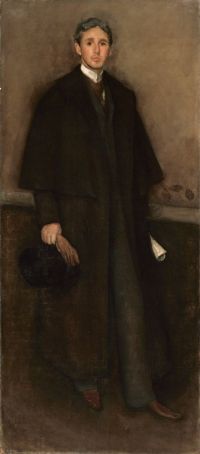 Arthur Jerome Eddy,
Cubists and Post-Impressionism
“ If we understand this we shall see that a new artistic movement, such as Post-Impressionism, is not to be judged merely by a few pictures or to be condemned because those pictures seem to us very unlike reality. Whatever may come of it, it is something that is happening in all the arts, because discovery is turning in a new direction. All the successes of the past are obstacles to new success of the same kind, and discovery naturally takes a line of least resistance away from them. ”
Arthur Jerome Eddy,
Cubists and Post-Impressionism
“ Impressionism is painting with a minimum of esoragoto; Post-Impressionism is painting with a maximum of esoragoto.The pendulum in art and literature swings from less esoragoto to more—from realistic transcription with a minimum of self, to idealistic compositions with a maximum of self.All the great art of the world is esoragoto.The greatest paintings in the world are indoor not outdoor paintings—in-self not out-self. ”
Arthur Jerome Eddy,
Cubists and Post-Impressionism
“ Even in England, where the arts are not commonly taken very seriously, they are beginning to clap or hiss on principle, and to feel that they are making history when they do so. Partisans on both sides are probably not very clear in their minds why they like Post-Impressionism or dislike it; but the word, vague and clumsy as it is, does imply to them a set of tendencies by which all the arts may be ruined or regenerated. It is not merely a fashion in painting, but, like Romanticism,{215} a movement of the mind which is trying to express itself through all means of artistic expression. ”
“ It was near the end of last century that first appeared what has so misleadingly been called Post-Impressionism, an art with a new synthetic vision which saw beyond realism, which repudiated illusion, which tried to get deep down to where life and beauty touch and so externalise that indefinite something which makes things what they always 19 seem to us to be. This art which has recreated decoration, which is going to revolutionise stage-craft, house furniture and even building, while it deals unhesitatingly with any subject, is perhaps chiefly significant in its bearing on landscape. ”
“ Their pictures will be dubbed "Post-Impressionist," but only by gross injustice will they be excluded from Burlington House. Post-Impressionism is no specific against human folly and incompetence. All it can do for painters is to bring before them the claims of art. To the man of genius and to the student of talent it can say: "Don't waste your time and energy on things that don't matter: concentrate on what does: concentrate on the creation of significant form." ”
Arthur Jerome Eddy,
Cubists and Post-Impressionism
“ There is no denying that, and it takes even the most impartial and sympathetic observer a long time to pick out the things which are fine in color and line and to readjust his notions of beauty.Many of the pictures are brutal and most of them are crude, but while the first impression may be one of ugliness it is more, it is one of exceeding vitality.There is nothing musty about the moderns, their canvases are so alive they scream.As compared with the subdued tones of an academic exhibition a modern seems like a babel of discordant sounds, but the confusion is more apparent than real. ”
Arthur Jerome Eddy,
Cubists and Post-Impressionism
“ The stream of Pre-Impressionist and Impressionist pictures goes right on and in time history will repeat itself, the good in Post-Impressionism will be absorbed and the main current that supplies the great public with art will be Pre-impressionist + Impressionist + Post-impressionist, with as many more prefixes as the ingenuity of the artist can devise to describe his vagaries.Painters are a good deal like inventors, each of whom thinks his invention sure to revolutionize the world, to find{20} in the end that his supposed invention is either not new or if new not valuable. ”
Arthur Jerome Eddy,
Cubists and Post-Impressionism
“ UGLINESS THE modern movement is in the direction of greater freedom, freedom to produce beautiful things in one’s own way.Unhappily many of the things produced are not beautiful now—not nearly so dignified and beautiful as thousands upon thousands of old pictures.One’s first impression on entering an exhibition of extreme modern works is not an impression of beauty but of ugliness. ”
Arthur Jerome Eddy,
Cubists and Post-Impressionism
“ The trouble with most of us is that even when we do react to new impressions and experience new emotions we are afraid to admit it. If any one of us, while alone in a museum, happened to run across a strange painting or a strange piece of sculpture—say a Javanese or a cubist production—we would not burst out laughing any more than we would laugh at some of the archaic sculptures and primitive works that are found in every great collection. ”
Geoffrey Arundel Whitworth, The Art of Nijinsky (1913)
“ And yet to those who are accustomed to a more critical view of painting, this same Post-Impressionism offers no such difficulties. Whether they approve of it or disapprove, they are not deceived into mistaking it for a monster. ”
Arthur Jerome Eddy,
Cubists and Post-Impressionism
“ We have entered into one of those periods of artistic revolution in which the public, audience, or spectators become partisans and express their opinions as if they were at a political meeting. The Russian Ballet, for instance, produced a conflict of opinion last Friday, which recalls the conflicts provoked by the plays of Victor Hugo in the thirties. Post-Impressionism now is what the Romantic movement was then. To one party it means the end of all beauty; to the other a new birth of it. People no longer clap or hiss because they think a particular performance is well or ill done. ”
Arthur Jerome Eddy,
Cubists and Post-Impressionism
“ Cubists and Post-ImpressionismI A SENSATION SINCE the exhibit at the Columbian Exposition (1893) nothing has happened in the world of American art so stimulating as the recent INTERNATIONAL EXHIBITION OF MODERN ART. New York and Chicago, spring of 1913. [1] “Stimulating” is the word, for while the recent exhibition may have lacked some of the good, solidly painted pictures found in the earlier, it contained so much that was fresh, new, original—eccentric, if you prefer—that it gave our art-world food for thought—and heated controversy.Art thrives on controversy—like every human endeavor. ”
Robert Edmund Jones, Continental stagecraft (1922)
“ They are freed from the moral problems of the writer; and where their work is distempered with the morbidity, the unhealthiness, of so much of our time, the result is less obvious in color or design than it would be if it took the form of words. And they have had behind them the history and the example of the movement in art which we once called Post-Impressionism, but which follows logically into Expressionism, the movement of Cézanne, Van Gogh, Matisse, Picasso, Duchamp. ”
Arthur Jerome Eddy,
Cubists and Post-Impressionism
“ The interest expressed in much impressionist painting is only an interest of curiosity. The painter represents facts that he has only just noticed. He is like a clever journalist who makes an article out of his first observations of a new country. But the aim of the Post-Impressionist is to substitute the deeper and more lasting emotional interest for the interest of curiosity. Like the great Chinese artists, they have tried to know thoroughly what they paint before they begin to paint it, and out of the fulness of their knowledge to choose only what has an emotional interest for them. ”
Arthur Jerome Eddy,
Cubists and Post-Impressionism
“ It is only when the critic gets so angry he forgets his jargon that he becomes intelligible—and betrays himself.The reputation of many a preacher, many an orator, depends wholly upon his command of jargon, his ability to utter endless phrases which are either stock ideas, old as the hills, or which sound as if they meant something but on analysis prove quite barren.{11}II POST-IMPRESSIONISM POST-Impressionism means exactly what the prefix means—the art-development following Impressionism. ”
“ Post-Impressionism can no more make good artists than good laws can make good men. Doubtless, with its increasing popularity, an annually increasing horde of nincompoops will employ the so-called "Post-Impressionist technique" for presenting insignificant patterns and recounting foolish anecdotes. ”
Arthur Jerome Eddy,
Cubists and Post-Impressionism
“ Thus, in art, we have the classical spirit for the thesis, the modern art movement, its antithesis, and we may confidently expect and hope for an age which shall select the bold, fresh spirit of the modern movement and infuse it into the proportion of classical art, which shall be the great synthesis of the artistic future. Thus the extravagant and apparently insane movement of the Futurist and Cubist will be of the greatest value in reviving art, putting red blood into art again. ”
Arthur Jerome Eddy,
Cubists and Post-Impressionism
“ Neo-Impressionism was not a reaction from Impressionism but an attempt to advance still further the painting of light effects.Seurat and Signac simply attempted to out-Monet Monet. They were the last word in Impressionism. After them the reaction—Post-Impressionism, something fundamentally different from and opposed to the very theory of Impressionism.{28}It is, perhaps, a national characteristic of the French to be intense on all they undertake, and if there is one quality common to the generation of painters who followed the earlier impressionists it is intensity. ”
Arthur Jerome Eddy,
Cubists and Post-Impressionism
“ He has found that, if he is to be a discoverer in his art, he must teach his public not to expect this easy grace, this formal and accustomed beauty, from the start. And that is the purpose of Post-{217}Impressionism in all the arts. It is determined not to arouse expectations which it cannot satisfy.“The public may begin by thinking it all crude and ugly and childish; and it will be the more delighted by any beauties which it discovers afterwards. Hitherto the arts have promised more than they could possibly perform. ”
Arthur Jerome Eddy,
Cubists and Post-Impressionism
“ We have learned that the proper end of poetry is the expression of emotion, to which all reasoning and statement of fact should be subsidiary; but we have not learned that painting should have the same end, using representation only as a means to that end, and representing only those facts of reality which have emotional associations for the painter. ”
Arthur Jerome Eddy,
Cubists and Post-Impressionism
“ Painting Nature as she is, is not art, it is mechanical genius. The old masters turned out by hand the most perfect models, the most faithful copies of what they saw. That all their paintings are not alike is due to the fact that no two men see the same things the same way. Those old masters were, and their modern followers are, faithful depicters of the actual,{98} but I do not call that art today, because we have outgrown it. It is old, and only the new should live. Creating a picture without models is art. ”
Arthur Jerome Eddy,
Cubists and Post-Impressionism
“ To lend an allegorical significance to an ordinary nude figure, deriving the meaning of the picture from the objects held by the model or from those which are arranged about him, is to our mind the evidence of a traditional and academic mentality.“While we repudiate impressionism, we emphatically condemn the present reaction which, in order to kill impressionism, brings back painting to old academic forms.“It is only possible to react against impressionism by surpassing it. ”
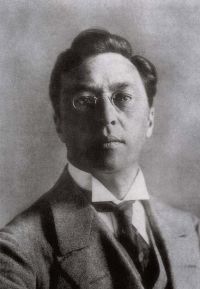 Wassily Kandinsky,
Concerning the Spiritual in Art
“ Such people are numbered among the bitterest opponents of Post-Impressionism, and indeed it is difficult to see how they could be otherwise. "Painting," they say, "which seeks to learn from an age when art was, however sincere, incompetent and uneducated, deliberately rejects the knowledge and skill of centuries." It will be no easy matter to conquer this assumption that Primitive art is merely untrained Naturalism, but until it is conquered there seems little hope for a sympathetic understanding of the symbolist ideal. ”
Arthur Jerome Eddy,
Cubists and Post-Impressionism
“ We declare, on the contrary, that there can be no modern painting without the starting point of an absolutely modern sensation, and none can contradict us when we state that painting and sensation are two inseparable words.{176}“If our pictures are futurist, it is because they are the result of absolutely futurist conceptions, ethical, aesthetic, political, and social. ”
Arthur Jerome Eddy,
Cubists and Post-Impressionism
“ Within the main current lesser currents of such magnitude that they frequently seem to dominate—and often do obscure the direction of—the main current; as, for instance, Impressionism dominated the art of France and influenced the art of the entire western world in the final years of the last century. ”
Arthur Jerome Eddy,
Cubists and Post-Impressionism
“ On the contrary it takes him just that far away from the impression the artist desires to produce, plunging him deeper into that world of reality out of which he was to be extricated by this new art, and there is no doubt that in the minds of even the most intelligent spectator it only serves to reenforce his conception of reality upon which he is forced to fall back by the objective titles as well as the concrete representations of what is supposed to be a subjective mood. ”
Arthur Jerome Eddy,
Cubists and Post-Impressionism
“ The sole question regarding form the artist should put to himself is, “Which form, or combination of forms, shall I use in this case to express most fully and plainly my spiritual mood?”The ideal art critic is not the critic who tries to discover mistakes, ignorance, imitations in the form, but he who tries to feel and understand how the form expresses the inner feeling of the artist and who tries to make the public understand.A painter may use new and strange forms for the sake of the forms, just for the sake of painting new and strange pictures, but the result will be lifeless. ”
Arthur Jerome Eddy,
Cubists and Post-Impressionism
“ In sculpture this cannot be done save, in a measure, in such crude mixtures of sculpture, relief, and painted scenes as those large circular panoramas so popular twenty years ago, where the spectator stood in the center—where the theory of the Futurist requires him to be—and gazed from life-size figures and objects at his feet across smaller and smaller, until reality imperceptibly joined the painted canvas, which gave a sense of great distance—entire battle-fields. ”