“ An Englishman who knows anything of history is not likely to forget of how many striking events in the development of his country Oxford has been the scene. The element of romance is furnished early in her story by the daring escape of the Empress-Queen, Matilda, from Oxford Castle. The Provisions of Oxford (1258) were the work of one of the most famous Parliaments of the thirteenth century, the century which saw the building of the English constitution, and the students of the University fought for the cause which those Provisions represented. ”
Provisions of Oxford
Definition and stakes
The theme of “Provisions of Oxford” has been addressed by authors such as J. Wells, A. G. Little, George C. Brodrick, Cecil Headlam and Stanley Kuhl Hornbeck. It is often associated with terms like university, England, reform, college and Cambridge.
Quotes about “Provisions of Oxford”
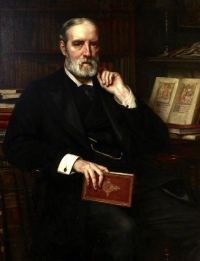 Edward Maunde Thompson,
Dictionary of National Biography…
(1886)
Edward Maunde Thompson,
Dictionary of National Biography…
(1886)
“ When the barons formed the confederation for redress of grievances in 1268, the Earl of Hereford was of their number, and had a share in the settlement of the government under the Provisions of Oxford, being one of the original commissioners, and subsequently one of the council of fifteen. ”
Cecil Headlam, Oxford and Its Story
“ Stimulated by the presence of the kings without its walls and the growth of the university within, trade flourished so greatly that it was soon necessary to regulate it by minute provisions. In the reign of Edward II. (1319) the mayor and bailiffs were commanded to “prevent confusion in the merchandising of strangers, and those who were not free of any guild from thrusting out those who were.” All traders and sellers who came to Oxford on market days—Wednesdays and Saturdays—were to know each one their places. ”
John Horace Round, Dictionary of National Biography… (1885)
“ In 1243 he had livery of his lands, and in 1258, in the parliament of Oxford, was elected one of the twelve baronial members of the council of twenty-four appointed to reform the realm (Ann. Burt.) By the Provisions of Oxford he was made constable of Nottingham (ib.) ”
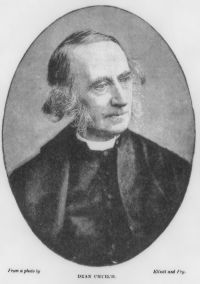 R. W. Church,
The Oxford Movement; Twelve Years…
R. W. Church,
The Oxford Movement; Twelve Years…
“ Oxford stood by itself in its meadows by the rivers, having its relations with all England, but, like its sister at Cambridge, living a life of its own, unlike that of any other spot in England, with its privileged powers, and exemptions from the general law, with its special mode of government and police, its usages and tastes and traditions, and even costume, which the rest of England looked at from the outside, much interested but much puzzled, or knew only by transient visits. ”
Cecil Headlam, Oxford and Its Story
“ Nor is it only the men like Lord Salisbury, Lord Rosebery and Mr Gladstone, who guide the country at home, or like Lord Milner and Lord Curzon, who give their best work to Greater Britain, that are the true sons of the University; it is the plain, hard-working clergymen and civilians, also, who, by their lives of honest and unselfish toil, hand on the torch of good conduct and high ideals which has been entrusted to them.Oxford had some share in the events which led to the deposition of Edward II. The King wrote to the Chancellor, masters and scholars calling upon them to resist his enemies. ”
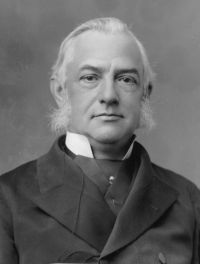 F. Max Müller,
My Autobiography: A Fragment
F. Max Müller,
My Autobiography: A Fragment
“ And here at Oxford I was told that the Government did not know Oxford, nor Oxford the Government, that the only ruling power consisted in the Statutes of the University, that professors and tutors were perfectly free so long as they conformed to these statutes, and that certainly no minister could ever appoint or dismiss a professor, except the Regius professors. “If we want a thing done,” my friends used to explain to me, “we do it ourselves, as long as it does not run counter to the statutes.”But Oxford changes with every generation. ”
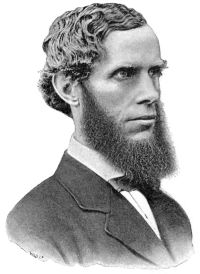 George C. Brodrick,
A history of the University of Oxford
(1900)
George C. Brodrick,
A history of the University of Oxford
(1900)
“ The close of the fifteenth century found the University of Oxford far more complete in its outward structure, if somewhat less vigorous in its inward life, than it had been two centuries earlier. It was no longer a loose aggregate of students under the paramount jurisdiction of a bishop resident at Lincoln, but an organised institution, with a government of its own, under the special protection of the Crown, and capable of being used as a powerful engine for effecting or resisting changes in Church or State. ”
George C. Brodrick,
A history of the University of Oxford
(1900)
“ But the University and the colleges were still governed respectively by antiquated codes of statutes, which it would have been no less disastrous than impossible to enforce strictly, but from which, as we have seen, it required the intervention of the Legislature to release them. Though a considerable number of able students destined for the Bar were attracted by scholarships and the prospect of fellowships, Oxford was still mainly a clerical and aristocratic seminary, exercising a very slight influence on the scientific or commercial world, and little affected by their fashions. ”
A. G. Little, The Grey Friars in Oxford
“ During the long reign of Henry III, the Patent, Close, and Liberate Rolls contain only three grants of money to the house of the Minorites at Oxford, and all of them are due to exceptional circumstances. They are, ten marks for the support of a provincial chapter in 1238, 60s. for their houses in 1245 in lieu of six oaks which the king had before given them, and three marks for the fabric of their church in 1246 [25] . The alms to the house at Oxford are almost wholly in kind, and consist chiefly of supplies of firewood from the royal forests round Oxford. ”
David Masson, The Life of John Milton Volume 3 1643-1649
“ Then, in a different way, the political crisis had brought Oxford and Cambridge, but especially Oxford, under severe revision. Had they not been the nurseries of Episcopacy, and of other things and principles of which England was now declaring herself impatient? All this, which was to be more felt after the Civil War had begun and Oxford became the King's headquarters, was felt already in very considerable degree during the two-and-twenty months of preliminary struggle between the King and the Parliament (Nov. 1640-Aug. 1642) . Why not have a University in London? ”
Richard Garnett, Essays in librarianship and bibliography
“ Such a system was supposed to have been inaugurated at Oxford, although we have only heard of two colleges which are actually working it out—Worcester, with its deliberate and most laudable bent towards classical archæology; and All Souls', whose noble collection of law books might, if law were more scientifically taught in this country, contribute to make Oxford a great school of jurisprudence. ”
George C. Brodrick,
A history of the University of Oxford
(1900)
“ Seldom in history, and never in the annals of the University, have characters so diverse been grouped together into so brilliant and picturesque a society as that which thronged the good city of Oxford during the Queen’s residence in the autumn and winter of 1643—the last happy interlude of her ill-starred life. ”
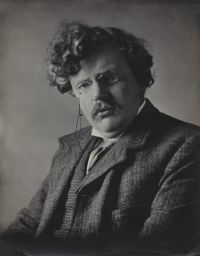 Gilbert Keith Chesterton,
All Things Considered
(1908)
Gilbert Keith Chesterton,
All Things Considered
(1908)
“ The social exclusiveness of aristocrats at Oxford and Cambridge gives way before the free spirit of competition amongst all classes. That is to say, there is at Oxford so hot and keen a struggle, consisting of coal-heavers, London clerks, gypsies, navvies, drapers' assistants, grocers' assistants—in short, all the classes that make up the bulk of England—there is such a fierce competition at Oxford among all these people that in its presence aristocratic exclusiveness gives way. ”
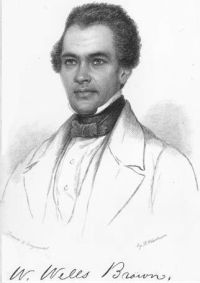 William Wells Brown,
Three Years in Europe: Places I Have Seen and People I Have Met
William Wells Brown,
Three Years in Europe: Places I Have Seen and People I Have Met
“ The University, founded by the good King Alfred, still throws its shadow upon the side-walk; and the lapse of ten centuries seems to have made but little impression upon it. Other seats of learning may be entitled to our admiration, but Oxford claims our veneration. Although the lateness of the night compelled me, yet I felt an unwillingness to tear myself from the scene of such surpassing interest. Few places in any country as noted as Oxford is, but what has some distinguished person residing within its precincts. ”
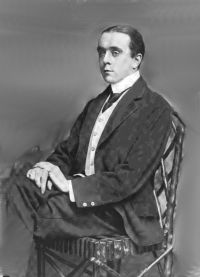 Max Beerbohm,
Zuleika Dobson — Chapter 12
(1911)
Max Beerbohm,
Zuleika Dobson — Chapter 12
(1911)
“ If the Colleges could be transferred to the dry and bracing top of some hill, doubtless they would be more evidently useful to the nation. But let us be glad there is no engineer or enchanter to compass that task. Egomet, I would liefer have the rest of England subside into the sea than have Oxford set on a salubrious level. For there is nothing in England to be matched with what lurks in the vapours of these meadows, and in the shadows of these spires—that mysterious, inenubilable spirit, spirit of Oxford. Oxford! ”
George C. Brodrick,
A history of the University of Oxford
(1900)
“ This change marks a notable step in the growth of the college monopoly afterwards established, and could hardly have been carried while the monastic orders were still powerful in Oxford, and a large body of non-collegiate students were lodged in halls. Nor could the erection of such a [Pg 91] legislative oligarchy, with a virtual power of suppressing obnoxious motions, be otherwise than unfavourable to freedom of teaching and government, however congenial to Tudor notions of academical discipline. ”
 Falconer Madan,
The Early Oxford Press
Falconer Madan,
The Early Oxford Press
“ No Bibles or Prayerbooks were issued at Oxford till 1675, but this Grammar and three Almanacs (see 1637 B, C, and W.) raised the standard of revolt against monopoly. On 20 March 16367 the Stationers’ Company agreed to pay the University £200 a year, if it would agree not to issue the classes of books in question, and no further difficulties arose till after the Restoration. ”
“ And to the darkest days of the eighteenth century belongs the most famous picture of the ideal Oxford life: "I spent many years, in that illustrious society, in a well-regulated course of useful discipline and studies, and in the agreeable and improving commerce of gentlemen and of scholars; in a society where emulation without envy, ambition without jealousy, contention without animosity, incited industry and awakened genius; where a liberal pursuit of knowledge and a genuine freedom of thought was raised, encouraged, and pushed forward by example, by commendation, and by authority." ”
John Corbin, An American at Oxford
“ In an incredibly short time all undergraduate news, and the judgments upon it of those best qualified to judge, ramify the college; and men who seldom stir beyond its walls are brought closely in touch with the innermost spirit of the university life. Here, again, those forbidding walls make possible a freedom of social interplay which is unknown in America. The real union of Oxford, social, athletic, and intellectual, is quite apart from the so-called Oxford Union ”
Flora Masson, Robert Boyle (1914)
“ It was Oxford six years after the Parliament’s Visitation and Purgation; Oxford after the imposition of the Covenant. The old Heads had conformed or been summarily ejected, the new Heads were Commonwealth men; and Cromwell himself was Chancellor. It was an Oxford where the use of the Liturgy was not openly permitted. And yet, “speech is thrall, but thocht is free,” says the old Scottish proverb. At Oxford a man could still fast quietly, if he was so minded, for forty-one hours, without being sent down for it. ”
“ And fifty years later, his son, Charles II, triumphed over the Whig Parliament at Oxford, which was trying by factious violence to force the Exclusion Bill on a reluctant king and nation. Few towns beside London have been the scene of so many great historical events; yet any one who looks below the surface will attach less importance to these than to the great changes in thought which have found in Oxford their inspiration, and which make it a city of pilgrimage for those interested in the development of England's real life. ”
S. A. Reilly, Our Legal Heritage: King AEthelbert - King George III, 600 A.D. - 1776
“ Oxford had started as a burh and had a royal residence and many tradesmen. It was given its basic charter in 1155 by the King. This confirmed to it all the customs, laws and liberties [rights] as those enjoyed by London. It became a model charter for other towns.Bachelors at Oxford studied the arts of grammar, rhetoric, and logic, and then music, arithmetic, geometry, and astronomy, until they mastered their discipline and therefore were authorized to teach it. Teaching would then provide an income sufficient to support a wife. ”
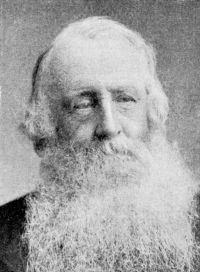 Edward A. Freeman,
Studies of Travel: Italy
Edward A. Freeman,
Studies of Travel: Italy
“ So to do is sometimes needful as a protest against serious error. When so many members of Parliament showed a few years back, and when the Times showed only a very little time back, that they believed that the University of Oxford was founded by somebody—Alfred will do as well as anybody else—and that the city of Oxford somehow grew up around the University, it became, and it remains, a duty 47 to historic truth to point out the importance of Oxford, geographical and therefore political and military, for some ages before the University was heard of. ”
George C. Brodrick,
A history of the University of Oxford
(1900)
“ In the very year of his accession, he granted letters patent to both Universities, commanding each of them to choose two grave and learned men, professing the civil law, to serve as burgesses in the House of Commons. Though he was prevented by the plague from visiting Oxford in that year, he came to Woodstock in the autumn and received the University authorities. ”
“ If Oxford thus, to some extent, moulded to her pattern men who, welcome as they were, were only accidental, surely the college spirit may be trusted to assimilate whatever material the changed conditions of social or of political life furnish to it. The hope of many at Oxford is that there will be a great development and a great change. On one side it will be good if Oxford becomes to a much greater extent not only an all-British, but also a world university; on another side it is to be hoped that far more than ever before men of all classes in England will come to Oxford. ”
Greville John Chester, Notes on the Present and Future of the Archaeological Collections of the University of Oxford (1881)
“ Cambridge spends her hundreds a year in augmenting and improving the collections of the Fitzwilliam Museum; even Aberdeen is buying medals, and the generous Head Master of Winchester is at his own expense forming a cabinet of coins, the better to teach History to the lads of his noble school. Oxford alone does nothing, or, if she does anything, does it in the spirit of jealousy and rivalry; her counsels are divided; there is no central or controlling authority; every man's hand is against his brother ”
A. G. Little, The Grey Friars in Oxford
“ The statutes of the Order [599] enact that every convent shall have its ‘procurator’ or ‘syndicus,’ who shall transact all the legal business of the house and receive in the name of the Roman Church for the use of the friars all pecuniary alms and bequests, or all such alms and bequests as can be changed into money. The express object of these constitutions was to‘preserve the Order in its purity and prevent the brethren being immersed in secular affairs [600] .’It would appear that at Oxford in the fourteenth century the office of alms-collector was held by one of the brethren. ”
Various, Blackwood's Edinburgh Magazine…
“ There is another point too, the great difficulty and the great evil, as we think, not of the Oxford system, for the system itself does not recognise it, but of Oxford practice, which, as the bill would surely have been powerless to deal with effectually, its promoters have perhaps done wisely in not dealing with at all. ”
F. Max Müller,
Chips from a German Workshop, Volume 4
“ But looking back to the earlier history of the English universities, I believe it is a mistake to suppose that Oxford, one of the most celebrated universities during the Middle Ages and in the modern history of Europe, could ever have ignored the duty, so fully recognized by other European universities, of not only handing down intact, and laid up, as it were, in a napkin, the traditional stock of human knowledge, but of constantly adding to it, and increasing it fivefold and tenfold. ”
Mrs. S. A. Barnett, Practicable Socialism, New Series
“ Oxford seems to be compelled, both by its traditions, its customs, and its money to do something for the education of the working people. The question whether it can do so, is answered by the scheme which the report recommends; that a committee be formed in Oxford, consisting of working-class representatives, in equal numbers with members of the University; that this Committee should draw up a two years’ curriculum, select the tutors, who must also have work in Oxford, and settle the localities in which classes shall be held; that students at these classes be admitted to the diploma course ”
Related terms
Authors who wrote about “Provisions of Oxford”
J. WellsA. G. LittleGeorge C. BrodrickCecil Headlam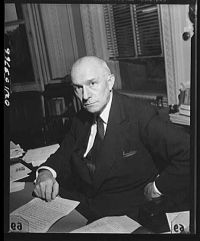 Stanley Kuhl HornbeckFalconer MadanR. W. ChurchMax BeerbohmGreville John Chester
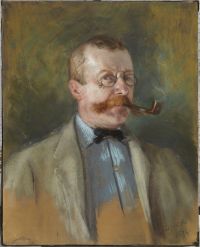 Laurence Hutton
 A. Hamilton Gibbs
 Thomas De QuinceyJohn Corbin
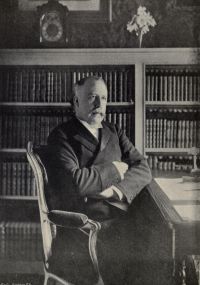 George William Erskine Russell
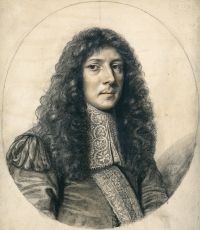 John Aubrey
 Leslie StephenSir David Oswald Hunter BlairF. Max MüllerJohn Horace Round
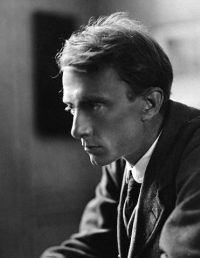 Edward Thomas
George C. BrodrickCecil HeadlamStanley Kuhl HornbeckFalconer MadanR. W. ChurchMax BeerbohmGreville John ChesterLaurence HuttonA. Hamilton GibbsThomas De QuinceyJohn CorbinGeorge William Erskine RussellJohn AubreyLeslie StephenSir David Oswald Hunter BlairF. Max MüllerJohn Horace RoundEdward Thomas