“ See Ode xviii. Watson. ↑ Quinctilius. This is not Quinctilius Varus, who commanded the army in Germany under Augustus as his general, who, after his army was routed, killed himself For that was twenty-seven years after Virgil's death, and eighteen after Horace died. But Quinctilius Varus, the poet and critic of Cremona, an intimate friend of Virgil's, who died about the tenth consulship of Augustus. Watson. ↑ Between an old and new moon, the wind is usually most tempestous. ”
Publius Quinctilius Varus
Definition and stakes
The theme of “Publius Quinctilius Varus” has been addressed by authors such as William Ware, Julius Caesar, Cornelius Tacitus, Edward Shepherd Creasy and Bayard Taylor. It is often associated with terms like Rome, Augustus, Romans, Quintus and Roman.
Quotes about “Publius Quinctilius Varus”
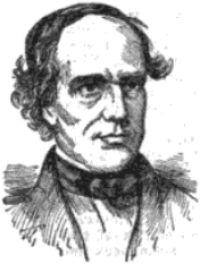 William Ware,
Aurelian; or, Rome in the Third Century
William Ware,
Aurelian; or, Rome in the Third Century
“ I believe the gods are ever faithful to the faithful.''What good citizen, too,' added Varus, 'but must lament to witness the undermining, and supplanting of those venerable forms, under which this universal empire has grown to its present height of power? He is scarcely a Roman who denies the gods of Rome, however observant he may be of her laws and other institutions. Religion is her greatest law.''These are hard questions,' said the Emperor. 'For, know you not, that some of our noblest, and fairest, and most beloved, have written themselves followers of this Gallilean God? ”
Sir Edward Shepherd Creasy, The Fifteen Decisive Battles of the World…
“ In the room of Tiberius, Augustus sent into Germany Quintilius Varus, who had lately returned from the proconsulate of Syria. Varus was a true representative of the higher classes of the Romans; among whom a general taste for literature, a keen susceptibility to all intellectual gratifications, a minute acquaintance with the principles and practice of their own national jurisprudence, a careful training in the schools of the rhetoricians, and a fondness for either partaking in or watching the intellectual strife of forensic oratory, had become generally diffused ”