Q

Definition and stakes

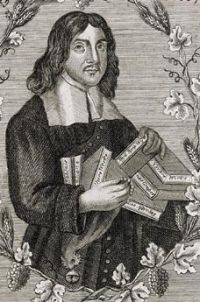
Portrait of Virginia Woolf Virginia Woolf,  To the Lighthouse (1927)

“ It was a splendid mind. For if thought is like the keyboard of a piano, divided into so many notes, or like the alphabet is ranged in twenty-six letters all in order, then his splendid mind had no sort of difficulty in running over those letters one by one, firmly and accurately, until it had reached, say, the letter Q. He reached Q. Very few people in the whole of England ever reach Q. ”
Source: Gutenberg

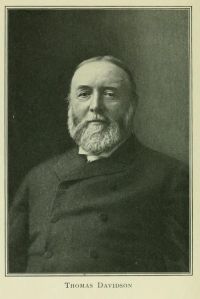
Portrait of Thomas Davidson Thomas Davidson,  Chambers's Twentieth Century Dictionary 1908… (1908)

“ Quāter′nion, a set or group of four: a word of four syllables: (pl.) in mathematics, a calculus of peculiar power and generality invented by Sir W. R. Hamilton of Dublin, as a geometry, primarily concerning itself with the operations by which one directed quantity or vector is changed into another.—v.t. to divide into quaternions: (Milt.) to divide into companies.—ns. Quāter′nionist, a student of quaternions; Quātern′ity, the state of being four, a group of four.—Quaternary number, ten; so called by the Pythagoreans because equal to 1 + 2 + 3 + 4. ”
Source: Wikisource

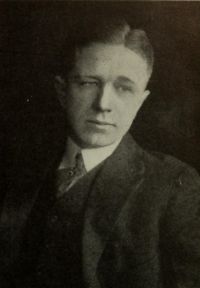
Portrait of G. E. Moore G. E. Moore,  Philosophical Studies

“ When we say "There is nothing which does possess Q and does not possess R" we are obviously saying something which is either identical with or logically equivalent to the proposition "In the case of every such pair of propositions it is not the case both that the one which asserts a particular thing to have Q is true, and that the one which asserts it to have R is false." ”
Source: Gutenberg

Get perspective with Kwize: daily news enlightened by great literature