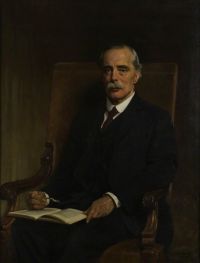
“ When Robert Estienne fled to Geneva, his brother, the physician, Charles, was allowed to succeed to his office at Paris, and he in turn was followed by a younger Robert, who died in 1571. Meanwhile Robert I had taken with him a set of matrices of the royal Greek types, and with these and other founts printed at Geneva until his death in 1559. ”
Robert Estienne
Definition and stakes
The theme of “Robert Estienne” has been addressed by authors such as Arthur Augustus Tilley, Eugène Sue, George Haven Putnam and Alfred W. Pollard. It is often associated with terms like Etienne, Paris, Richard, Estein and Charles.
Quotes about “Robert Estienne”
 Arthur Augustus Tilley,
Encyclopædia Britannica, Ninth Edition…
Arthur Augustus Tilley,
Encyclopædia Britannica, Ninth Edition…
“ Charles Estinne (1504 or 1505–1564) , the third son of Henri, was, like his brother Robert, a man of considerable learning. After the usual humanistic training lie studied medicine, aud became a doctor of that faculty in the university of Paris. In 1540 he accompanied the French ambassador Lazare Baif to Italy in the capacity of tutor to his natural son Antoine, the future poet. In 1551, when Robert Estienne left Paris for Geneva, Charles, who had remained a Catholic, took charge of his printing establishment, and in the same year was appointed king’s printer. ”
 Eugène Sue,
The Pocket Bible; or, Christian the Printer…
Eugène Sue,
The Pocket Bible; or, Christian the Printer…
“ After that—battle and carnage! By my sister's death—I shall cause the blood of papists to run like water. Time presses—let us make haste. You can not return home, Master Raimbaud, any more than my nephew could safely step into your house. This is the plan I submitted to Monsieur Robert Estienne, and which he approves: I have provided myself with a second Capuchin frock for Odelin. He and I will go to Paris, our bags on our backs, without awakening suspicion. We shall turn in at a friend's on St. Honoré Street, where Monsieur Estienne will call to see us. It is a safe place. ”
Eugène Sue,
The Pocket Bible; or, Christian the Printer…
“ They will find no one else at the house."Robert Estienne turned to Christian, who still held Hena in his arms:"Come, Christian! Courage! Coolness! The situation is hedged in with dangers; but it is not forlorn." Saying this he walked to the iron gate, at the moment when the gardener reappeared carrying a long ladder on his shoulder."What is there outside of the garden," asked the Franc-Taupin, "a highroad or fields?""Fields, sir; they are separated from the walls by a path and hedges. Beyond are meadows, as far as the eye extends." ”
Eugène Sue,
The Pocket Bible; or, Christian the Printer…
“ Wiping away the cold perspiration that bathed his forehead, the artisan went on to say: "Hervé entered the Convent of the Cordeliers, not against his will, but joyfully! He will not part from Fra Girard, the demon who led him astray. They are now waiting for my son Odelin to return from Italy. Alas, the boy is on his way to Paris and I have not been able to notify Master Raimbaud of what has happened, not knowing where to address a letter to him. They will fall into the hands of our enemies.""Just heavens!" exclaimed Robert Estienne, struck by a sudden thought and breaking in upon Christian. ”
 George Haven Putnam,
Books and their makers during the Middle Ages…
(1896)
George Haven Putnam,
Books and their makers during the Middle Ages…
(1896)
“ He appears never to have come into conflict with the divines whose censorship gave so much trouble to his brother Robert.Charles Estienne, who was the youngest of the three brothers, was known as a printer and publisher in Paris between the years 1550 and 1560. He had originally adopted the profession of medicine and attained high reputation as a physician and naturalist, and as a classical and antiquarian scholar. While travelling in Italy, he became intimate with Paul Manutius, the son of Aldus. ”
 Robert Tressell,
The Ragged Trousered Philanthropists
(1914)
Robert Tressell,
The Ragged Trousered Philanthropists
(1914)
“ If Easton was unemployed they had to stint themselves so as to avoid getting further into debt than was absolutely necessary. When he was working they had to go short in order to pay what they owed; but of what there was Easton himself, without knowing it, always had the greater share. If he was at work she would pack into his dinner basket over-night the best there was in the house. When he was out of work she often pretended, as she gave him his meals, that she had had hers while he was out. And all this time the baby was draining her life away, and her work was never done. ”
Robert Tressell,
The Ragged Trousered Philanthropists
“ You can’t do as you like nowadays you know! Easton—who was working at another job with Crass as his foreman—knew that unless some more work came in he was likely to be one of those who would have to go. As far as he could see it was only a week or two at the most before everything would be finished up. But notwithstanding the prospect of being out of work so soon he was far happier than he had been for several months past, for he imagined he had discovered the cause of Ruth’s strange manner. ”
Robert Tressell,
The Ragged Trousered Philanthropists
“ He was afraid to leave off to bind it up while Hunter was there, and consequently as he worked the white tiles became all smeared and spattered with blood. Easton, who was working with Harlow on a plank, washing off the old distemper from the hall ceiling, was so upset that he was scarcely able to stand on the plank, and presently the brush fell from his trembling hand with a crash upon the floor. Everyone was afraid. They knew that it was impossible to get a job for any other firm. They knew that this man had the power to deprive them of the means of earning a living ”
Various, The Scrap Book, Volume 1, No. 4
“ His father, George R. Edeson, who died while comedian and stage manager of the Philadelphia Girard Avenue stock company, in 1899, was so convinced that the actor's calling brought principally heart-sickness and disappointment that he used every means to dissuade his son from taking up with it.As a sort of compromise, when young Robert finished school (he was born in New Orleans, and the family now lived in Brooklyn) he went into the front of the house and obtained a position with Colonel Sinn as guardian of the box-office at the Park Theater. ”
Robert Tressell,
The Ragged Trousered Philanthropists
(1914)
“ Easton had been in no hurry to marry, for he knew that, taking good times with bad, his wages did not average a pound a week. At the end of that time, however, he found that he could not honourably delay longer, so they were married. That was twelve months ago. As a single man he had never troubled much if he happened to be out of work; he always had enough to live on, and pocket money besides, but now that he was married it was different: the fear of being 'out' haunted him. ”
Robert Tressell,
The Ragged Trousered Philanthropists
(1914)
“ Easton walked about with him while Ruth cleaned up the mess and got ready some fresh clothing. They both agreed that it was the coming teeth that had upset the poor child's digestion. It would be a good job when they were through. This work finished, Easton, who was still convinced in his own mind that with the aid of a little common sense and judicious management their affairs might be arranged more satisfactorily, said: 'We may as well make a list of all the things we must pay and buy to-morrow. The great thing is to think out exactly what you are going to do before you spend anything ”
Robert Tressell,
The Ragged Trousered Philanthropists
“ I reckon that’s what’ll be the end of it,” said Easton in a matter-of-fact tone. “It’s a grand finish, isn’t it?” observed Owen. “After working hard all one’s life to be treated like a criminal at the end.” “I don’t know what you call bein’ treated like criminals,” exclaimed Crass. “I reckon they ’as a bloody fine time of it, an’ we’ve got to find the money.” “Oh, for God’s sake don’t start no more arguments,” cried Harlow, addressing Owen. “We ’ad enough of that last week. You can’t expect a boss to employ a man when ’e’s too old to work.” ”
Robert Tressell,
The Ragged Trousered Philanthropists
(1914)
“ We must let the room and it might just as well be him as anyone else. We must make the best of it, that's all.' Easton stood with his back to the fire, staring gloomily at her. 'Yes, I suppose that's the right way to look at it,' he replied at length. 'If we can't stand it, we'll give up the house and take a couple of rooms, or a small flat—if we can get one.' Ruth agreed, although neither alternative was very inviting. ”
Robert Tressell,
The Ragged Trousered Philanthropists
(1914)
“ You say you've got to get there at seven, and it's only a quarter to four now. Where do you live? What's your name?' Easton gave his name and address and began repeating the story about the clock having stopped. 'What you say may be all right, or it may not,' interrupted the policeman. 'I'm not sure but that I ought to take you to the station. All I know about you is that I find you loitering outside this shop. What have you got in that basket?' 'Only my breakfast,' Easton said, opening the basket and displaying its contents. ”
Robert Tressell,
The Ragged Trousered Philanthropists
(1914)
“ Such an one would be quickly marked by Hunter, and even if the latter failed to notice him it would not be long before Crass reported his conduct. 'We can't 'elp ourselves,' said Easton, gloomily. 'If one man won't do it there's twenty others ready to take 'is place.' 'We could help ourselves to a certain extent if we would stand by each other; if, for instance, we all belonged to the society,' said Owen. 'I don't believe in the society,' observed Crass. ”
Robert Tressell,
The Ragged Trousered Philanthropists
(1914)
“ Easton smoked thoughtfully. 'No,' he said at length. 'But I'll mention it to one or two of the chaps on the job; they might know of someone.' 'And I'll get Mrs Crass to ask her lodgers; p'raps they might have a friend what would like to live near them.' So it was settled; and as the fire was nearly out and it was getting late, they prepared to retire for the night. The baby was still sleeping, so Easton lifted it, cradle and all, and carried it up the narrow staircase into the front bedroom, Ruth leading the way, carrying the lamp and some clothes for the child. ”
 Mrs. Humphry Ward,
Robert Elsmere
Mrs. Humphry Ward,
Robert Elsmere
“ Ah! it's no good talking; he has a heart—he has! Many's the kind thing he's done in old days for me and mine—I'll never forget them! But all these last few years—oh, I know, I know. You can't go and shut your heart up, and fly in the face of all the duties the Lord laid on you, without losing yourself and setting the Lord against you. But it is pitiful, Mr. Elsmere, it's pitiful!'It seemed to Robert suddenly as though there was a Divine breath passing through the wintry lane and through the shaking voice of the old man. ”
Mrs. Humphry Ward,
Robert Elsmere
“ You have a strong case, of course, and you have put it well. Only, when you are pegging away at reforming and enlightening the world, don't trample too much on the people who have more than enough to do to enlighten themselves.'As to Mrs. Elsmere, in this new turn of her son's fortunes, she realised with humorous distinctness that for some years past Robert had been educating her as well as himself. ”
Robert Tressell,
The Ragged Trousered Philanthropists
(1914)
“ The woman suddenly burst into a passion of weeping, laying her head on the seat of the chair that was standing near the cradle. Easton started up in surprise. 'Why, what's the matter?' he said. Then as he looked down upon the quivering form of the sobbing woman he was ashamed. He knelt down by her, embracing her and apologising, protesting that he had not meant to hurt her like that. 'I always do the best I can with the money,' Ruth sobbed. 'I never spend a farthing on myself, but you don't seem to understand how hard it is. ”
Robert Tressell,
The Ragged Trousered Philanthropists
“ Some of the men thought that, considering the extent to which they contributed, they should be entitled to attention as a right. After receiving their wages, Crass, Easton, Bundy, Philpot, Harlow and a few others adjourned to the Cricketers for a drink. Owen went away alone, and Slyme also went on by himself. There was no use waiting for Easton to come out of the public house, because there was no knowing how long he would be; he might stay half an hour or two hours. ”
Mrs. Humphry Ward,
Robert Elsmere
“ There is a tyrannical element in all fanaticism, an element which makes opposition a torment. He turned abruptly away, and Robert was left alone. It was a still, clear evening, rich in the languid softness and balm which mark the first approaches of autumn. Elsmere walked back to the house, his head uplifted to the sky which lay beyond the cornfield, his whole being wrought into a passionate protest—a passionate invocation of all things beautiful and strong and free, a clinging to life and nature as to something wronged and outraged. ”
Robert Tressell,
The Ragged Trousered Philanthropists
“ At this, everybody pretended to be very frightened, and edged away as far as possible from Philpot. Easton, who was sitting next to him, got up and crossed over to Owen’s vacant seat. The man on the pail was the only one who did not seem nervous; perhaps he felt safer because he was, as usual, surrounded by a moat. “Poverty,” resumed the lecturer, “consists in a shortage of the necessaries of life—or rather, of the benefits of civilization.” ”
Robert Tressell,
The Ragged Trousered Philanthropists
“ Slyme’s presence in the house had not proved so irksome as Easton and Ruth had dreaded it would be. Indeed, at first, he made a point of retiring to his own room after tea every evening, until they invited him to stay downstairs in the kitchen. Nearly every Wednesday and Saturday he went to a meeting, or an open-air preaching, when the weather permitted, for he was one of a little zealous band of people connected with the Shining Light Chapel who carried on the “open-air” work all the year round. ”
Mrs. Humphry Ward,
Robert Elsmere
“ The war is not ours, but God’s!’ Robert’s eyes had kindled. He was about to indulge himself in such a quick passage of arms as all such natures as his delight in, when his look travelled past the gaunt figure of the Ritualist vicar to his wife. A sudden pang smote, silenced him. She was sitting with her face raised to Newcome; and her beautiful gray eyes were full of a secret passion of sympathy. It was like the sudden re-emergence of something repressed, the satisfaction of something hungry. Robert moved closer to her, and the color rushed over all his young boyish face. ”
Mrs. Humphry Ward,
Robert Elsmere
“ It is you who in His loneliness have been robbing Him of the souls that should be his! It is you who have been doing your utmost to make His cross and passion of no effect. Oh, let it break your heart to think of it! Watch by Him to-night, my friend, my brother, and to-morrow let the risen Lord reclaim his own!’ Never had Robert seen any mortal face so persuasively beautiful; never surely did saint or ascetic plead with a more penetrating gentleness. After the storm of those opening words the change was magical. The tears stood in Elsmere’s eyes. ”
Mrs. Humphry Ward,
Robert Elsmere
“ You will live bitterly to regret the haste and the unreason of it.''There has been no haste,' exclaimed Robert in the low tone of passionate emotion; 'I have not rooted up the most sacred growths of life as a careless child devastates its garden. There are some things which a man only does because he must.'There was a pause. Robert held out his hand. The squire would hardly touch it. Outwardly his mood was one of the strangest eccentricity and anger; and as to what was beneath it, Elsmere's quick divination was dulled by worry and fatigue. ”
One of a Thousand — Estes, Dana (1890)
“ Mr. Estes is a lineal descendant in the eighth generation from Robert Estes, of Dover, England. Richard, the son of Robert, came to America in 1684, according to the record in the Bible now in possession of Mr. Estes. Benjamin, son of Richard, was born in Lynn, Mass., and died in Berwick, Maine, to which state he had removed at an uncertain date. This branch of the Estes family settled in Maine —Henry, son of Benjamin, born in Berwick; Samuel, son of Henry, born in Portland, and Robert, the grandfather of Dana, born in Windham, Me. ”
Mrs. Humphry Ward,
Robert Elsmere
“ The boy, throwing off his drowsiness, lay watching the Rector’s face as he talked in an undertone to the nurse, his haggard eyes full of a dumb, friendly wistfulness. When Robert bent over him to say good-by, this expression brightened into something more positive, and Robert left him, feeling at last that there was a promise of life in his look and touch. ”
Mrs. Humphry Ward,
Robert Elsmere
“ Again be hung over the figure on the bed—his own withered hand stroking that of the Squire with a yearning affection. ‘When was the last attack?’ asked Robert sadly. ‘A month ago, sir, just after they got back. Ah, Mr. Elsmere, he suffered. And he’s been so lonely. No one to cheer him, no one to please him with his food—to put his cushions right—to coax him up a bit, and that,—and his poor sister too, always there before his eyes. Of course he would stand to it, he liked to be alone. But I’ll never believe men are made so unlike one to the other. ”
