
“ Suns rise and set in Saadi's speech!' And thus to Saadi said the Muse: 'Eat thou the bread which men refuse; Flee from the goods which from thee flee; Seek nothing,—Fortune seeketh thee. Nor mount, nor dive; all good things keep The midway of the eternal deep. Wish not to fill the isles with eyes To fetch thee birds of paradise: On thine orchard's edge belong All the brags of plume and song; Wise Ali's sunbright sayings pass For proverbs in the market-place: Through mountains bored by regal art, Toil whistles as he drives his cart. ”
Saadi
Definition and stakes
The theme of “Saadi” has been addressed by authors such as Various, Robert Shea, James Justinian Morier, C. J. Wills and Richard Chenevix Trench. It is often associated with terms like Sadi, Hafez, king, dervish and Shiraz.
Quotes about “Saadi”
Various, The Atlantic Monthly, Volume 14…
“ Saadi praises alms, hospitality, justice, courage, bounty, and humility; he respects the poor, and the kings who befriend the poor. He admires the royal eminence of the dervish or religious ascetic. "Hunger is a cloud out of which falls a rain of eloquence and knowledge: when the belly is empty, the body becomes spirit; when it is full, the spirit becomes body." ”
The Arabian Nights Entertainments - Complete
“ After these words I was silent; and Saadi replied, "Though I would persuade myself, Hassan, that all you tell us is true, and not owing to your debauchery or ill management, yet I must not be extravagant, and ruin myself for the sake of an experiment. I do not regret in the least the four hundred pieces of gold I gave you to raise you in the world. I did it in duty to God, without expecting any recompense but the pleasure of doing good. If any thing makes me repent, it is, that I did not address myself to another, who might have made a better use of my charity." ”
Various, The Atlantic Monthly (1864)
“ The poet or thinker must always, in a rude nation, be the chief authority on religion. All questions touching its truth and obligation will come home to him, at last, for their answer. As he thinks and speaks will intelligent men believe. Therefore a certain deference must be shown him by the priests,—a result which conspicuously appears in the history of Hafiz and Saadi. In common with his countrymen, Saadi gives prominence to fatalism,—a doctrine which, in Persia, in Arabia, and in India, has had, in all ages, a dreadful charm. ”
Edna Worthley Underwood, The taste of honey (1930)
“ It was the old clothes of men’s pleasures gone to rags. For a little while there was general inclination among the people to turn to real life and give over vain dreaming.Of this healthful, sane impulse, Hafiz was poet, uniting as he did the imaginative reach of Rûmi, with the firm grasp on material things, the worldly wisdom of Saadi. But he was greater than either in artistic sense of form, which in the quatrain attained grace and distinction comparable with Anacreon. After the winter of war this was fertile spring, when life blossomed, and with it, genius. ”
Robert Shea, The Saracen: Land of the Infidel
“ He looked down that path and saw the same masses of crusaders and Tartars, saw the burning mosques, the emptied cities, the heaps of corpses. He saw the Gray Mosque in El Kahira ruined, his teacher Saadi hacked to pieces by crusader swords.Then he heard words Saadi had spoken: We are God's instruments, by which He brings about that which He wills. The fool does nothing and leaves the outcome to God. The ordinary man acts and prays that God will grant a good result. The wise man acts and leaves the outcome to God. ”
Miss Pardoe, The Thousand and One Days: A Companion to the "Arabian Nights"
“ The Persian allowed me to take as much as I pleased. I filled my trousers and the folds of my robe and turban with the finest pearls, the largest diamonds, and many other kinds of precious stones. As Saadi the Wise passed by all these treasures without looking at them, I said to him, "O my lord, why do you leave here all this wealth, and take away with you, as the reward of so many fatigues, an article of so little value? The book of wisdom is now useless; what man is there who does not think himself wise?" ”
Various, The Atlantic Monthly, Volume 14…
“ To the sprightly, but indolent Persians, conversation is a game of skill. They wish to measure wit with you, and expect an adroit, a brilliant, or a profound answer. Many narratives, doubtless, have suffered in the translation, since a promising anecdote sometimes heralds a flat speech. But Saadi's replies are seldom vulgar. His wit answers to the heart of the question, often quite over the scope of the inquirer. He has also that splendor of expression which alone, without wealth of thought, sometimes constitutes a poet, and forces us to ponder the problem of style. ”
The Arabian Nights Entertainments - Complete
“ Saad, remembering Saadi's engagement, said, "If you have not forgotten what you said to me, there is a man," pointing to me, "whom I can remember a long time working at his trade of rope-making, and in the same poverty: he is a worthy subject for your liberality, and a proper person to make your experiment upon." ”
C. J. Wills, In the land of the lion and sun… (1891)
“ Saadi, though more influencing the actions of the people, is less read by the upper classes than Hafiz, to whom are paid almost divine honours; and the humble tomb of the one, in its little unkept garden, is little visited, while the handsome stone over the grave of the other has generally a few reverent idlers round it. ”
Robert Shea, The Saracen: Land of the Infidel
“ To bring himself under control, he began the contemplative exercise his Sufi teacher, Sheikh Saadi, called the Presence of God."God is everywhere, and most of all in man's heart," Saadi had said, his old eyes twinkling. "He cannot be seen or heard or touched or smelled or tasted. Therefore, make your mind as empty as the Great Desert, and you may converse with God, Whose name be praised."Daoud touched the farewell present Saadi had given him when he left El Kahira to begin the journey to Italy. ”
Robert Shea, The Saracen: Land of the Infidel
“ But what if God had chosen him to be a Mameluke? Then it was a blessed life, a holy calling, as Saadi had said. There was a world beyond this one, a place the Koran called a "Heavenly Home." All men, Christian and Muslim, believed that. As a warrior he could hope that his hardship would be turned to joy in that Heavenly Home. In that world, not one in ten thousand, but every good man, would dwell in a palace. ”
The Arabian Nights Entertainments…
“ I then told them every circumstance your majesty has heard, without forgetting the least.All my protestations had no effect on Saadi, to cure him of his prejudice. "Khaujeh Hassan," replied he, "the adventure of the fish, and diamond found in his belly, appears to me as incredible as the vulture's flying away with your turban, and the exchange of the scouring earth. Be it as it may, I am equally convinced that you are no longer poor, but rich as I intended you should be, by my means ”
Various, The Atlantic Monthly, Volume 14…
“ The charge of monotony lies more against the numerous Western imitations than against the Persians themselves, and though the torrid, like the arctic zone, puts some limit to variety, it is least felt in the masters. It is the privilege of genius to play its game indifferently with few or with many pieces, as Nature draws all her opulence out of a few elements. Saadi exhibits perpetual variety of situation and incident, and an equal depth of experience with Cardinal de Retz in Paris or Doctor Johnson in London. ”
The Arabian Nights Entertainments…
“ Commander of the faithful, that your majesty may the better understand by what means I arrived at the happiness I now enjoy, I must acquaint you, there are two intimate friends, citizens of Bagdad, who can testify the truth of what I shall relate, and to whom, after God, the author of all good, I owe my prosperity.These two friends are called, the one Saadi, the other Saad. Saadi, who is very rich, was always of opinion that no man could be happy in this world without wealth, to live independent of every one. ”
Various, The Atlantic Monthly (1864)
“ The monotonies which we accuse, accuse our own. We pass into a new landscape, new costume, new religion, new manners and customs, under which humanity nestles very comfortably at Shiraz and Mecca, with good appetite, and with moral and intellectual results that correspond, point for point, with ours at New York and London. It needs in every sense a free translation, just as, from geographical position, the Persians attribute to the east wind what we say of the west. Saadi, though he has not the lyric flights of Hafiz, has wit, practical sense, and just moral sentiments. ”
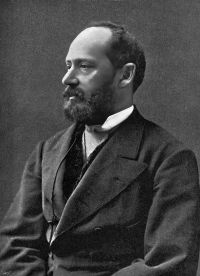 Ármin Vámbéry,
Sketches of Central Asia (1868…
Ármin Vámbéry,
Sketches of Central Asia (1868…
“ We may say, however, that we nowadays very seldom meet with a dervish in the strict sense of the word; that is, a man who, renouncing from inward conviction earthly goods and worldly comforts, is desirous only of obtaining experience of life and devoting himself to the practice of religious duties: such a man, in a word, as the poet Saadi is represented to have been. Those who embrace this vocation are either unprincipled and lazy fellows, or professed beggars, who, under the cloak of poverty, collect treasures, and when they are sufficiently enriched often adopt some lucrative trade. ”
Various, The Atlantic Monthly, Volume 14…
“ But he said,—'O Saadi, be not surprised at what thou seest. Do thou only not withdraw thy neck from the yoke of God, and nothing shall be able to withdraw its neck from thy yoke.'"In a country where there are no libraries and no printing, people must carry wisdom in sentences. Wonderful is the inconsecutiveness of the Persian poets. European criticism finds that the unity of a beautiful whole is everywhere wanting. ”
Various, The Atlantic Monthly, Volume 14…
“ In a rude and religious society, a poet and traveller is thereby a noble and the associate of princes, a teacher of religion, a mediator between the people and the prince, and, by his exceptional position, uses great freedom with the rulers. The growth of cities and increase of trade rapidly block up this bold access of truth to the courts, as the narrator of these events in Saadi's life plainly intimates. ”
Robert Shea, The Saracen: Land of the Infidel
“ Beside him, Saadi said, "Everything made by God has two sides, a useful side and a harmful side. That which is sometimes a poison [249] can at other times be a medicine. Even kaviyeh, which we drink in such great quantities to give vigor to our minds, can be a poison. If a substance is taken in the right amount, on the right occasion, with the right attitude, it can unlock doors in the mind. Our lord Baibars, peace be upon him, has told me he plans to send you to the Hashishiyya for further training. ”
The Arabian Nights Entertainments…
“ You may now make your experiment, and let me see that there are ways, besides giving money, to make a poor man's fortune. Let Hassan be the man. I dare say, whatever you may give him he will not be richer than he was with four hundred pieces of gold." Saad had a piece of lead in his hand, which he shewed Saadi. ”
C. J. Wills, In the land of the lion and sun… (1891)
“ Thus the tenets of the Persian sage and those of the Jesuits are similar. To do evil is lawful, if a greater good be the result. I fear the evil is often done without the expected good resulting.A visit to the tomb of Saadi, or that of Hafiz, is common among the Shirazis for the taking of omens or “fal,” as they are termed. For a few coppers the dervish who usually acts as guardian to the tomb produces his well-thumbed manuscript copy of the poet, and, after an invocation to the Deity, he thrusts his knife into the closed volume between the leaves. ”
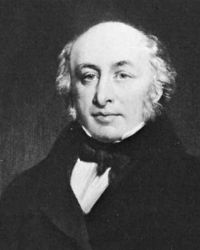 James Justinian Morier,
The adventures of Hajji Baba of Ispahan…
(1824)
James Justinian Morier,
The adventures of Hajji Baba of Ispahan…
(1824)
“ We hold men's beards as cheap as dirt; and although our existence is precarious, yet it is one of great variety, as well as of great idleness. We look upon mankind as fair game—we live upon their weakness and credulity; and, from what I have seen of you, I think you would do honour to our profession, and in time become as celebrated as even the famous Sheikh Saadi himself.' This speech was applauded by the other two, who pressed my entering upon their profession. ”
James Justinian Morier,
The Adventures of Hajji Baba of Ispahan
“ Saadi speaks truth when he sayeth, "A young man, though he hath strength of arm, and the force of an elephant, will kick his heel ropes [5] to pieces with fear in the day of battle."' But Osman Aga's principal hope of security, and of faring better than others in case we were attacked, was in the circumstance of his being a follower of Omar; [6] and, by way of proclaiming it, he wound a piece of green muslin round his cap, and gave himself out as an emir, or a descendant of the Prophet, to whom, as the reader may guess, he was no more allied than to the mule upon which he rode. ”
 Henry M. Stanley,
In Darkest Africa, Vol. 1; or, The Quest…
Henry M. Stanley,
In Darkest Africa, Vol. 1; or, The Quest…
“ Morphia injections rendered him slightly somnolent; but the spasms continued, and Saadi died on the 111th hour after receiving the wound. I am inclined to think that the arrow was smeared for the fight of the 14th the night previous. A third man died of dysentery before noon, making the fourth death in this camp. At 5 P.M. the caravan arrived. Its sufferings have been great from mental distress. There have been three deaths also in the land column. ”
 Richard Chenevix Trench,
Poems from Eastern Sources: The Steadfast Prince…
Richard Chenevix Trench,
Poems from Eastern Sources: The Steadfast Prince…
“ THE WORLD.See Von Hammer’s “Gesch. d. schönen Redekunst Persiens,” p. 236. P. 78. THE MONK AND SINNER.It is difficult not to be struck with the deep moral resemblance which this story of Saadi’s bears to that related by St. Luke, ch. vii. 36–50. We have here reproduced to us the Pharisee and the woman that was a sinner, and all the deep relations of law and grace; and a reference to the original, or at least my original, in Tholuck’s “Blüthensammlung &c.,” p. 251, will prove that I have not sought to throw upon it any colouring which it did not in itself already possess. ”
Augusta J. Evans, Vashti; Or, Until Death Us Do Part
“ God grant that your life may be spared, until all doubt and bitterness is removed from your heart, and that when you go down into the grave it may be as bright with the blessed faith of a Christian as that which now contains my sister Janet. Do not allow the gloom of earthly disappointment to cloud your trust, but bear always in mind those cheering words of Saadi,—“If I am to be kept in this world until all the bitterness is scourged out of me, I might as well resign myself to a career 314 as endless as that of Ahasuerus. ”
Mrs. Meer Hasan Ali, Observations on the Mussulmauns of India
“ Now you, Saadie, who are deeply versed in the way of wisdom, and better acquainted with the words of the Khoraun than any other man on earth, tell me, is there in that holy book a promise made of forgiveness for that man who breaks the hearts of his fellow-creatures? With us there are many hearts so devotedly attached to you, that must assuredly burst the bonds of life by your complete and sudden desertion of them, so that not one sin but many shall be hurled by their deaths on your conscience, to be atoned for how you may. ”
“ Treat inferiors as if you might one day be in the hands of a master." "I recollect," says Saadi, "the verse which the elephant-driver rehearsed on the banks of the river Nile: 'If you are ignorant of the state of the ant under your foot, know [Pg 373] that it resembles your own condition under the foot of the elephant.'" The stable of Confucius being burned down, when he was at court, on his return he said, "Has any man been hurt?" ”
Richard Chenevix Trench,
Poems from Eastern Sources: The Steadfast Prince…
“ The good that one man flings aside.I must acknowledge that I have only assumed from internal evidence, that this story of the Sage gathering herbs is of Eastern origin, owing it myself to Calderon, who introduces it in his famous drama, “La Vida es Sueño.” The second incident of the rebuke which the pilgrim through the desert met with for his unthankfulness and discontent is related by Saadi in his “Rosarium,” and he tells it as having come upon himself. P. 71. LIFE THROUGH DEATH.See Tholuck’s “Blüthensammlung &c.” p. ”
Mrs. Meer Hasan Ali, Observations on the Mussulmauns of India
“ Saadie assured him he was sensible of the offence his friend might give to the opinions of his people, by the proposal of uniting his daughter to a man of another faith, and that their prejudices would bring innumerable evils on his good name by such an alliance. ”
1911 Encyclopædia Britannica, Volume 24… (1911)
“ Under his rule the school attained the highest reputation among the Jewish communities of East and West—but it was not of long duration. His health had been impaired by the strenuous life he had led, and in his later years he suffered from melancholia. In 942 he died, two years after the exilarch. That some of the many works of Saadia, in 'spite of their merits, have been neglected, and others partly or entirely lost, is not as surprising as it appears at first sight. ”
